Essence
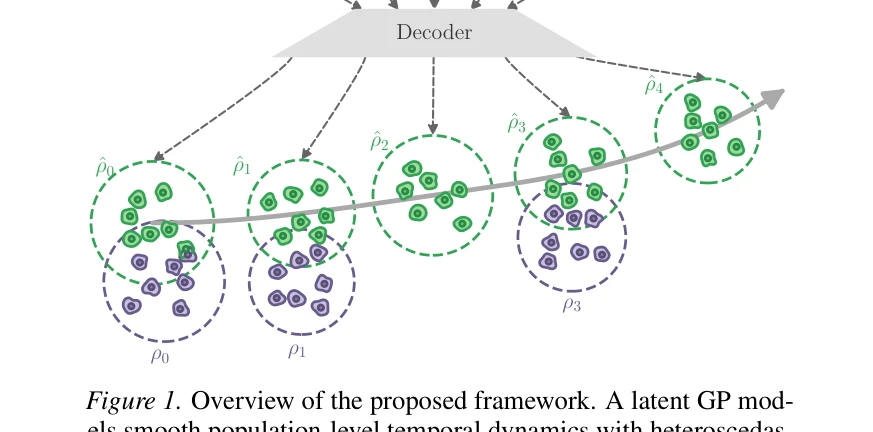
Figure 1. Overview of the proposed framework. A latent GP mod-
scRNA-seq의 시간에 따른 population dynamics를 latent heteroscedastic Gaussian process(GP)로 모델링하고, optimal transport(OT) 목적함수로 생성 분포와 관측 분포를 정합시켜 cell trajectory를 추론하는 생성 프레임워크 LGP-OT를 제안한다.
Evaluation
Novelty: 4/5 Technical Soundness: 4/5 Significance: 4/5 Clarity: 4/5 Overall: 4/5
총평: GP 기반 latent dynamics와 OT를 결합해 scRNA-seq의 시간적 이질성과 불확실성을 동시에 포착하는 견고한 프레임워크로, interpolation·extrapolation·perturbation 추론 전반에서 실용적 가치가 높은 연구이다.
같이 보면 좋은 논문
기반 연구SPECTER2 유사도 0.91로 Scientific Machine Learning for Dynamics와 Scientific AI for Physics and Environment가 맞닿아, 'Neural Ordinary Differential Equations'가 이 ICML 2026 논문의 배경·대안·응용 맥락을 보완한다.
기반 연구SPECTER2 유사도 0.90 기준으로 'Modeling Temporal scRNA-seq Data with Latent Gaussian Process and Optimal Transport'의 AI4S 방법론을 'A multimodal generative AI copilot for human pathology'의 과학 생산·평가 맥락과 함께 보면 연구 자동화의 의미를 입체적으로 볼 수 있다.
기반 연구latent Gaussian process 모델링의 이론적 기반을 제공한다.
기반 연구optimal transport 기반 분포 정합 이론이 본 연구 방법론의 기초가 된다.
기반 연구SPECTER2 유사도 0.93로 Scientific Machine Learning for Dynamics와 AI-Driven Drug and Materials Discovery가 맞닿아, 'stVCR: spatiotemporal dynamics of single cells from time-series spatial transcriptomics'가 이 ICML 2026 논문의 배경·대안·응용 맥락을 보완한다.
기반 연구SPECTER2 유사도 0.92로 Scientific Machine Learning for Dynamics와 AI-Driven Drug and Materials Discovery가 맞닿아, 'Towards building a World Model to simulate perturbation responses in cellular biology'가 이 ICML 2026 논문의 배경·대안·응용 맥락을 보완한다.
다른 접근scRNA-seq 시계열 데이터 모델링에 다른 생성모델 프레임워크를 사용하는 대안적 접근이다.
후속 연구연속적 동역학을 다루는 Neural ODE/CNF 기반 생성 모델링의 공통 기반을 갖는다.
후속 연구optimal transport 기반 궤적 추정을 확장한 연구이다.
후속 연구conditional CNF 기반 밀도/우도 추정이라는 공통된 이론적 기반을 공유한다.
후속 연구latent diffusion 기반 건강 이벤트 생성의 이론적 기반을 제공한다.