⚠️ 이 페이지의 요약·평가·해설은 생성형 AI(Claude)가 자동 생성한 2차적 분석물입니다. 논문 원문의 저작권은 원저작자에게 있으며, 정확한 내용은 원문(위 DOI·arXiv 등 출처)을 확인하세요.
라이선스: OpenReview 공개(오픈액세스)
Essence
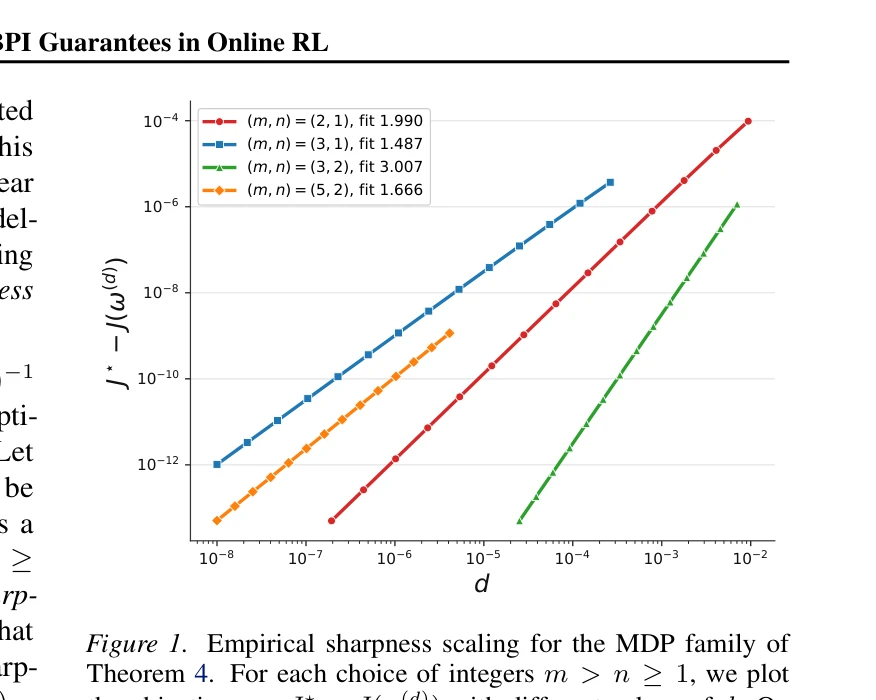
Figure 1. Empirical sharpness scaling for the MDP family of
본 논문은 온라인, tabular MDP에서 Best Policy Identification(BPI) 문제를 다루며, 기존에 asymptotic (δ→0) 최적성만 알려져 있던 Navigate-and-Stop (NaS) 알고리즘에 대해 최초의 non-asymptotic sample complexity 상한을 제시한다.
Motivation
Known: BPI는 discounted MDP에서 δ-Probably-Correct(δ-PC) 프레임워크로 formalize되며, Al Marjani et al. (2021)이 navigation constraint 하에서 instance-specific lower bound와 NaS 알고리즘의 asymptotic optimality를 제시한 바 있다. 또한 bandit 분야의 Best-Arm Identification(BAI)에서는 Track-and-Stop(TAS)에 대한 non-asymptotic guarantee가 최근 연구(Degenne et al., 2019; Poiani et al., 2025a)를 통해 이미 확립되었다.
Gap: MDP 환경에서의 BPI, 특히 NaS 및 그 변형들에 대한 기존 분석은 전적으로 asymptotic(δ→0)에 머물러 있어, finite-confidence 환경에서의 stopping threshold 효과, 데이터 부족 시 sampling distribution의 transient instability 등을 이해할 수 없다는 근본적 한계가 있었다.
Why: MDP 상에서의 online navigation 설정은 generative model 설정과 달리 단일 trajectory로만 샘플링이 제한되어 change-of-measure 논증, non-homogeneous Markov dynamics, forced exploration 유지 필요성이 결합되어 bandit보다 훨씬 도전적이며, 이에 대한 non-asymptotic 이론은 실용적 알고리즘 설계와 finite-sample 성능 예측에 필수적이다.
Approach: NaS-type 알고리즘의 finite-confidence sample complexity를 implicit bound 형태로 도출하고, characteristic time의 linear sharpness 가정 하에서 이를 connectivity, mixing, forced exploration, allocation geometry 등의 instance-dependent quantity로 명시적으로 전개하는 이론적 접근을 취한다.
Achievement
Figure 1. Empirical sharpness scaling for the MDP family of
Finite-confidence 상한 증명: single-trajectory discounted tabular MDP에서 NaS-type 알고리즘에 대해 δ-correct하며 E[τ] ≤ inf{t : b(t,δ) ≤ (t−√t)T(M)^{-1} − ℓ(t,M)} + O(1) 형태의 implicit non-asymptotic bound를 최초로 증명하였다.
명시적 확장식 도출: characteristic time의 linear sharpness 하에서 E[τ] ≤ Bδ + Õ(√Bδ + T(M)∑ᵢ Aᵢ Bδ^{rᵢ}) (Bδ = T(M)log(1/δ), rᵢ<1) 형태의 명시적 finite-confidence 전개를 얻어 connectivity, curvature, allocation geometry의 기여를 드러냈다.
핵심 기술 요소 개발: adaptive non-homogeneous Markov dynamics 하에서 empirical visitation frequency의 finite-time tracking, transition perturbation에 대한 optimal-allocation selector의 안정성, continuum alternative class에서 목적함수가 임의로 flat할 수 있음을 보이는 sharpness 분석을 제시하였다.
How
BPI를 δ-PC 프레임워크로 정식화하고 Al Marjani et al. (2021)의 information constraint 및 navigation constraint에 기반한 lower bound를 재검토
NaS 알고리즘의 sampling rule(오라클 최적 할당을 추적)과 stopping rule의 finite-time 거동을 분석하기 위해 empirical transition kernel의 concentration과 tracking error를 통제
characteristic time 함수 T(M)의 curvature(선형 sharpness)를 새로운 instance-dependent 속성으로 정의하고, 이를 통해 alternative set 상에서 objective가 flat해지는 정도를 정량화
이러한 요소들을 결합하여 implicit bound에서 명시적 finite-δ expansion으로 유도
Originality
BAI에서의 non-asymptotic TAS 분석(Degenne et al., 2019; Poiani et al., 2025a)을 MDP의 navigation-constrained BPI 설정으로 확장한 최초의 시도
characteristic time의 curvature(sharpness)를 도입하여 alternative class의 flatness가 sample complexity에 미치는 영향을 명시적으로 정량화한 점이 새로움
단일 trajectory 제약 하 non-homogeneous adaptive Markov dynamics에서 empirical visitation frequency의 finite-time tracking 이론을 새롭게 구축
Limitation & Further Study
deterministic reward를 가정하고 있어 stochastic reward를 포함하는 일반적인 MDP로의 확장이 필요
linear sharpness 가정이 성립하지 않는 인스턴스(더 일반적인 curvature 형태)에 대한 분석은 다루지 않음
본문 발췌 내용상 실험적 검증(Figure 1 외)이 제한적으로 보이며, 실제 대규모 MDP에서의 실용적 성능 검증이 추가로 필요
상한(upper bound)만 제시되었으며, non-asymptotic lower bound와의 tightness 비교가 이루어지지 않음
총평: BPI 분야에서 오랫동안 미해결로 남아있던 non-asymptotic guarantee 문제를 다루는 이론적으로 견실하고 시의적절한 기여이며, MDP의 구조적 특성(connectivity, curvature)을 명시적으로 드러낸 점이 인상적이나, 실험적 검증과 lower bound와의 비교가 보강되면 더욱 완성도가 높아질 것이다.
기반 연구SPECTER2 유사도 0.91로 Reinforcement Learning Policy Optimization와 Scientific AI for Physics and Environment가 맞닿아, 'Improving generalization of robot locomotion policies via sharpness-aware reinforcement learning'가 이 ICML 2026 논문의 배경·대안·응용 맥락을 보완한다.