⚠️ 이 페이지의 요약·평가·해설은 생성형 AI(Claude)가 자동 생성한 2차적 분석물입니다. 논문 원문의 저작권은 원저작자에게 있으며, 정확한 내용은 원문(위 DOI·arXiv 등 출처)을 확인하세요.
라이선스: OpenReview 공개(오픈액세스)
Essence
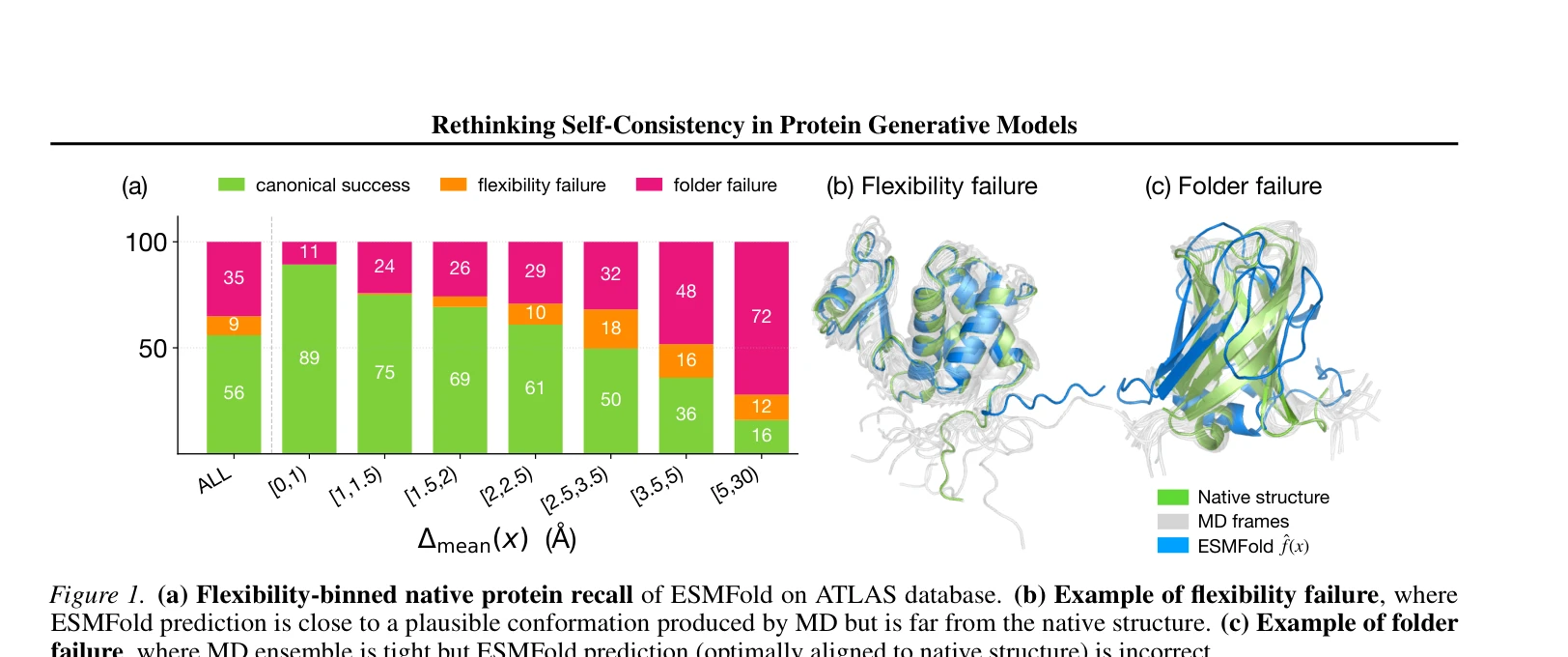
Figure 1. (a) Flexibility-binned native protein recall of ESMFold on ATLAS database. (b) Example of flexibility failure,
단백질 생성모델 평가의 표준 지표인 self-consistency가 native 서열-구조 쌍의 44%를 부당하게 거부한다는 사실을 밝히고, 이를 flexibility failure와 folder failure로 분해한 뒤 conformational ensemble predictor를 활용한 ensemble self-consistency를 제안한다.
Motivation
Known: Self-consistency는 단백질 생성모델의 구조적 타당성을 평가하는 표준 지표로, 생성된 서열을 독립적인 folding model(주로 ESMFold)로 refold하여 원래 구조와 fixed RMSD threshold(보통 2Å) 이내로 일치하는지 확인한다. 이는 co-designability 평가와 대부분의 protein co-design 연구에서 headline metric으로 사용되고 있다.
Gap: 기존에는 native 구조가 self-consistency test를 통과하지 못하는 현상(44% 거부율)이 단순히 folding model의 한계로 치부되어 왔으며, 이 거부가 구체적으로 어떤 실패 메커니즘에서 비롯되는지, 그리고 그것이 단백질의 flexibility와 어떤 관계가 있는지에 대한 체계적 분석이 이루어지지 않았다.
Why: flexibility는 allostery, catalysis, binding 등 단백질 기능의 핵심 속성인데, self-consistency가 이를 체계적으로 벌점화한다면 생성모델 개발 방향 자체가 왜곡될 수 있으므로, 더 충실한 평가 프레임워크의 확립이 생성모델의 실질적 발전에 중요하다.
Approach: 저자들은 self-consistency를 단백질 평형 앙상블에서의 낮은 자유에너지라는 생물물리학적 이상(구조적 타당성)에 대한 근사로 재정식화하고, 이를 통해 flexibility failure와 folder failure라는 두 가지 실패 모드를 이론적·경험적으로 구분해 분석한다.
Achievement
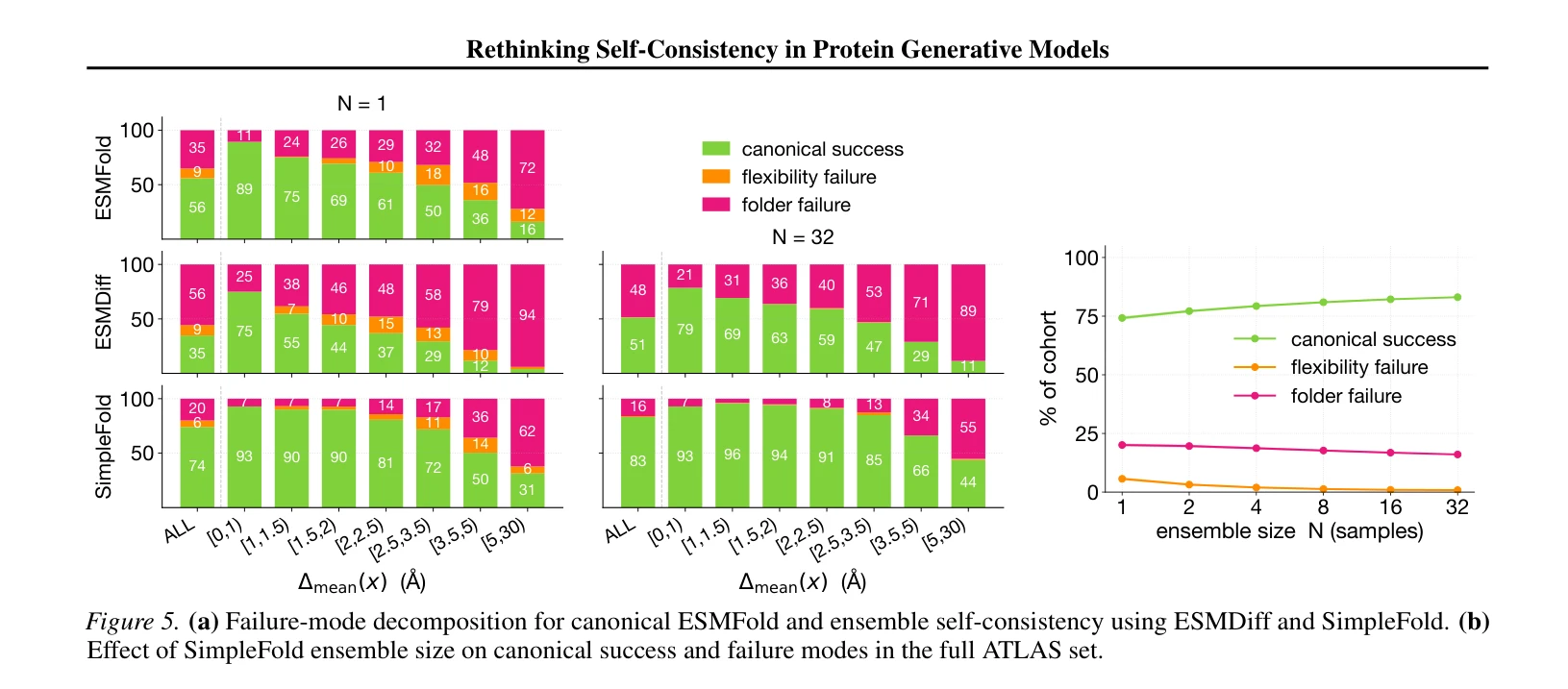
Figure 5. (a) Failure-mode decomposition for canonical ESMFold and ensemble self-consistency using ESMDiff and SimpleFol
Self-consistency의 형식적 재정의: 이상적인 ensemble-level criterion(forward KL divergence 기반)을 정의하고, 기존 canonical self-consistency를 이 이상에 대한 근사로 위치시켜 flexibility failure와 folder failure 두 실패 모드를 수학적으로 도출함.
ATLAS 데이터베이스 기반 실증 분석: molecular dynamics trajectories를 이용해 1,520개의 native 단백질 구조에서 두 실패 모드를 정량 분해했고, 두 실패 모드 모두 flexible한 단백질에서 유의하게 증가함을 보임.
Ensemble self-consistency 제안: SimpleFold와 같은 conformational ensemble predictor를 이용해 단일 refold 대신 샘플링된 ensemble과 비교하는 방법을 제안했고, N≥16 샘플에서 flexibility failure가 거의 해소되며 native protein recall이 flexibility spectrum 전반에서 향상됨을 확인함.
Specificity 유지 검증: Rosetta decoy dataset을 이용한 hard negative 검증에서 ensemble self-consistency가 specificity를 훼손하지 않음을 보임.
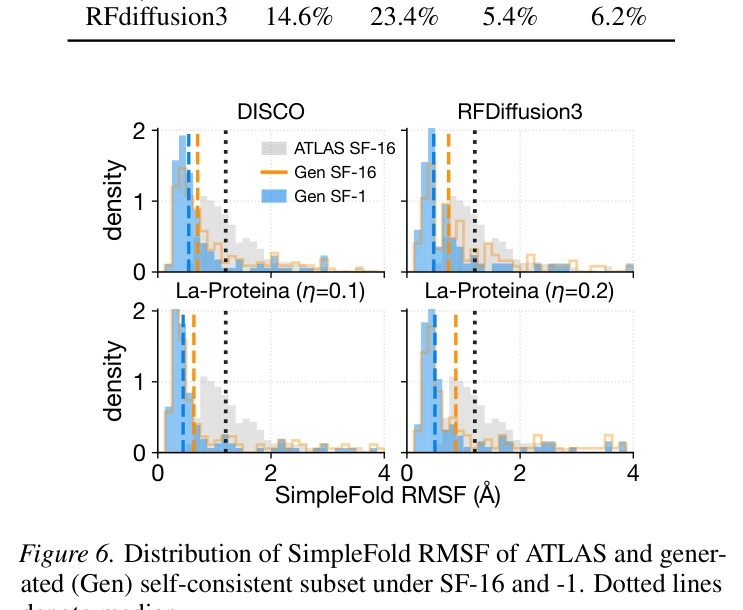
Co-design 생성물 재평가: 기존 co-design 모델의 생성 결과 중 canonical self-consistency로 거부되었던 flexible한 생성물이 ensemble self-consistency에서는 구제됨을 실증함.
How
Figure 6. Distribution of SimpleFold RMSF of ATLAS and gener-
1,520개의 PDB native 단백질 구조를 대상으로 ESMFold를 이용한 canonical self-consistency test를 수행하여 거부율(44%)을 확인함.
ATLAS molecular dynamics trajectories를 활용해 각 native 단백질의 실제 conformational ensemble을 얻고, 이를 기준으로 ESMFold의 예측이 (b) 앙상블 내 특정 conformation과는 가깝지만 native 구조와는 먼 경우(flexibility failure)와 (c) 앙상블 자체는 tight하지만 ESMFold 예측이 부정확한 경우(folder failure)로 구분함.
ESM3 embedding의 PCA, secondary structure composition, radius of gyration 등의 분포 분석을 통해 flexibility failure가 secondary structure 왜곡만으로는 설명되지 않음을 검증함.
SimpleFold 등 conformational ensemble predictor를 이용해 다수(N≥16)의 conformation을 샘플링하고, 생성 구조가 샘플링된 ensemble 중 하나와 RMSD threshold 이내로 일치하는지 확인하는 ensemble self-consistency 지표를 정의함.
Rosetta decoy dataset을 이용해 non-native(잘못된) 구조에 대한 specificity 저하 여부를 검증함.
기존 published co-design 모델의 생성 결과에 ensemble self-consistency를 재적용하여 recall 개선 효과를 확인함.
Originality
self-consistency를 단순한 경험적 필터가 아니라 평형 앙상블에 대한 KL divergence 근사라는 생물물리학적 원리로부터 형식적으로 재도출한 점이 독창적임.
기존 연구들이 self-consistency 실패를 folding model의 성능 한계나 synthetic dataset의 특성으로 귀속시킨 것과 달리, native 서열-구조 쌍에서도 실패가 발생함을 보여 이 문제가 metric 자체에 내재된 구조적 편향임을 규명함.
flexibility failure와 folder failure라는 두 가지 실패 모드로 분해하는 진단적 틀을 새롭게 제시하고 이를 ATLAS MD trajectories로 실증적으로 검증한 것이 독창적임.
ensemble self-consistency라는 drop-in replacement 지표를 제안하여, 구조 예측 모델이 발전함에 따라 함께 진화할 수 있는 평가 프레임워크를 설계함.
Limitation & Further Study
ensemble self-consistency는 conformational ensemble predictor(SimpleFold 등)의 품질에 크게 의존하며, 이 predictor 자체의 folder failure(앙상블 예측이 실제 평형 앙상블을 제대로 반영하지 못하는 경우)에 대한 완전한 해결책은 제시되지 않음.
분석이 ATLAS 데이터베이스에 포함된 단백질과 이를 통한 MD trajectories에 의존하므로, 매우 크거나 복잡한 단백질, 혹은 multi-domain/intrinsically disordered protein과 같은 극단적 flexibility case에 대한 일반화 가능성은 추가 검증이 필요함.
제안된 방법이 여전히 fixed RMSD threshold와 sample size(N≥16)와 같은 hyperparameter에 의존하고 있어, 이들 선택이 결과에 미치는 민감도에 대한 심층 분석이 부족함.
ProteinMPNN을 이용한 redesign 상황에서의 ensemble self-consistency 적용 및 영향은 부분적으로만 논의되어 후속 연구가 필요함.
기반 연구SPECTER2 유사도 0.91 기준으로 'Rethinking Self-Consistency in Protein Generative Models'의 AI4S 방법론을 'What Topological and Geometric Structure Do Biological Foundation Models Learn?'의 과학 생산·평가 맥락과 함께 보면 연구 자동화의 의미를 입체적으로 볼 수 있다.
기반 연구SPECTER2 유사도 0.91 기준으로 'Rethinking Self-Consistency in Protein Generative Models'의 AI4S 방법론을 'Spectral Coherence Index: A Model-Free Metric for Protein Structural Ensemble Quality Assessment'의 과학 생산·평가 맥락과 함께 보면 연구 자동화의 의미를 입체적으로 볼 수 있다.
기반 연구SPECTER2 유사도 0.92로 Computational Molecular Design와 Molecular Simulation and Generative Modeling가 맞닿아, 'Learning Structure, Energy, and Dynamics: A Survey of Artificial Intelligence for Protein Dynamics'가 이 ICML 2026 논문의 배경·대안·응용 맥락을 보완한다.