⚠️ 이 페이지의 요약·평가·해설은 생성형 AI(Claude)가 자동 생성한 2차적 분석물입니다. 논문 원문의 저작권은 원저작자에게 있으며, 정확한 내용은 원문(위 DOI·arXiv 등 출처)을 확인하세요.
라이선스: OpenReview 공개(오픈액세스)
Essence
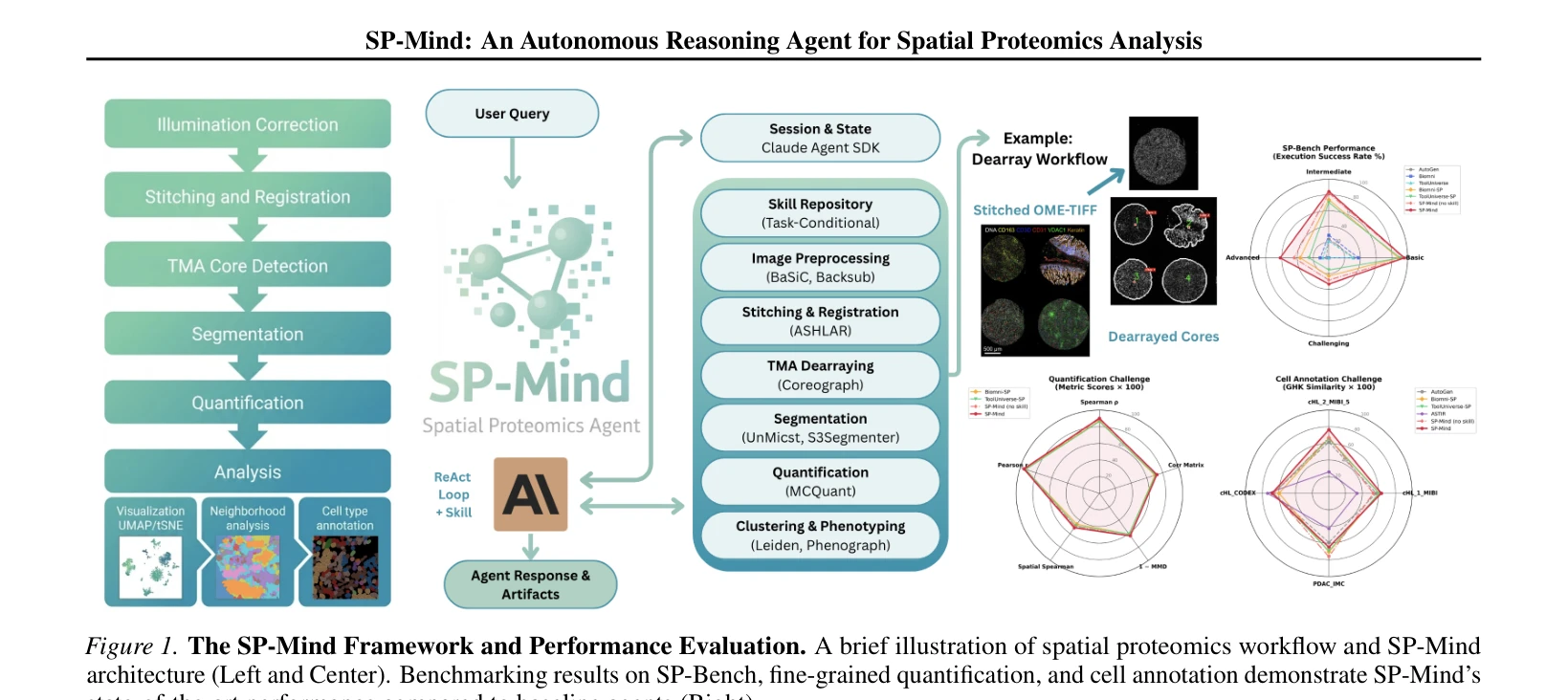
Figure 1. The SP-Mind Framework and Performance Evaluation. A brief illustration of spatial proteomics workflow and SP-M
SP-Mind은 raw multiplexed tissue imaging부터 downstream phenotype discovery까지 spatial proteomics 분석 파이프라인 전체를 자연어 쿼리만으로 자동 수행하는 최초의 autonomous AI agent이며, 이를 평가하기 위한 SP-Bench 벤치마크(102개 태스크, 18개 카테고리)를 함께 제안한다.
Motivation
Known: 기존 spatial proteomics 분석은 image registration, segmentation, phenotyping, spatial analysis 등 여러 단계를 거치는 복잡한 파이프라인이며, MCMICRO, TRACERx-PHLEX, MARQO 같은 workflow management system 기반 자동화 도구들이 재현성 있는 batch processing을 제공해왔다.
Gap: 기존 파이프라인들은 사용자가 이미징 플랫폼과 조직 맥락에 따라 도구와 파라미터를 수동으로 선택·조정해야 하는 expert-dependent configuration 문제와, 다양한 분석 쿼리에 동적으로 대응하지 못하는 static execution 문제를 가지고 있으며, spatial proteomics 전체 파이프라인을 orchestration할 수 있는 biomedical agent나 이를 평가할 표준 벤치마크도 부재하다.
Why: spatial proteomics는 tumor microenvironment 이해와 정밀 의학에 핵심적이지만 현재의 파편화된 워크플로우는 연구 확장성과 재현성을 제한하므로, 자연어 쿼리 하나로 전체 분석을 자동화하는 agent는 spatial biology 연구의 접근성과 처리량을 크게 높일 수 있다.
Approach: SP-Mind는 ReAct 스타일의 observation-thought-execution 루프와 CodeAct 방식의 하이브리드 코드 실행 전략을 결합하고, 10개 이상의 전문 도구와 전문가가 큐레이션한 skill template을 태스크 조건부로 주입하여 별도의 task-specific fine-tuning 없이 자연어 쿼리를 end-to-end 분석 워크플로우로 변환한다.
Achievement
Figure 1. The SP-Mind Framework and Performance Evaluation. A brief illustration of spatial proteomics workflow and SP-M
SP-Mind 프레임워크 제안: raw multiplexed tissue imaging부터 phenotype discovery까지 전체 spatial proteomics 파이프라인을 자동 orchestration하는 최초의 autonomous agent를 구축했다.
SP-Bench 벤치마크 구축: 다양한 tissue type을 아우르는 102개 태스크, 18개 카테고리, 4개 난이도 등급으로 구성된 최초의 표준화된 agentic spatial proteomics 평가 벤치마크를 제시했다.
SOTA 성능 달성: SP-Bench에서 68.9%의 execution accuracy를 기록하여 가장 강력한 baseline 대비 13%p 향상시켰으며, cell quantification 및 annotation 등 downstream task에서도 기존 접근법 대비 일관된 성능 향상을 입증했다.
How
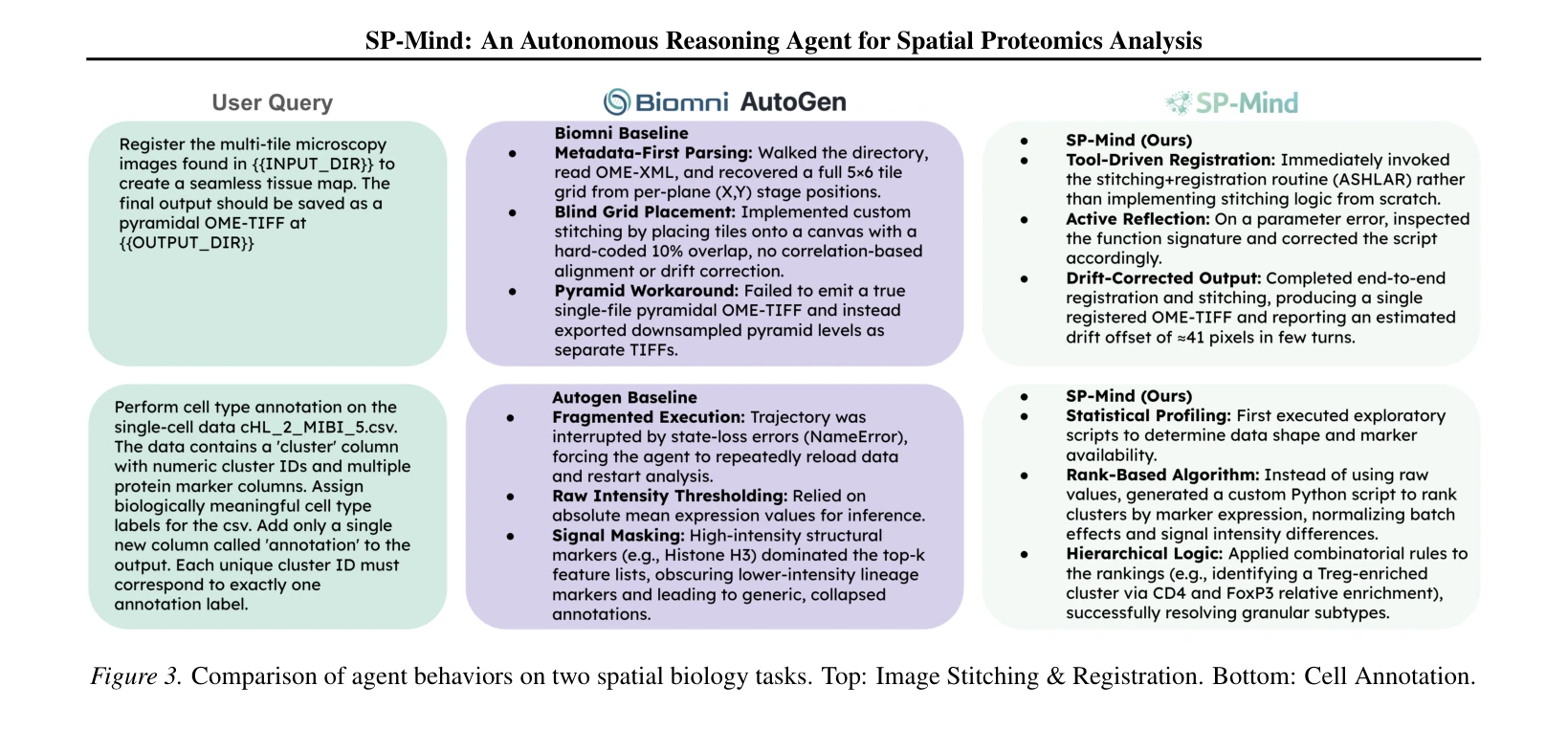
Figure 3. Comparison of agent behaviors on two spatial biology tasks. Top: Image Stitching & Registration. Bottom: Cell
Algorithm 1의 Task-Conditional Skill Injection: 사용자 쿼리의 keyword mapping을 통해 관련 skill을 skill repository에서 로드하고 이를 prompt에 결합
observation-thought-execution의 ReAct-style 반복 루프: observation 단계에서 사용자 쿼리와 이전 실행 출력을 관측하고 automatic context compaction으로 long-horizon interaction을 관리
data-first reasoning protocol: 분석 액션 수행 전 데이터 구조와 분포를 우선 검사하여 잘못된 threshold 설정으로 인한 연쇄 오류를 감소
thought 단계에서 explicit chain-of-thought reasoning을 통해 실패를 진단하고 다음 단계를 계획하며 해석 가능한 결정 추적을 externalize
execution 단계에서 CodeAct-style paradigm을 사용해 사전 정의된 API schema 호출뿐 아니라 임의의 Python 스크립트 생성/실행, shell command 실행, file operation 등을 수행
dual-layer memory architecture를 통해 reasoning cycle 간 실행 상태(conversational layer 포함)를 유지
sandboxed execution environment에서 configurable permission level로 interactive exploration과 fully autonomous batch processing을 모두 지원
Originality
spatial proteomics 자동화 문제를 최초로 체계적으로 정의하고 formalize
전체 spatial proteomics 파이프라인을 orchestration하는 최초의 autonomous biomedical agent
expert-curated skill template과 keyword 기반 task-conditional injection이라는 도메인 지식 주입 방식
ReAct와 CodeAct를 결합한 hybrid code-execution 전략을 spatial biology 도메인에 특화 적용
최초의 agentic spatial proteomics 평가 표준 벤치마크(SP-Bench) 도입
Limitation & Further Study
본문 발췌에는 SP-Bench의 구체적 태스크 구성과 평가 지표, baseline agent들과의 상세 비교 결과가 충분히 제시되지 않아 성능 향상의 원인 분석이 제한적임
keyword 기반 skill matching 방식(Algorithm 1)은 쿼리 표현의 다양성에 취약할 수 있어 보다 정교한 semantic retrieval로의 확장이 필요해 보임
단일 LLM 백본에 의존하는 구조로 보이며, 다양한 LLM에 대한 일반화 및 강건성 검증이 추가로 필요함
실제 임상/연구 현장에서의 장기간 배포 시 안전성, 오류 전파, human-in-the-loop 검증 체계에 대한 논의가 부족함