⚠️ 이 페이지의 요약·평가·해설은 생성형 AI(Claude)가 자동 생성한 2차적 분석물입니다. 논문 원문의 저작권은 원저작자에게 있으며, 정확한 내용은 원문(위 DOI·arXiv 등 출처)을 확인하세요.
라이선스: OpenReview 공개(오픈액세스)
Essence
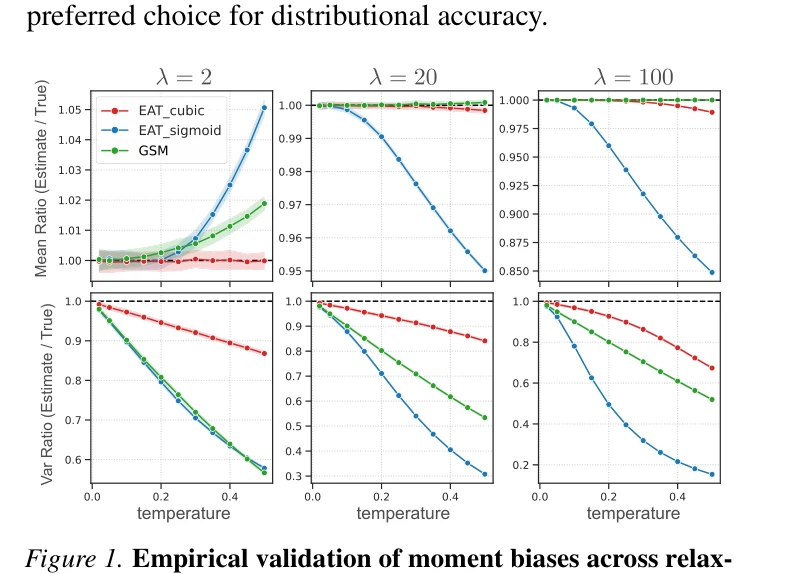
Figure 1. Empirical validation of moment biases across relax-
Poisson latent 변수의 미분 불가능성을 해결하기 위한 두 relaxation 기법(EAT, GSM)을 최초로 체계적으로 비교하고, sigmoid 대신 cubic Hermite interpolant(smoothstep)를 사용하는 EATcubic을 제안하여 1차 moment의 unbiasedness를 이론적으로 보장하고 2차 moment bias를 줄였다.
Motivation
Known: Poisson 분포는 신경과학에서 spike count를 모델링하는 principled한 선택으로 널리 쓰이며, Poisson VAE(P-VAE)와 POGLM 등 discrete latent variable model들이 개발되었다. 이러한 모델 학습을 위해 Exponential Arrival Time(EAT) simulation과 Gumbel-SoftMax(GSM) relaxation이라는 두 가지 독립적인 pathwise gradient estimation 방법이 각각 제안되었다.
Gap: EAT와 GSM은 동일한 문제(discrete Poisson sample을 통한 미분)를 다루지만 이 둘 사이의 체계적인 비교가 존재하지 않아, 실무자들이 어떤 방법을 선택해야 할지에 대한 지침이 부재했다. 또한 기존 EAT 방법(EATsigmoid)은 temperature hyperparameter에 매우 민감하다는 한계가 있었다.
Why: Poisson latent variable model은 NeuroAI 응용(신경 데이터의 spike train 분석, sparse coding, 지각적 의사결정 모델링 등)에서 중요한 역할을 하므로, 이들의 gradient estimation 방법 선택에 대한 명확한 트레이드오프 이해와 실용적 권고안은 관련 연구 커뮤니티에 실질적 도움이 된다.
Approach: EATsigmoid의 불안정성이 무한 support를 가지는 sigmoid 근사에서 비롯됨을 규명하고, 이를 compact support를 갖는 cubic Hermite interpolant(smoothstep)로 대체한 EATcubic을 제안하여, EATsigmoid, GSM, score-based estimator, exact gradient(가능한 경우)와 비교 평가하였다.
Achievement
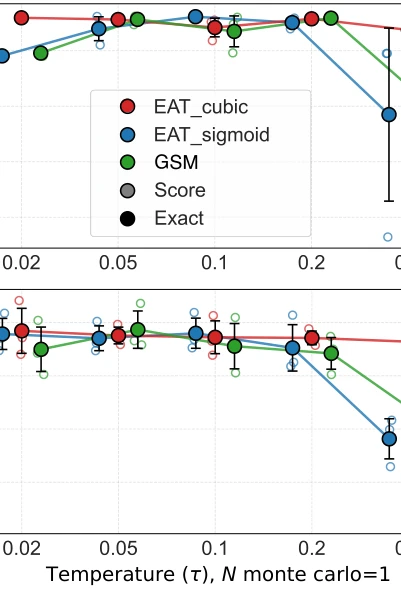
Figure 4. Validation ELBO across relaxation methods and
EATcubic 제안: sigmoid를 cubic Hermite interpolant(smoothstep)로 대체하여 1차 moment의 unbiasedness를 이론적으로 보장(Campbell's theorem 활용)하고 2차 moment bias를 감소시켰다.
최초의 체계적 비교: distributional fidelity, gradient quality, downstream task 성능(P-VAE, POGLM) 등 다축 평가를 통해 EAT와 GSM 계열 방법들을 최초로 종합적으로 비교하였다.
일관된 성능 우위: EATcubic이 모든 평가 지표에서 EATsigmoid, GSM, score-based 방법보다 우수하며, exact gradient에 필적하는 성능을 보임과 동시에 temperature hyperparameter에 훨씬 강건함을 확인하였다.
Negative Binomial로의 확장: over-dispersed Negative Binomial latent에도 EATcubic이 최선의 성능을 보임을 검증하였고, 다만 under-dispersed regime을 포함한 임의의 non-Poisson 분포에는 GSM만이 일반화됨을 밝혔다.
실무 가이드 제공: Table 1과 같이 방법별 강점/한계를 정리한 practitioner용 recommendation을 제시하였다.
How
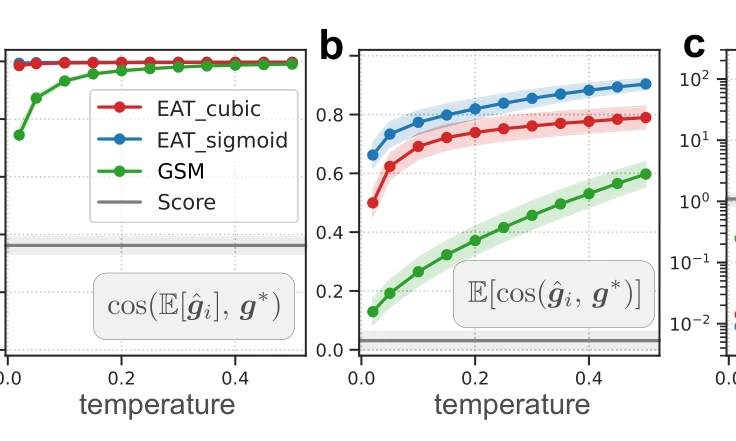
Figure 3. Gradient quality analysis across relaxation methods. We compare gradient estimates from EATsigmoid (blue), EAT
변분추론(VI)과 ELBO 프레임워크 하에서 score function estimator(REINFORCE)와 pathwise estimator(reparameterization trick)의 차이를 정리
EAT 방법의 핵심 구조(exponential arrival time 기반 point process relaxation)를 검토하고, 기존 sigmoid 근사의 infinite support로 인한 distributional fidelity 저하를 규명
sigmoid를 compact support를 가지는 cubic Hermite interpolant(smoothstep)로 교체한 EATcubic 도입, Campbell's theorem을 이용해 1차 moment unbiasedness를 이론적으로 증명
여러 relaxation 방법(EATcubic, EATsigmoid, GSM, score-based, exact)에 대해 moment bias(Fig. 1), Wasserstein-1 distance(Fig. 2), gradient bias/variance(Fig. 3)를 정량 비교
P-VAE(Poisson latent VAE)와 POGLM(partially observable generalized linear model, retinal ganglion cell 데이터 포함) 두 downstream task에서 validation ELBO(Fig. 4, 5)를 통해 temperature robustness 및 실제 성능을 평가
over-dispersed Negative Binomial latent로 실험을 확장하여 일반화 가능성 검증
Originality
EAT relaxation의 불안정성 원인을 sigmoid의 infinite support로 규명하고, 이를 compact support를 갖는 cubic Hermite interpolant로 교체한다는 간결하면서도 이론적으로 뒷받침되는 수정안 제시
Campbell's theorem을 활용하여 relaxation의 1차 moment unbiasedness를 엄밀하게 증명한 점
서로 독립적으로 개발된 두 계열의 방법(EAT, GSM)을 신경과학 downstream task(P-VAE, POGLM) 맥락에서 최초로 통합적, 체계적으로 비교한 벤치마크 연구
Negative Binomial 등 over/under-dispersed 분포로의 일반화 가능성까지 포괄적으로 탐구하여 각 방법의 적용 범위에 대한 명확한 경계를 제시
Limitation & Further Study
EATcubic을 비롯한 EAT 계열 방법은 본질적으로 Poisson(및 그 확장인 Negative Binomial 등 특정 분포족)에 국한되며, 임의의 non-Poisson discrete 분포(특히 under-dispersed regime)에는 적용이 어려워 GSM만이 일반화 가능하다는 근본적 한계가 남아있다.
실험이 P-VAE와 POGLM이라는 두 가지 특정 downstream task, 그리고 제한된 데이터셋(예: retinal ganglion cell 데이터) 범위 내에서 이루어져, 더 다양한 신경 데이터 및 대규모 모델로의 일반화 여부는 추가 검증이 필요하다.
향후 연구로 Negative Binomial 외 다른 over-/under-dispersed count 분포 계열에 대한 relaxation 설계, 그리고 EATcubic과 GSM의 장점을 결합한 하이브리드 방법론 개발이 제안될 수 있다.
총평: Poisson latent variable model의 gradient estimation이라는 실용적이면서도 다소 좁은 문제를 정교한 이론적 분석과 폭넓은 실험으로 다룬 견고한 연구로, NeuroAI 및 관련 실무자에게 명확하고 실행 가능한 지침을 제공한다는 점에서 가치가 크다.
기반 연구SPECTER2 유사도 0.91로 Statistical Causal Inference Methods와 Scientific AI for Physics and Environment가 맞닿아, 'Scientific Machine Learning through Physics-Informed Neural Networks: Where we are and What's next'가 이 ICML 2026 논문의 배경·대안·응용 맥락을 보완한다.
기반 연구SPECTER2 유사도 0.91로 Statistical Causal Inference Methods와 LLM Benchmarking and Agent Evaluation가 맞닿아, 'Generative AI and the Foundation Model Era: A Comprehensive Review'가 이 ICML 2026 논문의 배경·대안·응용 맥락을 보완한다.