⚠️ 이 페이지의 요약·평가·해설은 생성형 AI(Claude)가 자동 생성한 2차적 분석물입니다. 논문 원문의 저작권은 원저작자에게 있으며, 정확한 내용은 원문(위 DOI·arXiv 등 출처)을 확인하세요.
라이선스: OpenReview 공개(오픈액세스)
Essence
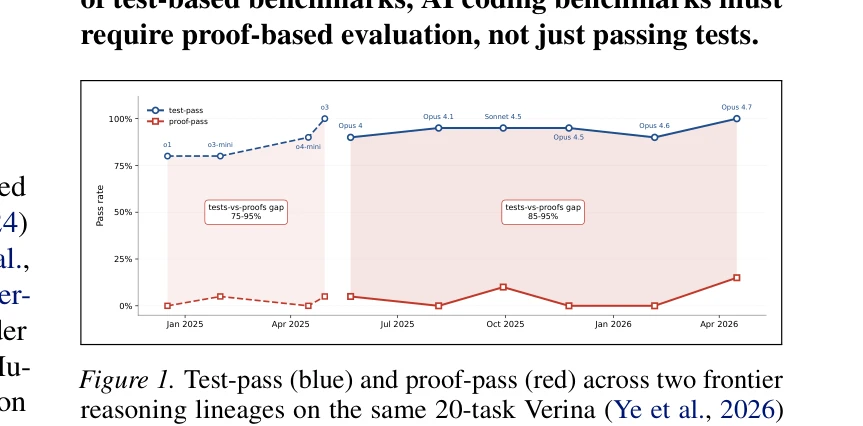
Figure 1. Test-pass (blue) and proof-pass (red) across two frontier
이 논문은 AI 코딩 벤치마크가 test-passing만으로는 코드의 의미론적 정확성을 보장할 수 없으며, 명시적 formal specification에 대한 machine-checkable proof를 요구하는 proof-based evaluation으로 전환해야 한다고 주장하는 position paper이다. 저자들은 구조적 논증, Lean 4 기반 benchmark(Verina, VeriBench)에서의 실증적 test-pass/proof-pass gap, 그리고 SWE-Bench 기반 case-study를 통해 이를 뒷받침한다.
Motivation
Known: SWE-Bench Verified, LiveCodeBench, Terminal-Bench, Aider Polyglot 등 test-based coding benchmark들이 frontier LLM 평가의 주류이며, HumanEval처럼 기존 벤치마크가 saturation되면 HumanEval+, MBPP+, SWE-Bench+, UTBoost 등 더 강한 test suite로 보강하는 cascade 패턴이 반복되어 왔다.
Gap: 유한한 test suite는 입력 공간 전체를 커버할 수 없어 정답 코드와 그럴듯하지만 틀린 코드를 구분하지 못하며, 아무리 정교한 curation을 거쳐도 test passing이 일반적인 semantic correctness 보장으로 전환될 수 없다는 구조적 한계가 존재한다. Verina, VeriBench 같은 formal verification 전용 benchmark는 존재하지만, 이 proof oracle이 SWE-Bench 같은 real-world, multi-file, test-blessed production code에도 확장되는지는 검증되지 않은 open question이었다.
Why: 벤치마크 목표가 모델 학습을 형성한다는 점에서, test-only leaderboard가 지속되면 모델이 proof-generation 능력 없이 code generation만 강화하는 방향으로 훈련될 위험이 있으며, frontier model들이 이미 test-based benchmark에서 saturation에 도달해 순위 변별력을 상실하고 있어 proof-based evaluation으로 전환할 시급성이 높다.
Approach: 저자들은 (1) test 기반 오라클의 구조적·통계적·수학적 한계를 논증하는 이론적 축, (2) 두 개의 Lean 4 benchmark(Verina, VeriBench)에서 frontier model들의 test-pass와 proof-pass 격차를 측정하는 실증적 축, (3) SWE-Bench에서 손수 formalize한 case-study grid라는 세 축으로 position을 뒷받침한다.
Achievement
Figure 1. Test-pass (blue) and proof-pass (red) across two frontier
구조적 불충분성 논증: test 기반 오라클이 finite input-output check에 불과하다는 점, Goodhart's law에 의한 overfitting 위험, 그리고 iid sampling 하에서 P(all k tests pass | bug rate ε) = (1-ε)^k 같은 통계적 논증으로 rare bug를 놓칠 확률이 구조적으로 크다는 것을 보였다.
실증적 test-pass/proof-pass gap 측정: 여러 frontier reasoning model(o1, o3-mini, o4-mini, o3, Opus/Sonnet 시리즈 등) 스냅샷에 걸쳐 Verina(n=189), VeriBench(n=153) 벤치마크에서 test-pass는 100%에 근접하지만 proof-pass는 한 자릿수%에 머무는 큰 격차(75-95%)를 실증적으로 확인했다.
prover-limited zone 개념화: test는 통과하지만 정해진 budget 내에서 correctness proof도 counterexample도 얻지 못하는 영역을 정의하여, 기존 test 기반 평가가 놓치는 부분을 정량화했다.
SWE-Bench case study: merged-and-fixed 버그들에 대해 formal specification이 실제로 buggy code와 upstream fix를 구분해내지만 해당 repository의 test suite는 이를 구분하지 못함을 hand-formalized grid로 보였다.
How
Figure 1. Test-pass (blue) and proof-pass (red) across two frontier
Plank 1(§3): 벤치마크 cascade 사례(HumanEval→HumanEval+, MBPP→MBPP+, SWE-Bench→SWE-Bench+/UTBoost 등) 분석과 Goodhart's law, iid sampling 하의 수학적 bound (1-ε)^k를 통해 test 기반 평가가 근본적으로 불충분함을 논증
Plank 2(§4): Verina와 VeriBench라는 두 Lean 4 benchmark에서 두 frontier model lineage(Claude, OpenAI o-series)의 여러 스냅샷에 대해 동일 prompt로 implementation task(test로 채점)와 proof task(reference implementation에 대한 specification 증명)를 각각 수행시켜 test-pass와 proof-pass율을 비교 측정 (Lean compiler error를 피드백하며 최대 3회 typecheck retry, 10회 proof retry)
Plank 3(§5): SWE-Bench에서 merged-and-fixed 버그를 손수 formal specification으로 만들어, test suite로는 구분 안 되지만 proof oracle로는 buggy code와 fix를 구분할 수 있는 case를 grid 형태로 구축
Originality
Test 기반 코딩 벤치마크의 한계를 empirical(cascade)-statistical(Goodhart, sampling)-mathematical(구조적 불충분성)의 세 층위로 체계화하여 논증한 점이 새로움
기존 formal verification 벤치마크(Verina, VeriBench 등)가 다루던 순수 학술적 세팅을 넘어, SWE-Bench라는 real-world production 코드에 proof oracle을 처음으로 확장 적용한 시도
test-pass와 proof-pass를 같은 task, 같은 모델 스냅샷에 대해 나란히 측정하여 "prover-limited zone"이라는 개념으로 gap을 정량화한 실증적 기여
Limitation & Further Study
Verina, VeriBench는 여전히 single-function, 상대적으로 curated된 task 위주이며 SWE-Bench case study는 hand-formalized된 소규모 grid에 불과해 대규모 real-world 코드베이스로의 일반화는 제한적
proof-based evaluation 자체가 formal specification 작성 비용이 크고 Lean 4 같은 특정 프로버 생태계에 의존하므로, 벤치마크 확장성과 다양한 언어/도메인 적용 가능성에 대한 논의가 부족
proof 생성 능력을 학습 목표로 삼았을 때 발생할 수 있는 새로운 형태의 Goodharting(specification-passing이지만 실제 유용성과 괴리된 proof)에 대한 논의가 미흡
후속 연구로는 자동 specification 생성/검증 파이프라인의 scaling, 다양한 production 코드베이스에 대한 대규모 proof-based benchmark 구축이 필요
총평: Test 기반 코딩 벤치마크의 saturation 문제를 구조적·통계적·실증적으로 설득력 있게 짚어내고 proof-based evaluation이라는 대안을 구체적 실험과 사례로 뒷받침한 시의적절하고 중요한 position paper이나, 실제 대규모 도입을 위한 scalability 문제는 향후 과제로 남아있다.
기반 연구SPECTER2 유사도 0.92로 Formal Proof Verification Automation와 Formal Methods and Computational Reasoning가 맞닿아, 'Towards large language models as copilots for theorem proving in lean'가 이 ICML 2026 논문의 배경·대안·응용 맥락을 보완한다.
기반 연구SPECTER2 유사도 0.92 기준으로 'AI Coding Benchmarks Need Proofs, Not Just Tests'의 AI4S 방법론을 'The Story is Not the Science: Execution-Grounded Evaluation of Mechanistic Interpretability Research'의 과학 생산·평가 맥락과 함께 보면 연구 자동화의 의미를 입체적으로 볼 수 있다.