⚠️ 이 페이지의 요약·평가·해설은 생성형 AI(Claude)가 자동 생성한 2차적 분석물입니다. 논문 원문의 저작권은 원저작자에게 있으며, 정확한 내용은 원문(위 DOI·arXiv 등 출처)을 확인하세요.
라이선스: OpenReview 공개(오픈액세스)
Essence
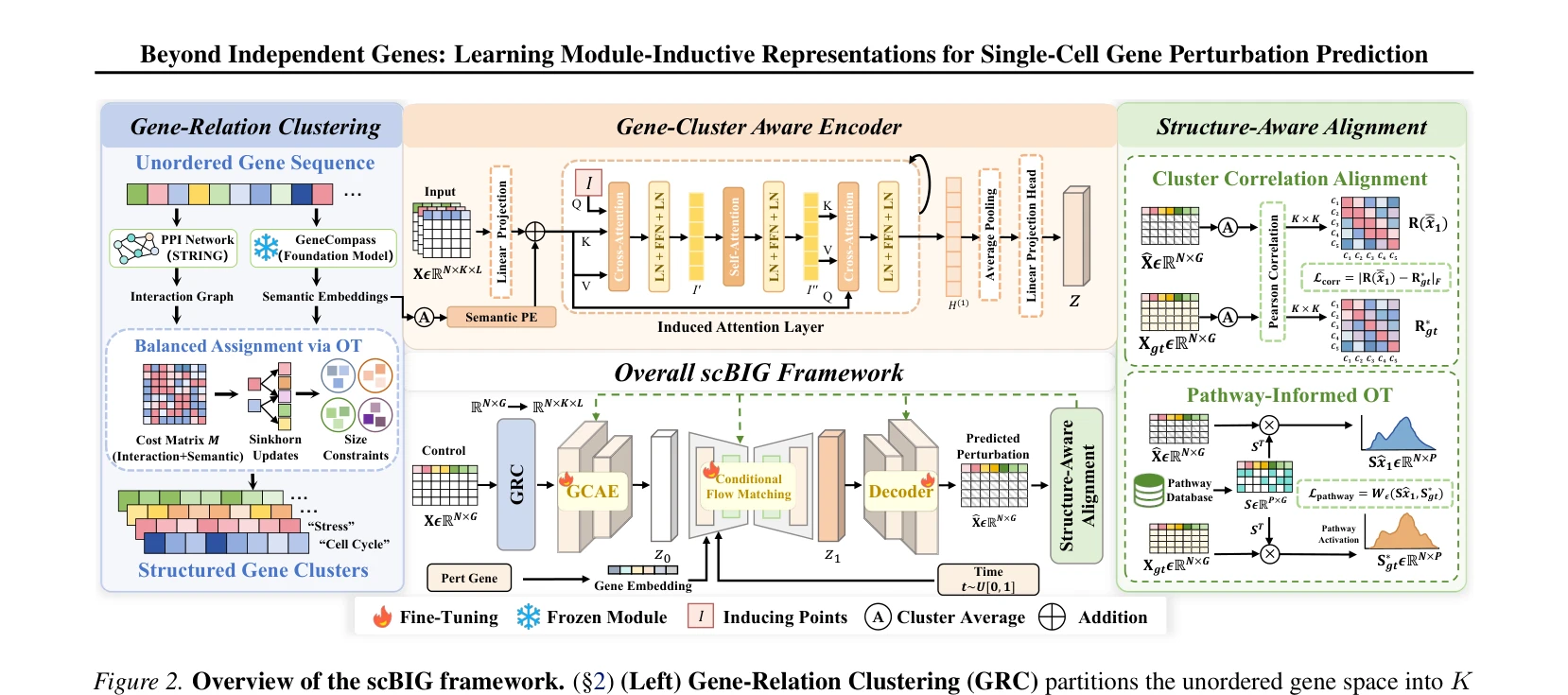
Figure 2. Overview of the scBIG framework. (§2) (Left) Gene-Relation Clustering (GRC) partitions the unordered gene spac
유전자 발현 섭동(perturbation) 반응을 개별 유전자 단위가 아닌 기능적으로 연관된 유전자 프로그램(모듈) 단위의 협응된 변화로 모델링하는 module-inductive 프레임워크 scBIG를 제안한다. Gene-Relation Clustering으로 데이터 기반 유전자 모듈을 유도하고, Gene-Cluster-Aware Encoder와 conditional flow matching으로 구조화된 표현을 생성하며, structure-aware alignment로 모듈 수준 협응을 보존한다.
Motivation
Known: 유전자 섭동에 대한 전사체 반응 예측은 기능유전체학의 핵심 문제이며, GEARS, CellFM, CellFlow 등 gene-wise 모델링이나 정적 생물학적 prior(Gene Ontology, PPI network, gene regulatory graph 등)를 활용하는 그래프 기반 접근이 다수 존재한다.
Gap: 기존 방법들은 gene-wise 모델링 패러다임과 정적 biological prior에 의존하기 때문에, 섭동 반응이 실제로는 기능적으로 연관된 유전자들 간의 협응된 program-level 변화로 나타난다는 사실과 세포 유형·섭동 조건에 따른 동적 프로그램 재구성을 명시적으로 포착하지 못한다.
Why: program-level 협응을 명시적으로 모델링하면 unseen 및 combinatorial perturbation과 같은 어려운 일반화 상황에서 예측 정확도와 생물학적 일관성을 크게 향상시킬 수 있어, in silico 섭동 예측의 실용성과 신뢰성을 높이는 데 중요하다.
Approach: scBIG은 데이터로부터 유전자 프로그램을 유도하는 Gene-Relation Clustering, 프로그램 간 상호작용을 포착하는 Gene-Cluster-Aware Encoder, 그리고 모듈 협응을 보존하는 structure-aware alignment 목적함수를 결합하고, 이를 conditional flow matching으로 생성 모델링하는 3단계 module-inductive 프레임워크이다.
Achievement
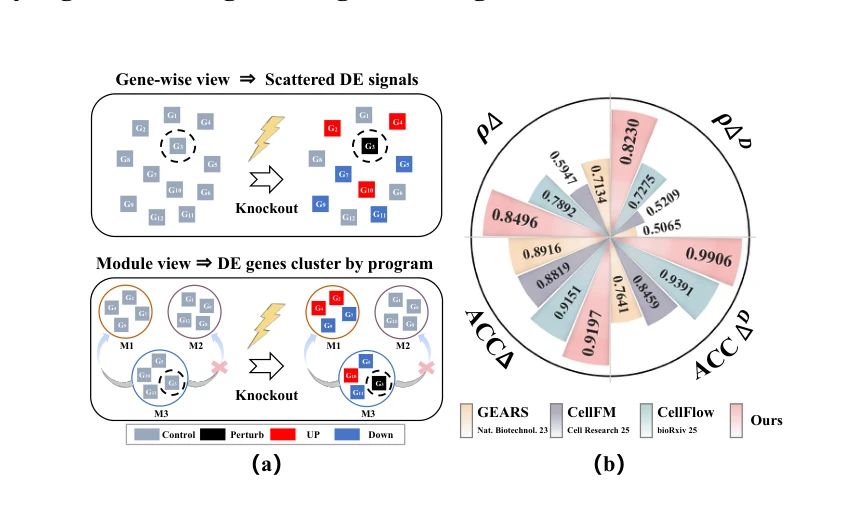
Figure 1. (a): Comparison between gene-wise view and module
최고 성능 달성: 다수의 single-cell perturbation benchmark에서 13개의 강력한 baseline(GEARS, CellFM, CellFlow 등)을 능가하며, 핵심 지표에서 평균 6.7%의 성능 향상을 달성했다.
일반화 성능 강화: 특히 unseen perturbation과 combinatorial perturbation 설정에서 큰 폭의 성능 개선을 보여, 분포 외 일반화 능력을 입증했다.
생물학적 해석가능성 제공: functional enrichment analysis와 differential attention 분석을 통해 GRC로 유도된 유전자 클러스터가 실제 생물학적 pathway와 정합함을 보였다.
How
Figure 2. Overview of the scBIG framework. (§2) (Left) Gene-Relation Clustering (GRC) partitions the unordered gene spac
Gene-Relation Clustering (GRC): pretrained foundation model(GeneCompass)의 semantic embedding과 STRING 기반 high-confidence PPI network를 결합한 cost matrix를 구성하고, Sinkhorn 알고리즘 기반 optimal transport로 균형잡힌 크기 제약 하에 유전자를 K개의 기능적 모듈로 클러스터링한다.
Gene-Cluster-Aware Encoder (GCAE): inducing point 기반 bottleneck attention(cross-attention과 self-attention 결합)을 통해 클러스터 간 고차 상호작용을 계층적으로 인코딩하고, semantic positional encoding을 추가한다.
Conditional Flow Matching: control 상태(z0)에서 perturbed 상태(z1)로의 연속적 전이를 조건부 흐름으로 모델링하여, 유연하고 일반화 가능한 섭동 반응 생성을 수행한다.
Structure-Aware Alignment: Cluster Correlation Alignment(클러스터 간 Pearson 상관관계 정합)와 Pathway-informed Optimal Transport를 통해 모듈 및 pathway 수준에서 생성 결과의 협응 구조를 생성 과정 전반에 걸쳐 유지한다.
Originality
유전자 섭동 예측 문제를 gene-wise가 아닌 module-inductive 관점에서 최초로 명시적으로 정식화하여, 정적 prior가 아닌 데이터 기반 동적 유전자 프로그램 유도라는 새로운 inductive bias를 제안한다.
foundation model semantic embedding과 PPI prior를 optimal transport 기반으로 결합해 균형잡힌 유전자 클러스터링을 수행하는 GRC 설계가 참신하다.
클러스터 수준 상호작용을 modeling하는 bottleneck attention 기반 GCAE와 conditional flow matching, 그리고 pathway-informed optimal transport alignment를 하나의 파이프라인으로 통합한 점이 독창적이다.
Limitation & Further Study
GRC의 클러스터 수(K)나 PPI/semantic embedding 결합 비율 등 하이퍼파라미터에 대한 민감도 분석이 본문 발췌에서 충분히 제시되지 않아, 다른 종·조직·세포유형에 대한 일반화 강건성이 불명확하다.
foundation model(GeneCompass)과 STRING PPI에 의존하므로, 이들 사전학습 자원의 편향이나 커버리지 한계가 유도된 모듈 품질에 영향을 줄 수 있다.
후속 연구로 클러스터링 과정 자체를 생성 모델과 end-to-end로 미분 가능하게 최적화하거나, 더 다양한 조직·질병 맥락에서의 검증이 필요해 보인다.
기반 연구SPECTER2 유사도 0.91로 Multimodal Biomedical Data Fusion와 AI-Driven Drug and Materials Discovery가 맞닿아, 'PerTurboAgent: A Self-Planning Agent for Boosting Sequential Perturb-seq Experiments'가 이 ICML 2026 논문의 배경·대안·응용 맥락을 보완한다.
기반 연구SPECTER2 유사도 0.91로 Multimodal Biomedical Data Fusion와 AI-Driven Drug and Materials Discovery가 맞닿아, 'AROMA: Augmented Reasoning Over a Multimodal Architecture for Virtual Cell Genetic Perturbation Modeling'가 이 ICML 2026 논문의 배경·대안·응용 맥락을 보완한다.
기반 연구SPECTER2 유사도 0.91로 Multimodal Biomedical Data Fusion와 AI-Driven Drug and Materials Discovery가 맞닿아, 'PUFFIN: Protein Unit Discovery with Functional Supervision'가 이 ICML 2026 논문의 배경·대안·응용 맥락을 보완한다.