⚠️ 이 페이지의 요약·평가·해설은 생성형 AI(Claude)가 자동 생성한 2차적 분석물입니다. 논문 원문의 저작권은 원저작자에게 있으며, 정확한 내용은 원문(위 DOI·arXiv 등 출처)을 확인하세요.
라이선스: OpenReview 공개(오픈액세스)
Essence
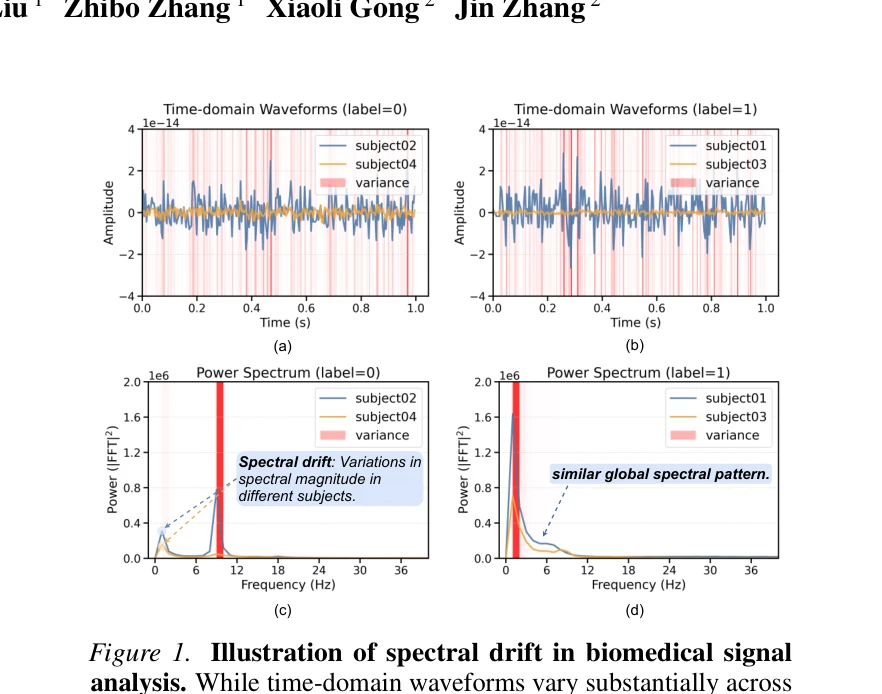
Figure 1. Illustration of spectral drift in biomedical signal
BTS(생체 시계열) 신호에서 subject-specific variability를 spectral drift(주파수 대역별 magnitude/phase 편이)로 명시적으로 정의하고, 이를 정렬(align)하는 Frequency-Band Alignment Module(FBAM)과 Sample-Conditional Layer Normalization(SCLN)을 결합한 BioFormer를 제안하여 cross-subject generalization 성능을 개선한다.
Motivation
Known: 기존 연구들은 Transformer 기반 backbone의 표현력 강화나 subject adversarial learning(GRL 기반)을 통해 subject-specific variability를 암묵적으로 억제해왔다.
Gap: 기존 방법들은 subject-specific variability를 implicit nuisance로 취급할 뿐, 무엇을 억제해야 하는지에 대한 명시적 모델링이 부재하여 invariance objective를 제어하기 어렵고 label-relevant structure까지 함께 제거될 위험이 있다.
Why: Cross-subject generalization은 EEG/ECG 등 임상 응용에서 학습 대상 subject와 평가 대상 subject가 다를 때 실제 배포 성능을 좌우하는 핵심 문제이며, subject variability의 본질을 규명하는 것은 모델 설계와 해석가능성 모두에 중요하다.
Approach: 같은 label을 가진 BTS 신호들은 유사한 global spectral pattern을 공유하지만 특정 주파수 대역에서 subject-dependent한 magnitude/phase drift를 보인다는 관찰(spectral drift)에 기반하여, 이를 Fourier domain에서 적응적으로 정렬하는 FBAM과 sample 통계 기반 정규화 SCLN을 Transformer backbone에 결합한다.
Achievement
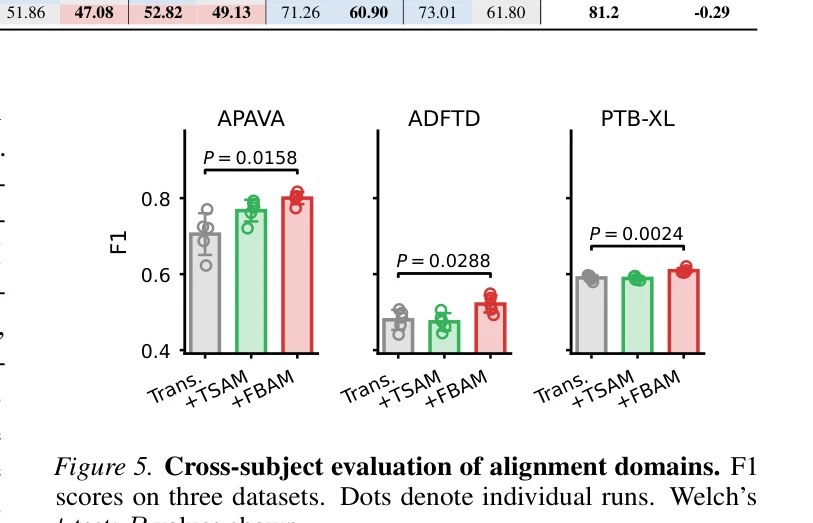
Figure 5. Cross-subject evaluation of alignment domains. F1
spectral drift 개념 제안: subject-specific variability를 band-wise magnitude scaling과 phase rotation으로 이루어진 label-conditioned spectral transformation으로 정량적으로 특성화하고 이를 정렬 문제로 재정식화했다.
BioFormer 아키텍처 설계: FBAM(cross-attention 기반 band-wise modulation)과 SCLN(subject identity 없이 sample 통계로부터 정규화 파라미터 추론)을 결합한 hybrid spectral-temporal Transformer를 구축했다.
광범위한 실증 검증: 6개 BTS benchmark에서 12개 baseline 및 6개 domain generalization 방법 대비 rank-1 성능을 달성하고 F1-score 기준 최대 6%의 절대적 개선을 보였다.
How
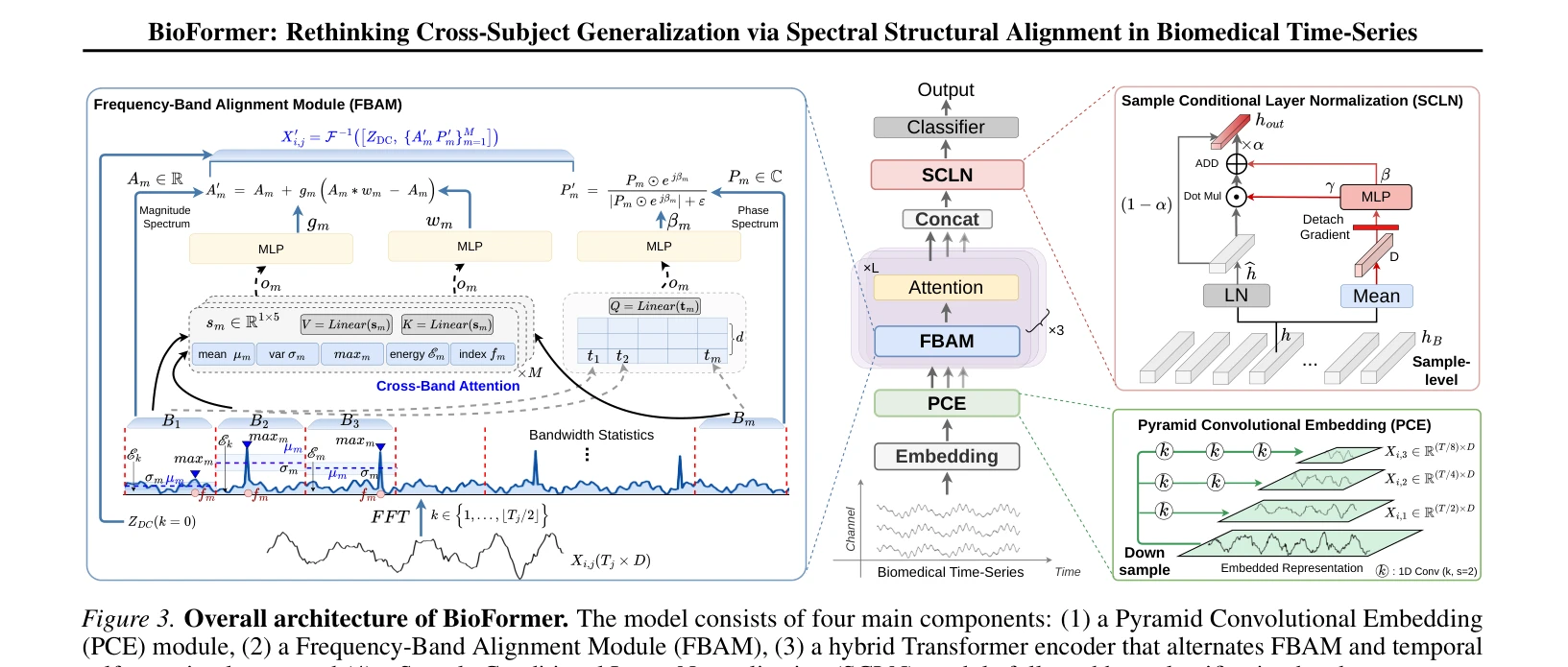
Figure 3. Overall architecture of BioFormer. The model consists of four main components: (1) a Pyramid Convolutional Emb
Fourier domain에서 신호를 band-wise spectral descriptor로 압축 추출
학습 가능한 band token과 spectral descriptor 간 cross-attention을 통해 task-aware한 amplitude/phase modulation 계수를 생성 (FBAM)
Sample-Conditional Layer Normalization(SCLN)을 통해 subject identity 대신 개별 sample의 intrinsic signal statistics로부터 normalization parameter를 추론하여 잔차 분포 이동을 보정
FBAM과 SCLN을 Transformer 기반 backbone에 통합해 BioFormer 구성
6개 BTS 데이터셋(APAVA 등 포함)에서 cross-subject protocol 하에 12개 baseline 및 6개 DG 방법과 비교 실험 수행
Originality
subject variability를 시간 영역이나 latent feature 정렬이 아닌 frequency domain의 구조적 drift(magnitude/phase)로 명시적으로 정의한 새로운 관점 제시
기존 adversarial invariance나 generic feature matching과 달리, band-wise spectral descriptor와 cross-attention을 이용해 task-aware하게 modulation을 학습하는 FBAM 설계
subject label supervision 없이 sample 고유 통계만으로 정규화 파라미터를 추론하는 SCLN을 통해 subject-agnostic한 안정화 메커니즘 제안
Limitation & Further Study
spectral drift가 magnitude scaling과 phase rotation으로 근사 가능하다는 가정이 모든 BTS 신호 유형(비정상적, 비선형적 신호 등)에 일반화되는지에 대한 이론적 보장이 부족할 수 있음
FBAM의 band 분할 방식과 band token 개수 등 hyperparameter에 대한 민감도 분석이 충분히 다뤄지지 않았을 가능성이 있음 (본문 발췌만으로 확인 어려움)
6개 데이터셋에 대한 실험이지만 대부분 EEG/ECG 계열에 집중되어 있어, 더 다양한 생체신호(EMG, PPG 등)나 실제 임상 배포 환경에서의 일반화 검증이 후속 연구로 필요
subject 수가 매우 적거나 label 분포가 극단적으로 불균형한 상황에서의 강건성 검증이 추가로 요구됨
기반 연구SPECTER2 유사도 0.87로 Multimodal Biomedical Data Fusion와 LLM Benchmarking and Agent Evaluation가 맞닿아, 'Mind the gap: Examining the self-improvement capabilities of large language models'가 이 ICML 2026 논문의 배경·대안·응용 맥락을 보완한다.
기반 연구SPECTER2 유사도 0.89로 Multimodal Biomedical Data Fusion와 AI-Driven Drug and Materials Discovery가 맞닿아, 'WaveFormer: Wavelet Embedding Transformer for Biomedical Signals'가 이 ICML 2026 논문의 배경·대안·응용 맥락을 보완한다.
기반 연구SPECTER2 유사도 0.88로 Multimodal Biomedical Data Fusion와 LLM Benchmarking and Agent Evaluation가 맞닿아, 'Representative, Informative, and De-Amplifying: Requirements for Robust Bayesian Active Learning under Model Misspecification'가 이 ICML 2026 논문의 배경·대안·응용 맥락을 보완한다.
기반 연구SPECTER2 유사도 0.87로 Multimodal Biomedical Data Fusion와 Applied Bibliometrics Across Domains가 맞닿아, 'Mapping fMRI research in disorders of consciousness: a bibliometric study'가 이 ICML 2026 논문의 배경·대안·응용 맥락을 보완한다.