⚠️ 이 페이지의 요약·평가·해설은 생성형 AI(Claude)가 자동 생성한 2차적 분석물입니다. 논문 원문의 저작권은 원저작자에게 있으며, 정확한 내용은 원문(위 DOI·arXiv 등 출처)을 확인하세요.
라이선스: OpenReview 공개(오픈액세스)
Essence
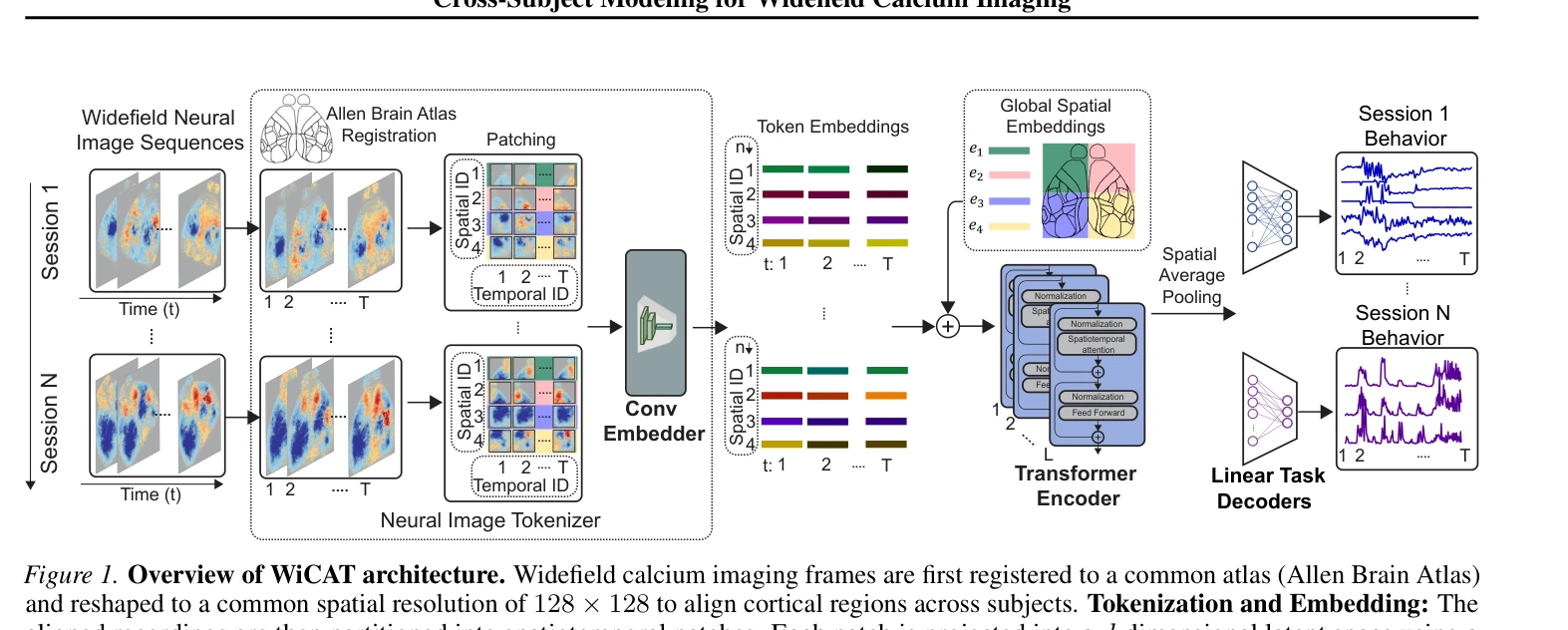
Figure 1. Overview of WiCAT architecture. Widefield calcium imaging frames are first registered to a common atlas (Allen
WiCAT는 widefield calcium imaging 데이터를 위한 최초의 multi-subject 사전학습 모델로, atlas-aligned spatiotemporal tokenization과 masked autoencoding(MAE) 기반 self-supervised pretraining을 통해 subject-invariant한 공유 표현을 학습하고, 미지의 subject에 대한 zero-shot behavior decoding과 zero-shot 뇌 영역 재구성을 가능케 한다.
Motivation
Known: spiking activity, LFP, intracranial EEG 등 다른 neural modality에서는 multi-subject pretrained model이 session-specific 파라미터(learnable session token, subject-specific read-in/out layer)를 활용해 cross-subject 일반화를 시도해왔으며, widefield imaging에서는 PCA나 LocaNMF 같은 atlas-guided decomposition을 통한 dimensionality reduction 후 단일 세션 단위의 dynamical model이나 VAE 기반 접근이 주로 사용되어 왔다.
Gap: widefield calcium imaging은 고차원성, 복잡한 spatiotemporal 구조, task-irrelevant activity로 인해 지금까지 single-session 모델링에 국한되어 왔고 multi-subject 모델이 시도된 바 없으며, 다른 modality에서도 session-specific 파라미터에 의존하기 때문에 subject-invariant한 진정한 zero-shot behavior decoding은 여전히 미해결 과제로 남아 있다.
Why: widefield imaging은 대규모 multi-animal, multi-session, multi-lab 데이터셋이 빠르게 축적되고 있어 이를 재사용 가능한 foundation model로 통합할 수 있다면 뇌 전역 동역학과 행동의 관계 연구를 크게 가속화할 수 있으며, session-specific 구성요소 없이 zero-shot 일반화를 달성하는 것은 neural foundation model 전반의 핵심 난제를 해결하는 방향이다.
Approach: Allen Brain Atlas에 registration된 widefield 프레임을 공통 해상도로 정렬한 뒤 atlas-grounded spatiotemporal patch tokenization과 global spatial embedding을 도입하고, session-specific 구성요소 없이 masked autoencoding 기반 self-supervised pretraining으로 subject 간 공유 표현을 학습하는 transformer 모델(WiCAT)을 제안한다.
Achievement
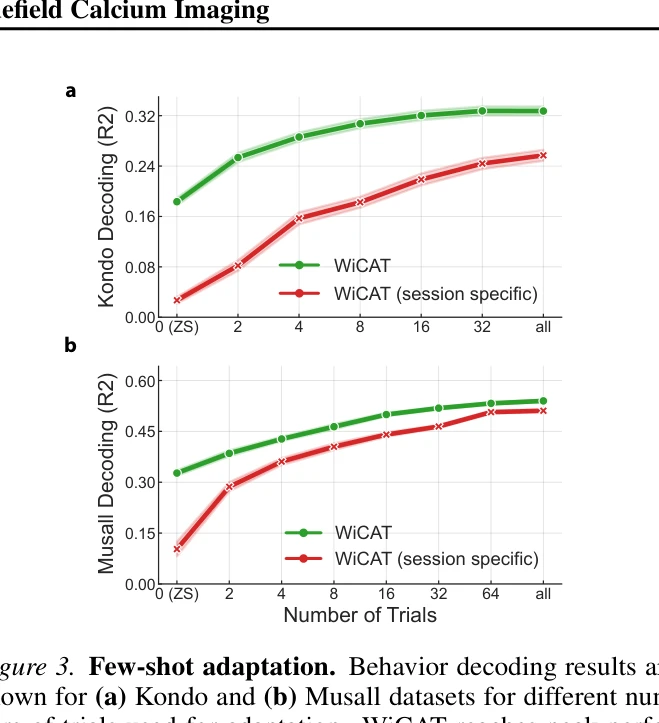
Figure 3. Few-shot adaptation. Behavior decoding results are
Multi-subject widefield 모델 최초 구현: 38명의 subject, 378개 session, 두 개의 상이한 behavioral task에 걸친 대규모 데이터로 학습된 최초의 multi-subject widefield calcium imaging 모델을 제시했다.
Session-free cross-subject 표현 학습: atlas 기반 tokenization과 global spatial embedding을 통해 subject/session identifier 없이도 subject-invariant한 해부학적 조직을 포착하는 embedding을 학습했다.
경량 downstream decoding 우수 성능: 사전학습된 표현이 frozen 상태에서 lightweight decoder만으로 subject, task, dataset 전이 시 baseline 모델을 능가했다.
Zero-shot behavior decoding 및 few-shot 적응: 미지의 subject에 대해 zero-shot continuous behavior decoding이 가능함을 보였고, 제한된 라벨 데이터로도 efficient few-shot 적응이 가능함을 입증했다.
Zero-shot 뇌 영역 재구성: 학습된 표현이 subject 간 일반화되는 cross-region dependency를 포착하여, 미지의 subject에서 left-out brain region의 zero-shot 재구성을 가능케 했다.
How
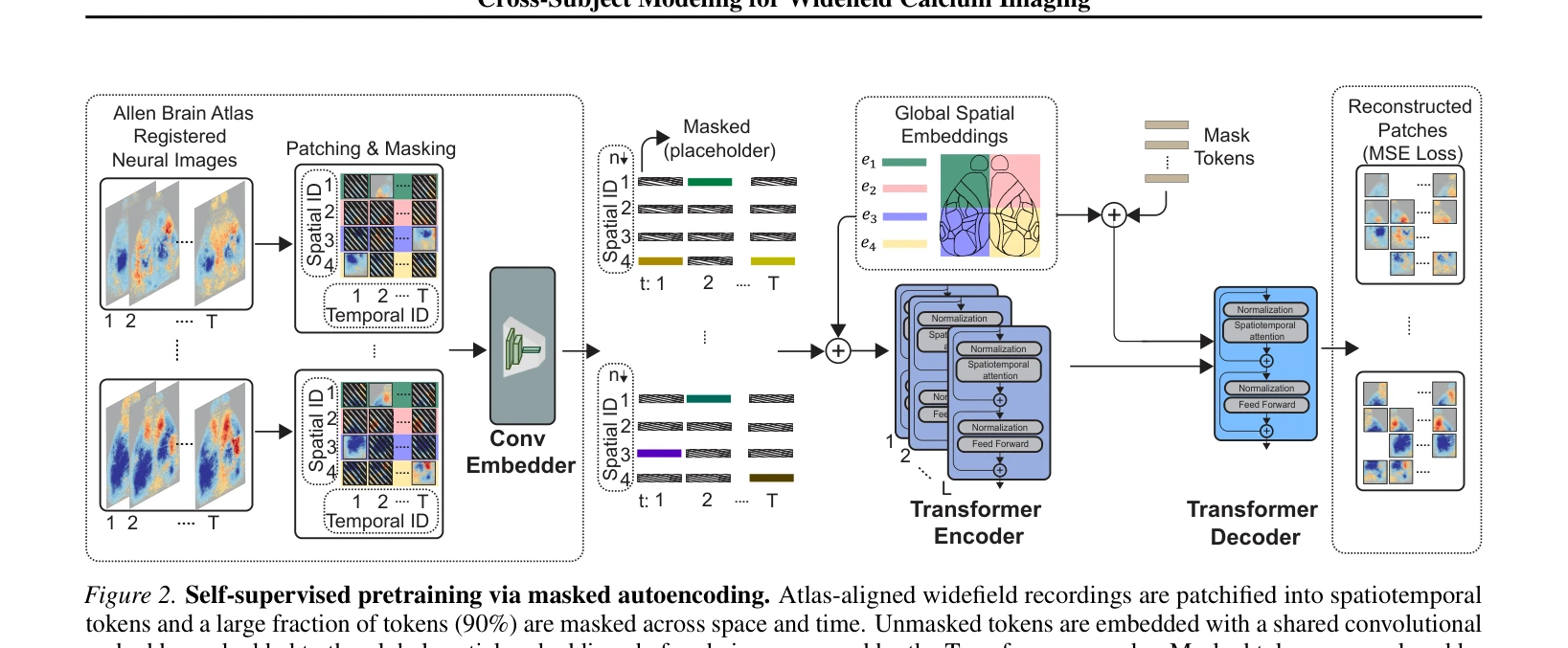
Figure 2. Self-supervised pretraining via masked autoencoding. Atlas-aligned widefield recordings are patchified into sp
Widefield calcium imaging frame을 Allen Brain Atlas에 registration하여 128×128 공통 해상도로 정렬함으로써 subject 간 cortical region 정렬을 수행
정렬된 recording을 spatiotemporal patch로 분할하고 각 patch를 conv embedder를 통해 d-차원 token embedding으로 투영
spatial ID, temporal ID를 부여하고 spatial average pooling을 통해 global spatial embedding을 생성하여 session-specific parameter 없이 anatomical 정보를 인코딩
spatiotemporal attention을 포함한 transformer encoder(정규화, feed-forward, residual 연결 포함)로 토큰 시퀀스를 처리
총평: widefield calcium imaging 분야에서 multi-subject foundation model을 최초로 구현하고 session-free zero-shot behavior decoding을 시연했다는 점에서 방법론적, 실용적 기여가 크며, neural foundation model 연구 전반에도 시사하는 바가 큰 견고한 연구이다.
기반 연구SPECTER2 유사도 0.92로 Multimodal Biomedical Data Fusion와 AI-Driven Drug and Materials Discovery가 맞닿아, 'Few-Shot Continual Learning for 3D Brain MRI with Frozen Foundation Models'가 이 ICML 2026 논문의 배경·대안·응용 맥락을 보완한다.
기반 연구SPECTER2 유사도 0.89로 Multimodal Biomedical Data Fusion와 Molecular Simulation and Generative Modeling가 맞닿아, 'Navigating heterogeneous protein landscapes through geometry-aware smoothing'가 이 ICML 2026 논문의 배경·대안·응용 맥락을 보완한다.
기반 연구SPECTER2 유사도 0.89로 Multimodal Biomedical Data Fusion와 AI-Driven Drug and Materials Discovery가 맞닿아, 'WaveFormer: Wavelet Embedding Transformer for Biomedical Signals'가 이 ICML 2026 논문의 배경·대안·응용 맥락을 보완한다.