Essence
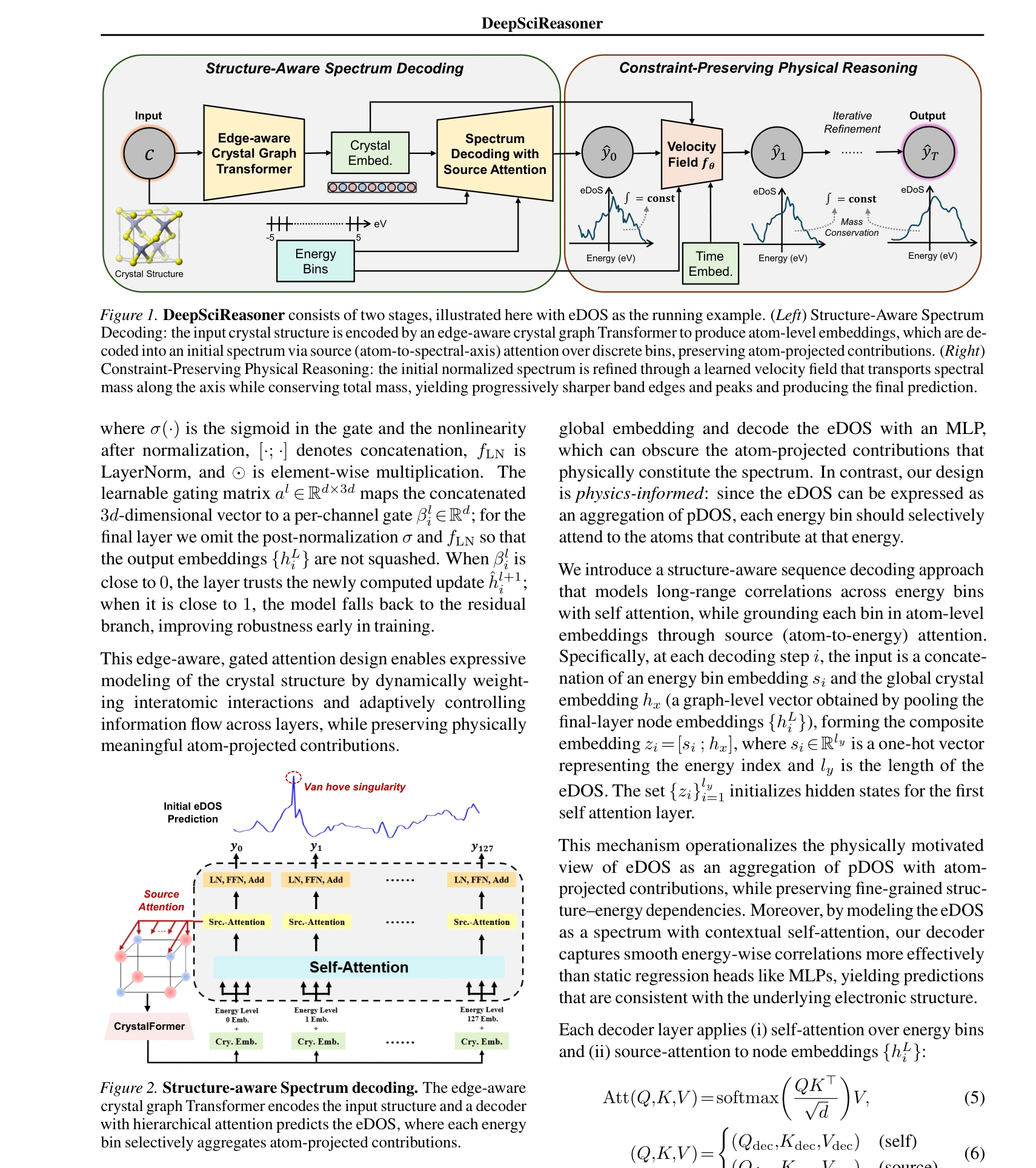
Figure 1. DeepSciReasoner consists of two stages, illustrated here with eDOS as the running example. (Left) Structure-Aw
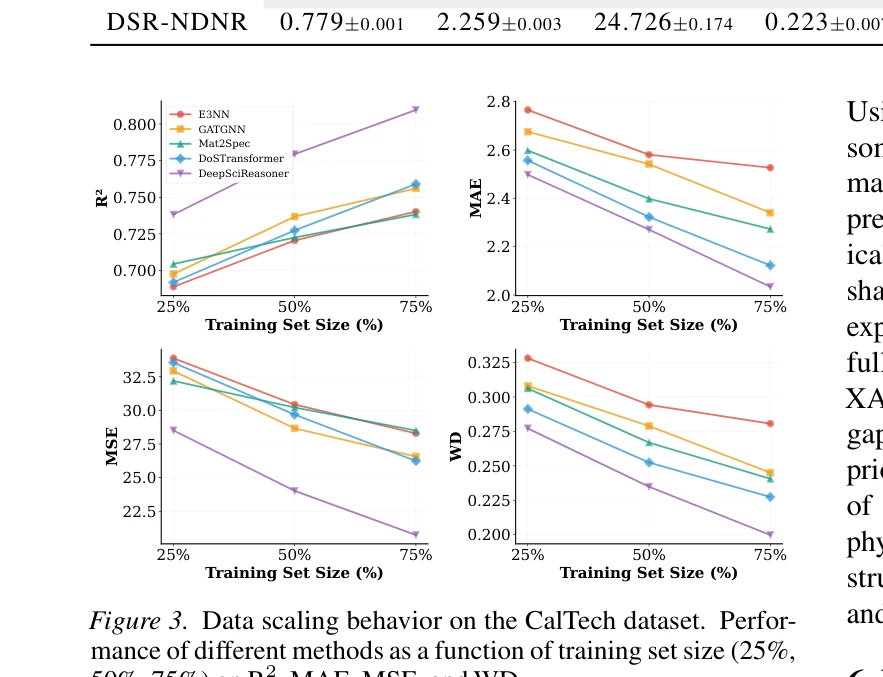
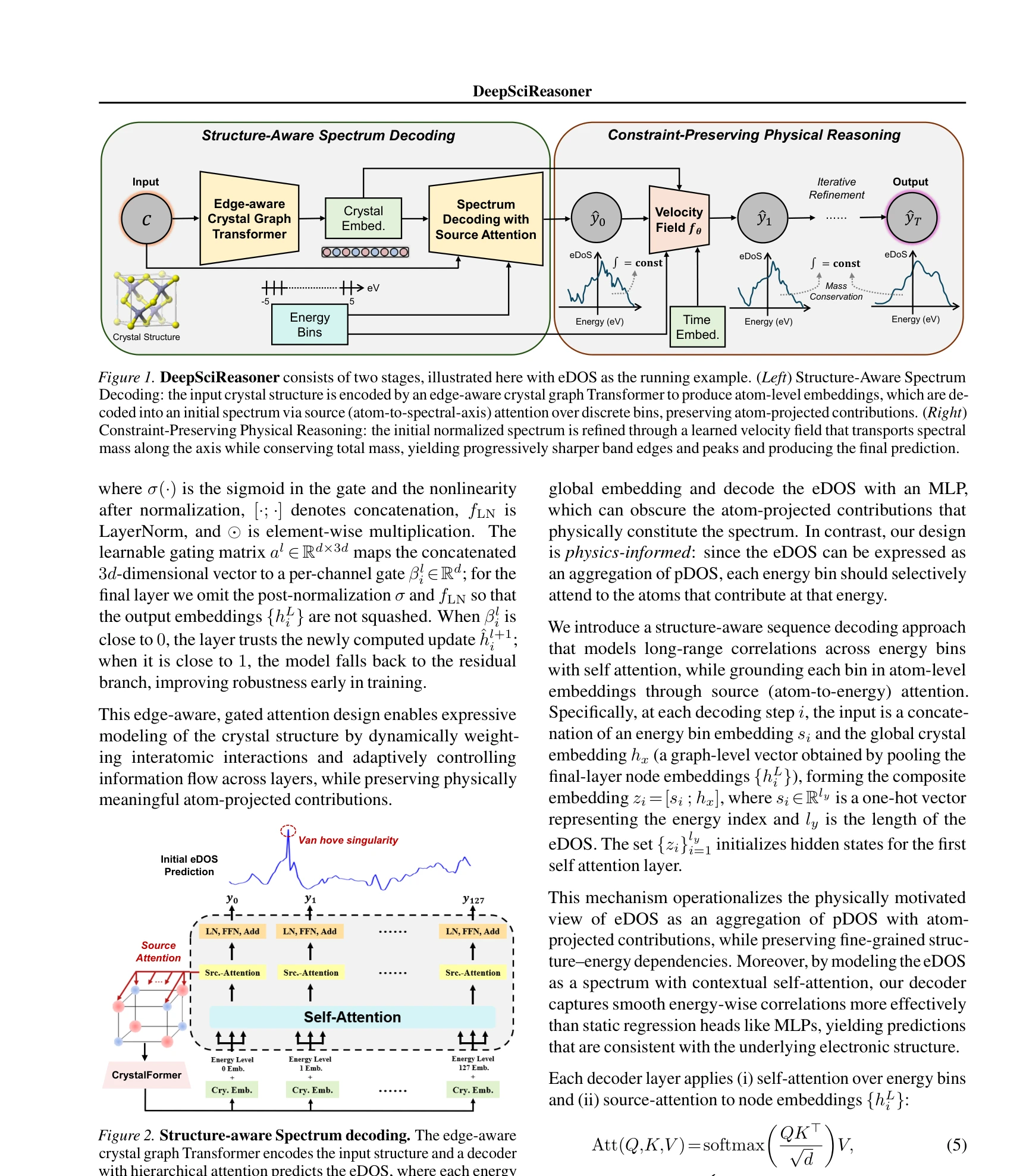
결정 구조로부터 eDOS, phDOS, XANES, Raman과 같은 구조화된 과학 스펙트럼을 예측할 때, 물리적 보존 법칙과 스펙트럼 기하학(band-edge, peak sharpness)을 명시적으로 준수하도록 하는 두 단계 프레임워크 DeepSciReasoner를 제안한다.
Evaluation
Novelty: 4/5 Technical Soundness: 4/5 Significance: 4/5 Clarity: 4/5 Overall: 4/5
총평: 물리적 보존 법칙을 스펙트럼 예측의 하드 제약으로 명시적으로 통합한 참신하고 실용적인 프레임워크로, 다양한 스펙트럼 타입에 걸친 일반화 가능성을 잘 입증했으나 수치적 안정성과 확장성에 대한 추가 검증이 필요하다.
같이 보면 좋은 논문
기반 연구SPECTER2 유사도 0.92로 Computational Molecular Design와 Molecular Simulation and Generative Modeling가 맞닿아, 'Composition-Weighted Symbolic Regression for General-Purpose Property Prediction'가 이 ICML 2026 논문의 배경·대안·응용 맥락을 보완한다.
기반 연구SPECTER2 유사도 0.92 기준으로 'Deep Scientific Reasoning under Physical Constraints: Structure-Aware Spectrum Prediction'의 AI4S 방법론을 'Foundation models for materials discovery – current state and future directions'의 과학 생산·평가 맥락과 함께 보면 연구 자동화의 의미를 입체적으로 볼 수 있다.
기반 연구SPECTER2 유사도 0.92 기준으로 'Deep Scientific Reasoning under Physical Constraints: Structure-Aware Spectrum Prediction'의 AI4S 방법론을 'A Perspective on Foundation Models in Chemistry'의 과학 생산·평가 맥락과 함께 보면 연구 자동화의 의미를 입체적으로 볼 수 있다.
기반 연구분광 데이터 검증을 실제 분자 구조 규명 문제에 적용한 연구
다른 접근구조화된 과학 스펙트럼 예측을 위한 다른 물리 제약 조건 방식을 제안함
기반 연구SPECTER2 유사도 0.92 기준으로 'Deep Scientific Reasoning under Physical Constraints: Structure-Aware Spectrum Prediction'의 AI4S 방법론을 'Generative Inversion of Spectroscopic Data for Amorphous Structure Elucidation'의 과학 생산·평가 맥락과 함께 보면 연구 자동화의 의미를 입체적으로 볼 수 있다.
기반 연구SPECTER2 유사도 0.93로 Computational Molecular Design와 Molecular Simulation and Generative Modeling가 맞닿아, 'MBD-ML: Many-body dispersion from machine learning for molecules and materials'가 이 ICML 2026 논문의 배경·대안·응용 맥락을 보완한다.
기반 연구SPECTER2 유사도 0.92로 Computational Molecular Design와 Molecular Simulation and Generative Modeling가 맞닿아, 'Parameter-Efficient Fine-Tuning of Machine-Learning Interatomic Potentials for Phonon and Thermal Properties'가 이 ICML 2026 논문의 배경·대안·응용 맥락을 보완한다.
후속 연구물리적 보존 법칙 반영 개념을 다른 스펙트럼 예측 문제로 확장한다.
후속 연구quantum sensing 기반 검출 기법의 이론적 토대를 제공하는 선행 연구로 판단된다.
응용 사례유사한 스펙트럼 예측 기법을 관련 재료 문제에 적용함