⚠️ 이 페이지의 요약·평가·해설은 생성형 AI(Claude)가 자동 생성한 2차적 분석물입니다. 논문 원문의 저작권은 원저작자에게 있으며, 정확한 내용은 원문(위 DOI·arXiv 등 출처)을 확인하세요.
라이선스: OpenReview 공개(오픈액세스)
Essence
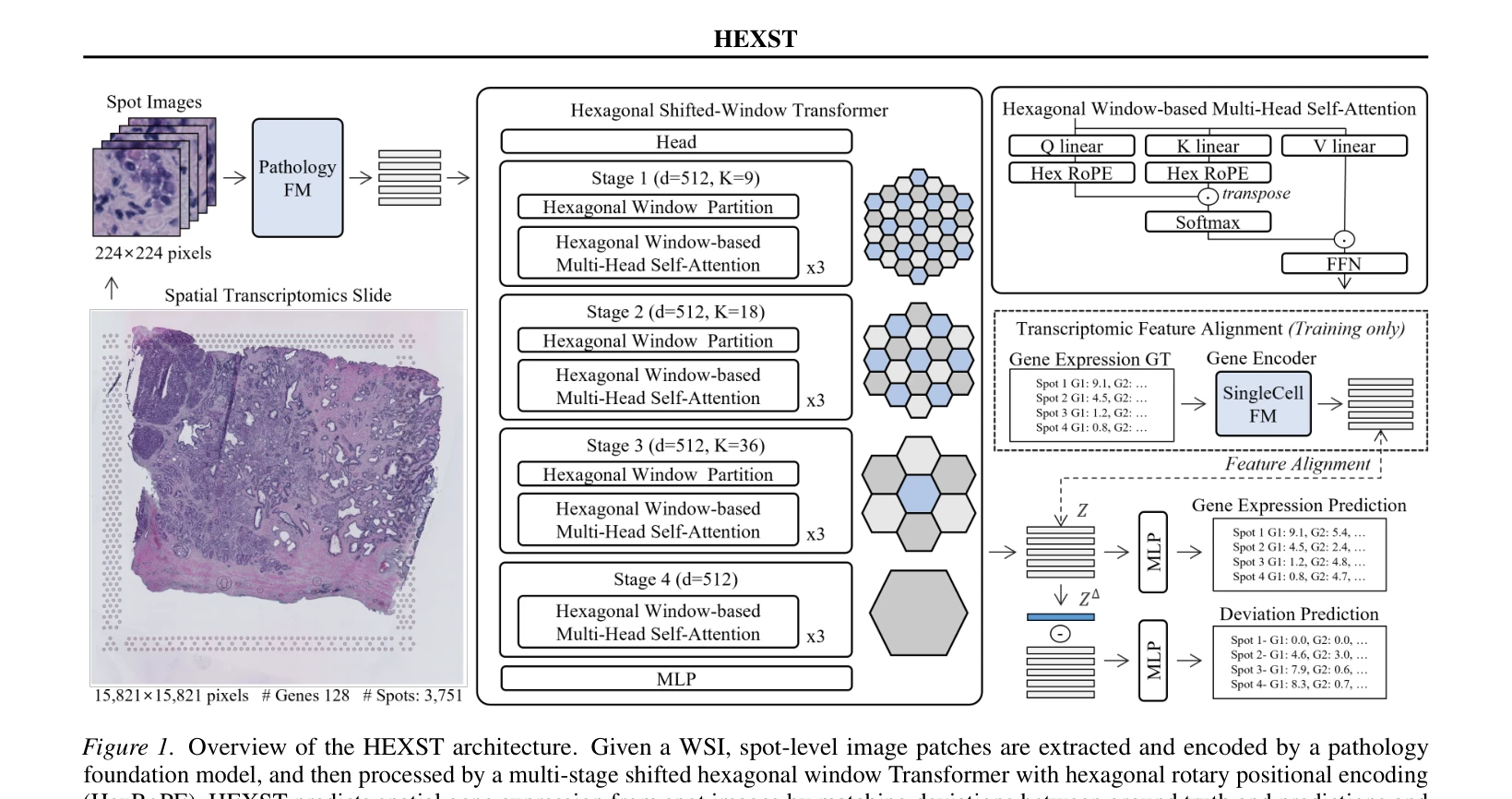
Figure 1. Overview of the HEXST architecture. Given a WSI, spot-level image patches are extracted and encoded by a patho
HEXST는 hexagonal spot-array ST 플랫폼의 비-Cartesian 기하 구조에 맞춘 shifted-window Transformer로, hexagonal RoPE와 contrast-sensitive deviation-matching objective, 그리고 pretrained single-cell foundation model의 transcriptomic prior를 결합하여 histology 이미지로부터 spatial gene expression을 예측한다.
Motivation
Known: 기존 연구들은 CNN, graph 기반 모델, Transformer 기반 attention 메커니즘을 활용해 H&E histology 이미지로부터 spatial gene expression을 예측해왔으며, ST-Net, Hist2ST, HisToGene, TCGN, EGNv1/v2, PEKA, NH2ST 등이 대표적이다.
Gap: 기존 방법들은 Visium 등 널리 쓰이는 spot-array 플랫폼의 hexagonal lattice 샘플링을 무시한 채 Cartesian 혹은 geometry-agnostic locality를 가정하며, point-wise regression objective는 neighborhood aggregation과 결합되어 예측을 local mean으로 수렴시켜 gene-specific spatial heterogeneity를 훼손하는 over-smoothing 문제를 야기한다.
Why: tumor–stroma boundary, immune niche 등 임상적으로 중요한 생물학적 신호는 gene expression의 절대값뿐 아니라 급격한 공간적 변화(spatial contrast)에 담겨 있으므로, 이를 보존하며 정확히 예측하는 것이 spatially informed transcriptomic 분석과 biomarker 발굴에 필수적이다.
Approach: 저자들은 hexagonal spot 좌표에 직접 작동하는 shifted-window attention과 hexagonal rotary positional encoding을 결합한 geometry-aligned Transformer를 제안하고, 여기에 deviation-matching objective와 single-cell foundation model 기반 transcriptomic prior alignment를 학습 목표로 추가하였다.
Achievement
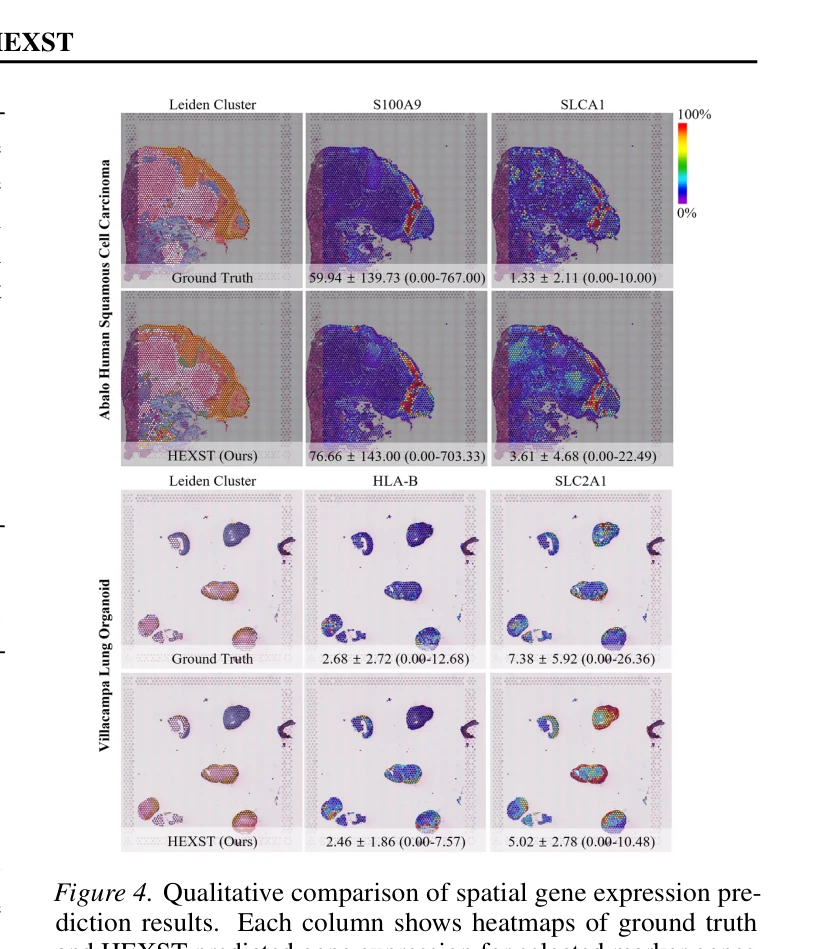
Figure 4. Qualitative comparison of spatial gene expression pre-
Geometry-aligned Transformer 제안: hexagonal 좌표 기반의 shifted-window attention(HexMSA)을 설계하여 hexagonal lattice의 non-Cartesian 구조에 맞는 local-to-global contextual modeling을 가능케 함.
HexRoPE 도입: axial/cube 좌표계에서 정의된 rotary positional encoding을 제안하여 principal lattice direction을 따라 query/key feature를 회전시킴으로써 hexagonal 상에서의 상대적 위치 관계를 효과적으로 인코딩함.
Spatial contrast 보존을 위한 deviation-matching objective: point-wise regression을 보완하는 contrast-sensitive 목표를 통해 예측이 local mean으로 collapse되는 over-smoothing 현상을 완화함.
Transcriptomic prior 활용: pretrained single-cell foundation model의 transcriptomic embedding을 학습 중 정렬(align)하여 생물학적으로 의미 있는 표현을 주입함.
7개 spatial transcriptomics 데이터셋에서 SOTA 성능 달성: 기존 최신 모델들을 일관되게 능가하며 gene-wise contrast와 spatial heterogeneity를 보존하는 정확하고 robust한 예측을 제공함.
How
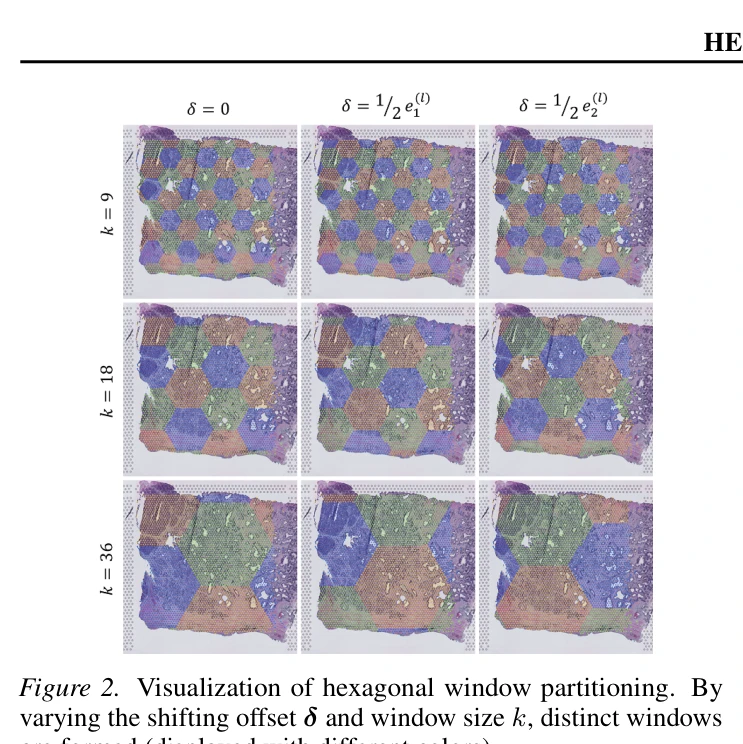
Figure 2. Visualization of hexagonal window partitioning. By
WSI로부터 spot-level image patch를 추출하고, pretrained visual pathology foundation model E를 통해 각 patch를 Din-차원 visual token vi로 인코딩함.
다단계(multi-stage) hexagonal shifted-window Transformer 구조를 사용하여 hexagonal spot 좌표 상에서 window partitioning과 shifting을 연속 블록에 걸쳐 적용, local self-attention과 cross-window information exchange를 통해 receptive field를 local에서 tissue-wide로 점진적으로 확장함(HexMSA).
HexRoPE를 통해 axial/cube hexagonal 좌표에서 정의된 relative positional relationship을 attention에 주입함.
학습 시 point-wise regression loss에 더해, 예측과 ground truth 간 spot 간 deviation을 매칭하는 deviation-matching objective를 추가하여 spatial contrast를 보존함.
추가로 pretrained single-cell foundation model(예: Geneformer, xTrimoscFoundation 계열)로부터 얻은 transcriptomic embedding과 중간 표현을 정렬하는 transcriptomic feature alignment를 학습 목표에 포함함.
7개 ST 데이터셋에 대해 정량적 성능 비교와 정성적 spatial gene expression prediction 시각화, transcriptomics-guided survival 관련 분석을 수행함.
Originality
Cartesian 가정을 벗어나 hexagonal spot-array 기하 구조 자체를 아키텍처적 inductive bias로 명시적으로 인코딩한 최초의 시도로 보이며, shifted-window Transformer를 hexagonal lattice에 맞춰 재설계함.
기반 연구SPECTER2 유사도 0.91로 Scientific Machine Learning for Dynamics와 AI-Driven Drug and Materials Discovery가 맞닿아, 'Effective gene expression prediction from sequence by integrating long-range interactions'가 이 ICML 2026 논문의 배경·대안·응용 맥락을 보완한다.
기반 연구SPECTER2 유사도 0.92로 Scientific Machine Learning for Dynamics와 AI-Driven Drug and Materials Discovery가 맞닿아, 'Pixel2Gene enables histology-guided reconstruction and prediction of spatial gene expression'가 이 ICML 2026 논문의 배경·대안·응용 맥락을 보완한다.
기반 연구SPECTER2 유사도 0.90 기준으로 'HEXST: Hexagonal Shifted-Window Transformer for Spatial Transcriptomics Gene Expression Prediction'의 AI4S 방법론을 'stVCR: spatiotemporal dynamics of single cells from time-series spatial transcriptomics'의 과학 생산·평가 맥락과 함께 보면 연구 자동화의 의미를 입체적으로 볼 수 있다.
기반 연구SPECTER2 유사도 0.90로 Scientific Machine Learning for Dynamics와 AI-Driven Drug and Materials Discovery가 맞닿아, 'CellLoop: Identifying single-cell 3D genome chromatin loops'가 이 ICML 2026 논문의 배경·대안·응용 맥락을 보완한다.