Learning Extremely Sparse Signals in High-Dimensional Cell-Free DNA Data Using Modern Hopfield Attention for Colorectal Cancer Detection
저자: Michael Widrich, Anooj Patel, Elisabeth Rumetshofer, Peter Ulz, Kaitlyn Coil, Thomas Royce, Cheng-Ho Jimmy Lin, Richard Bourgon, Anindita Dutta | 날짜: 2026 | URL: https://openreview.net/forum?id=tCYH1EdShW📄 PDF
⚠️ 이 페이지의 요약·평가·해설은 생성형 AI(Claude)가 자동 생성한 2차적 분석물입니다. 논문 원문의 저작권은 원저작자에게 있으며, 정확한 내용은 원문(위 DOI·arXiv 등 출처)을 확인하세요.
라이선스: OpenReview 공개(오픈액세스)
Essence
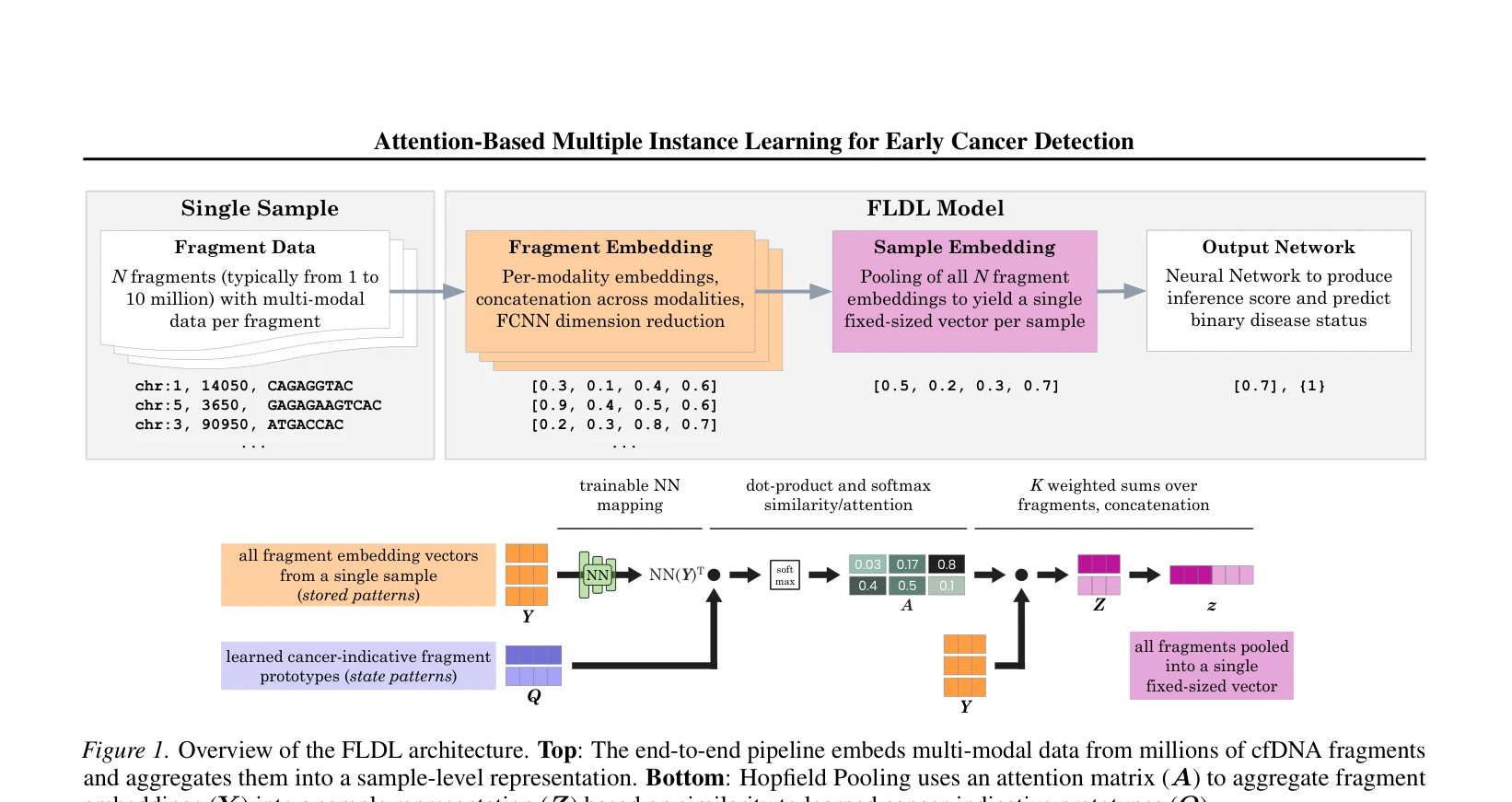
Figure 1. Overview of the FLDL architecture. Top: The end-to-end pipeline embeds multi-modal data from millions of cfDNA
cfDNA 기반 대장암(CRC) 조기 진단을 위해 Modern Hopfield Network의 dense associative memory 특성을 활용한 end-to-end multiple instance learning (MIL) 프레임워크인 Fragment-Level Deep Learning (FLDL)을 제안하고, 수백만 개 fragment 중 극도로 희소한 종양 신호(witness rate < 0.0001%)를 탐지하는 문제를 해결한다.
Motivation
Known: 전통적인 ctDNA 검출 방법은 생물학적 사전지식에 기반해 per-CpG(β) 또는 per-fragment(α) 수준에서 methylation을 수동으로 집계하는 방식을 사용해왔고, 최근 fragment-level representation learning을 활용한 multi-step deep learning 방법들도 등장했으나 대부분 표현 학습과 downstream aggregation을 분리하여 학습한다.
Gap: 기존 방법들은 fragment 표현 학습과 patient-level classification을 end-to-end로 결합하지 못했으며, 수백만 개의 instance와 극도로 낮은 witness rate를 가진 초대규모 MIL 문제에서 quadratic cost의 standard self-attention을 적용하기 어렵고, 임상 데이터의 제한된 라벨 코호트 크기까지 겹쳐 신뢰성 있는 학습이 어려운 상황이었다.
Why: CRC는 미국에서 암 사망 원인 2위이지만 스크리닝 순응도가 63%에 불과해, 편의성 높은 비침습적 혈액 기반 검사의 필요성이 크며, 이를 위해서는 극단적으로 희소한 신호를 수백만 개의 cfDNA fragment 중에서 정확히 찾아내는 확장 가능한 학습 방법이 필수적이다.
Approach: DeepRC에서 사용된 continuous Modern Hopfield Network 기반 Hopfield Pooling을 cfDNA fragment 집계에 적용하여, 학습 가능한 cancer-indicative prototype query를 통해 fragment 임베딩에 대해 dense associative retrieval를 수행하는 end-to-end 아키텍처를 설계했다.
Achievement
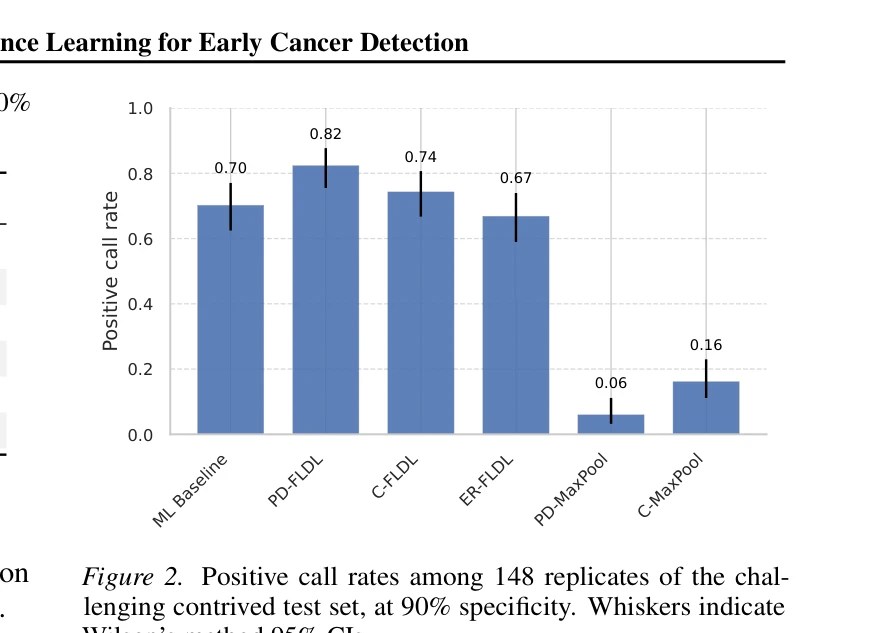
Figure 2. Positive call rates among 148 replicates of the chal-
Attention 기반 모델의 우위 입증: 4,394개 샘플이라는 적은 학습 데이터에도 불구하고, attention을 사용하지 않는 max pooling deep learning 모델이나 state-of-the-art 기존 machine learning 모델보다 FLDL이 held-out 실제 임상 데이터와 contrived test set에서 우수한 성능을 보였다.
확장성 검증: FLDL이 학습 샘플 수 및 샘플당 instance 수(최대 1000만 개)에 대해 뚜렷한 성능 정체(plateau) 없이 일관되게 확장됨을 보였다.
해석 가능성 제공: attention weight와 학습된 sample embedding(UMAP 시각화)을 통해 생물학적으로 유의미한 통찰과 일반화 가능성 평가가 가능함을 보였다.
암묵적 노이즈 제거 능력: 크고 희소한 입력 공간에서 implicit denoising이 가능함을 보였다.
How
Figure 1. Overview of the FLDL architecture. Top: The end-to-end pipeline embeds multi-modal data from millions of cfDNA
MIL 문제 정형화: 각 샘플(bag) X = {s1,...,sN}은 N개의 cfDNA fragment(instance)로 구성되며, 개별 fragment label은 관측되지 않고 sample-level label y = max_i y_i만 관측됨 (witness rate가 매우 낮음).
Fragment Embedding: 각 fragment를 5가지 modality(서열/CpG methylation, methylation 통계, DNA foundation model embedding, genomic position, strand)로 표현하고, 각 modality를 별도 sub-network로 임베딩 후 concatenate하여 고정 크기 벡터 h_i = ϕ(s_i)로 변환.
Sample Embedding (Hopfield Pooling): DeepRC를 따라 K개의 cancer-indicative fragment prototype(query) Q를 학습하고, self-normalizing neural network(SNN)로 fragment 임베딩 Y를 동일한 고차원 association space로 projection, dot-product 유사도와 softmax를 통해 attention matrix A 계산 후 fragment 임베딩들의 weighted sum으로 sample representation Z 생성.
Output Network: 완전연결 신경망을 통해 Z로부터 CRC 여부에 대한 최종 예측 점수 산출, 전체 파이프라인을 end-to-end로 학습.
평가: held-out 실제 임상 데이터셋과 도전적인 contrived test set을 사용해 state-of-the-art machine learning 모델 및 attention 없는 max pooling deep learning 모델과 성능 비교.
Originality
immune repertoire classification에서 성공적으로 활용된 DeepRC/Modern Hopfield Network 기반 attention 메커니즘을 cfDNA 기반 CRC 검출이라는 새로운 임상 도메인에 최초로 적용.
5가지 이질적 modality(서열, methylation 통계, DNA foundation model embedding, 위치, strand)를 통합하는 multi-modal fragment representation을 설계하여 nucleotide/CpG-fragment-sample 다중 해상도(multi-resolution) 정보를 하나의 end-to-end 학습 파이프라인으로 결합.
기존의 분리된 representation learning + downstream aggregation 방식과 달리, fragment 표현과 classification objective를 공동 최적화(jointly optimized)하는 완전한 end-to-end 프레임워크 제안.
witness rate < 0.0001%, instance 수 최대 1000만 개라는 기존 DeepRC(N≈300,000, witness rate 0.01%)보다 훨씬 극단적인 스케일의 MIL 문제에 attention 기반 방법이 적용 가능함을 실증.
Limitation & Further Study
초록과 발췌 본문에서 "directionally outperforms"라는 표현이 사용되어, 통계적으로 확고한 우위라기보다는 방향성 있는 개선 수준일 가능성이 있어 성능 차이의 유의성에 대한 추가 검증이 필요함.
학습 데이터셋 크기(n=4,394)가 여전히 딥러닝 기준으로는 작은 편이며, 실제 임상 배포를 위한 대규모 다기관 검증이 부족함.
Modern Hopfield Network 기반 attention의 계산 비용과 메모리 효율성에 대한 구체적 벤치마크(예: 실제 학습/추론 시간, 하드웨어 요구사항)가 발췌 부분에서 명확히 제시되지 않음.
향후 연구로 다양한 조기 병변(APL 등) 및 다른 암종으로의 일반화, 더 큰 임상 코호트에서의 전향적 검증, attention weight 기반 해석 결과의 생물학적 검증이 필요함.
총평: 극도로 희소한 신호와 초대규모 instance 공간이라는 임상 cfDNA 데이터의 근본적 난제를 Modern Hopfield Network 기반 attention으로 정면 돌파한 실용적이고 참신한 시도로, 임상적 중요성과 확장성 측면에서 의미 있는 기여를 하지만 소규모 학습 데이터와 성능 우위의 견고성에 대한 추가 검증이 필요하다.
기반 연구SPECTER2 유사도 0.92로 Multimodal Biomedical Data Fusion와 Agentic AI for Scientific Automation가 맞닿아, 'Aiscivision: A framework for specializing large multimodal models in scientific image classification'가 이 ICML 2026 논문의 배경·대안·응용 맥락을 보완한다.
기반 연구SPECTER2 유사도 0.91로 Multimodal Biomedical Data Fusion와 Scientific Information Extraction and QA가 맞닿아, 'ClinicalGPT-R1: Pushing reasoning capability of generalist disease diagnosis with large language model'가 이 ICML 2026 논문의 배경·대안·응용 맥락을 보완한다.
기반 연구SPECTER2 유사도 0.92로 Multimodal Biomedical Data Fusion와 Scientific Information Extraction and QA가 맞닿아, 'HiPerRAG: High-performance retrieval augmented generation for scientific insights'가 이 ICML 2026 논문의 배경·대안·응용 맥락을 보완한다.