From Experts to a Generalist: Toward General Whole-Body Control for Humanoid Robots
저자: Yuxuan Wang, Ming Yang, Ziluo Ding, Yu Zhang, Weishuai Zeng, Xinrun Xu, Haobin Jiang, Zongqing Lu | 날짜: 2025-06-15 | URL: https://arxiv.org/abs/2506.12779📄 PDF
⚠️ 이 페이지의 요약·평가·해설은 생성형 AI(Claude)가 자동 생성한 2차적 분석물입니다. 논문 원문의 저작권은 원저작자에게 있으며, 정확한 내용은 원문(위 DOI·arXiv 등 출처)을 확인하세요.
라이선스: arXiv 비독점 라이선스
Essence
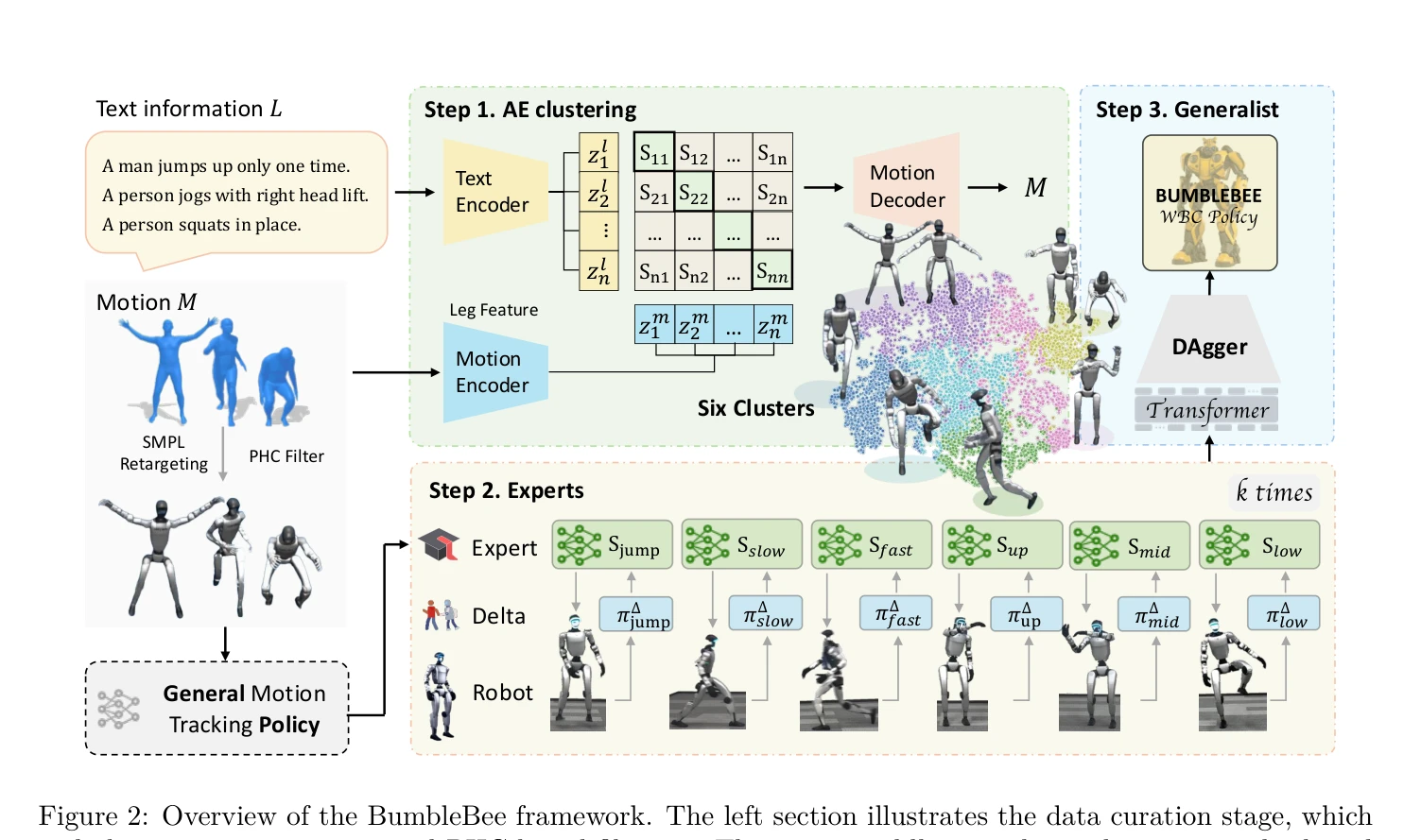
Figure 2: Overview of the BumbleBee framework. The left section illustrates the data curation stage, which
BumbleBee는 motion clustering과 sim-to-real adaptation을 결합하여 humanoid robot의 일반적인 whole-body control을 달성하는 expert-generalist 학습 프레임워크이다. 여러 motion cluster에서 전문가 정책을 훈련한 후 이를 통합 generalist controller로 distill한다.
Motivation
Known: 기존 프레임워크들은 단일 motion-specific 정책 훈련에는 우수하지만 diverse behavior에 걸친 일반화는 어려우며, conflicting control requirement와 mismatched data distribution 문제가 있다.
Gap: 서로 다른 motion type들이 상충하는 control requirement를 가지고 있어서 단일 정책으로는 일반화가 어려운데, 이를 체계적으로 해결하는 clustering 기반의 구조화된 접근이 부족하다.
Why: Humanoid robot이 diverse task를 수행하려면 agile하고 robust한 general whole-body control이 필수이며, 이를 통해 실제 세계에서 다양한 행동을 수행할 수 있는 실용적인 robot을 개발할 수 있다.
Approach: Autoencoder 기반 clustering으로 motion feature와 text description을 이용해 behaviorally similar motion을 그룹화하고, 각 cluster에서 expert policy를 훈련한 후 delta action modeling으로 sim-to-real gap을 해결한 뒤 knowledge distillation으로 통합 generalist를 생성한다.
Achievement
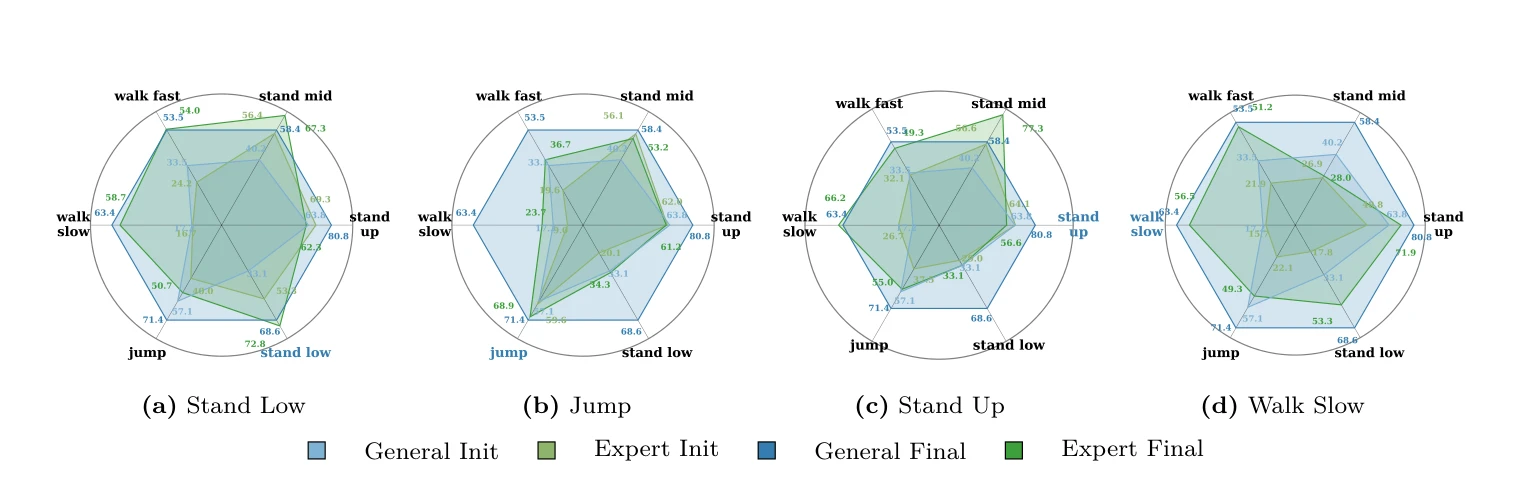
Figure 4: Evaluation of expert vs. generalist models in MuJoCo, measured by success rate.
Expert-to-Generalist Framework: Motion clustering을 통해 conflicting gradient 문제를 완화하고 각 motion type의 specialized control을 가능하게 함
Auto-regressive Clustering Method: Leg-specific motion feature와 text description을 결합하여 semantic과 kinematic 특성을 모두 반영한 clustering 달성
State-of-the-art Performance: 시뮬레이션과 실제 humanoid robot에서 superior agility, robustness, generalization을 입증
How
Figure 2: Overview of the BumbleBee framework. The left section illustrates the data curation stage, which
SMPL 형식의 human motion을 robot-specific representation으로 retargeting하고 PHC filtering으로 데이터 품질 확보
Self-supervised autoencoder를 사용하여 kinematic feature (joint 3D coordinate, foot velocity 포함)와 HumanML3D의 text annotation으로 motion clustering 수행
General tracking policy를 먼저 전체 데이터셋으로 훈련한 후 각 cluster에서 fine-tuning하여 expert policy 획득
각 cluster에서 delta action model을 훈련하여 simulated와 real-world state transition의 차이를 모델링하고 iterative refinement 수행
Transformer 기반 architecture를 사용한 knowledge distillation으로 모든 expert를 unified generalist controller로 통합
Originality
Motion clustering과 expert-generalist distillation 패러다임의 결합으로 mixture of experts (MoE) 개념을 humanoid whole-body control에 창의적으로 적용
Leg-specific kinematic feature와 text semantic을 함께 활용한 이중 정보 기반 clustering 방식의 설계
Cluster-specific delta action model을 통해 sim-to-real transfer를 motion type별로 최적화하는 접근
실제 robot에서 135초 이상의 연속 long-duration action 추적 성공으로 practical generalization 입증
Limitation & Further Study
Clustering 품질이 text annotation의 질과 motion feature extraction에 크게 의존하므로, annotation이 없는 새로운 motion type에 대한 확장성이 제한될 수 있음
Delta action model의 iterative refinement는 실제 robot에서의 data collection이 필요하므로 sample efficiency 측면에서 개선 여지 있음
현재 방법은 6개 cluster로 고정되어 있는데, 최적의 cluster 수 결정을 위한 automatic methodology 부족
서로 다른 humanoid robot platform 간의 transfer learning 가능성 및 한계에 대한 논의 필요
추가 연구로 더 적응적인 clustering 방법, zero-shot generalization to unseen motions, 다양한 robot morphology에 대한 확장이 필요
총평: BumbleBee는 motion clustering과 expert-generalist distillation을 통해 humanoid robot의 일반적인 whole-body control 문제를 효과적으로 해결하며, sim-to-real adaptation과 결합하여 실제 세계에서 agile하고 robust한 control을 달성한 우수한 연구이다. 기술적 창의성과 실험적 검증이 뛰어나고 robotics 분야에 의미 있는 기여를 한다.