⚠️ 이 페이지의 요약·평가·해설은 생성형 AI(Claude)가 자동 생성한 2차적 분석물입니다. 논문 원문의 저작권은 원저작자에게 있으며, 정확한 내용은 원문(위 DOI·arXiv 등 출처)을 확인하세요.
라이선스: arXiv 비독점 라이선스
Essence
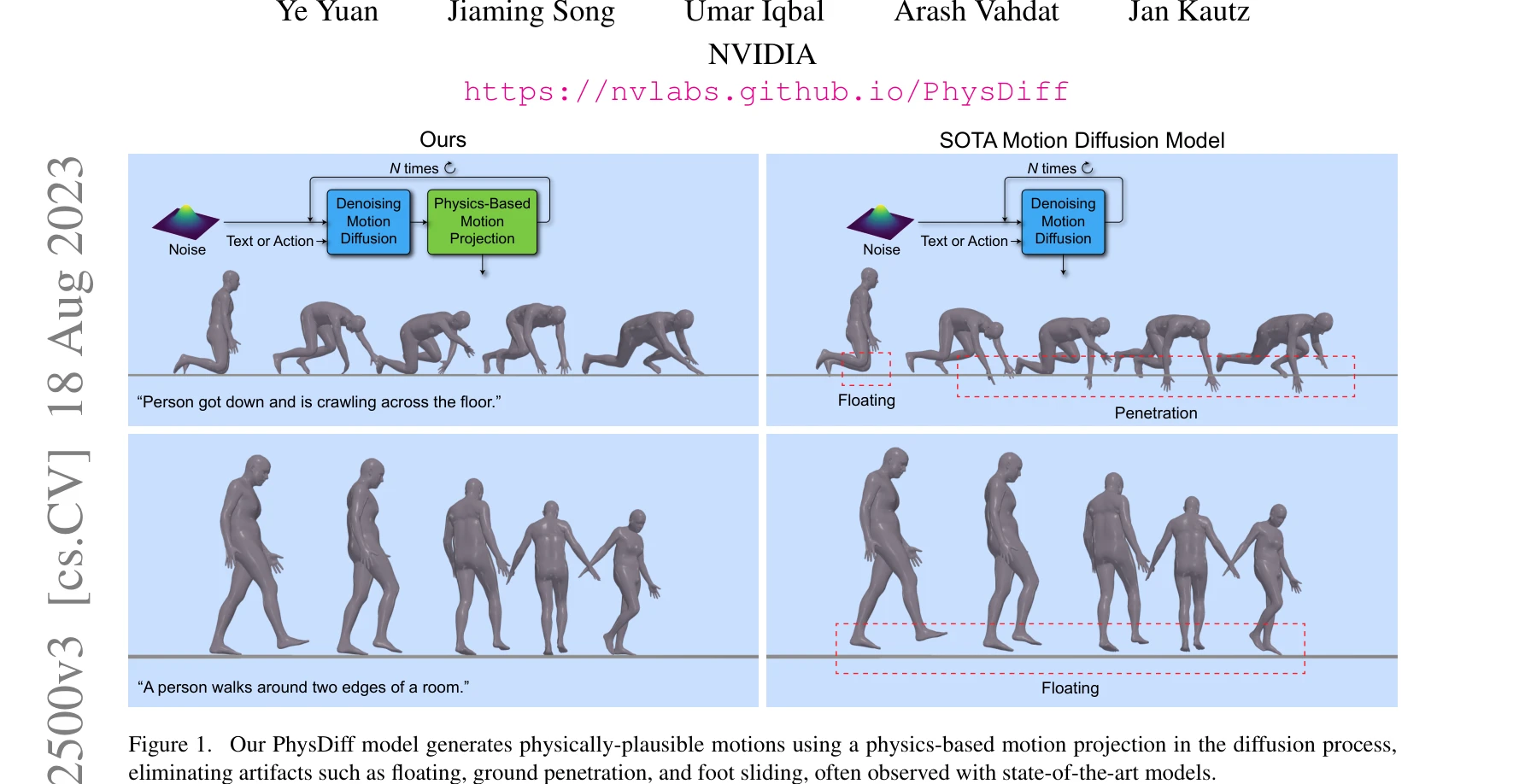
Figure 1. Our PhysDiff model generates physically-plausible motions using a physics-based motion projection in the diffu
PhysDiff는 diffusion 과정에 물리 기반 motion projection 모듈을 통합하여 physically-plausible human motion을 생성하는 physics-guided motion diffusion 모델이다. 기존 motion diffusion 모델의 floating, foot sliding, ground penetration 같은 물리적 artifacts를 제거한다.
Motivation
Known: Denoising diffusion 모델은 복잡한 분포를 잘 모델링하여 image generation과 human motion generation에서 우수한 성능을 보인다. 그러나 기존 motion diffusion 모델은 물리 법칙을 명시적으로 고려하지 않아 physically-implausible motion을 생성한다.
Gap: 기존 motion diffusion 모델은 diffusion 과정에서 물리 제약을 고려하지 않으며, 단순 post-processing으로는 너무 부자연스러운 motion을 보정할 수 없다. Physics-aware motion generation의 필요성이 있다.
Why: Animation, gaming, virtual reality 등 실제 응용에서 physically-implausible motion은 사용자가 쉽게 감지하는 artifacts를 유발하여 품질을 심각하게 저하시킨다. Physics-aware generation은 현실적인 motion 활용을 가능하게 한다.
Approach: Motion imitation을 통해 physics simulator에서 훈련한 policy를 motion projection 모듈로 사용하고, diffusion 과정의 각 스텝에서 denoised motion을 physically-plausible space로 projection한다. 이렇게 projected motion을 다음 diffusion 스텝의 가이드로 사용하여 iteratively physical plausibility를 개선한다.
Achievement
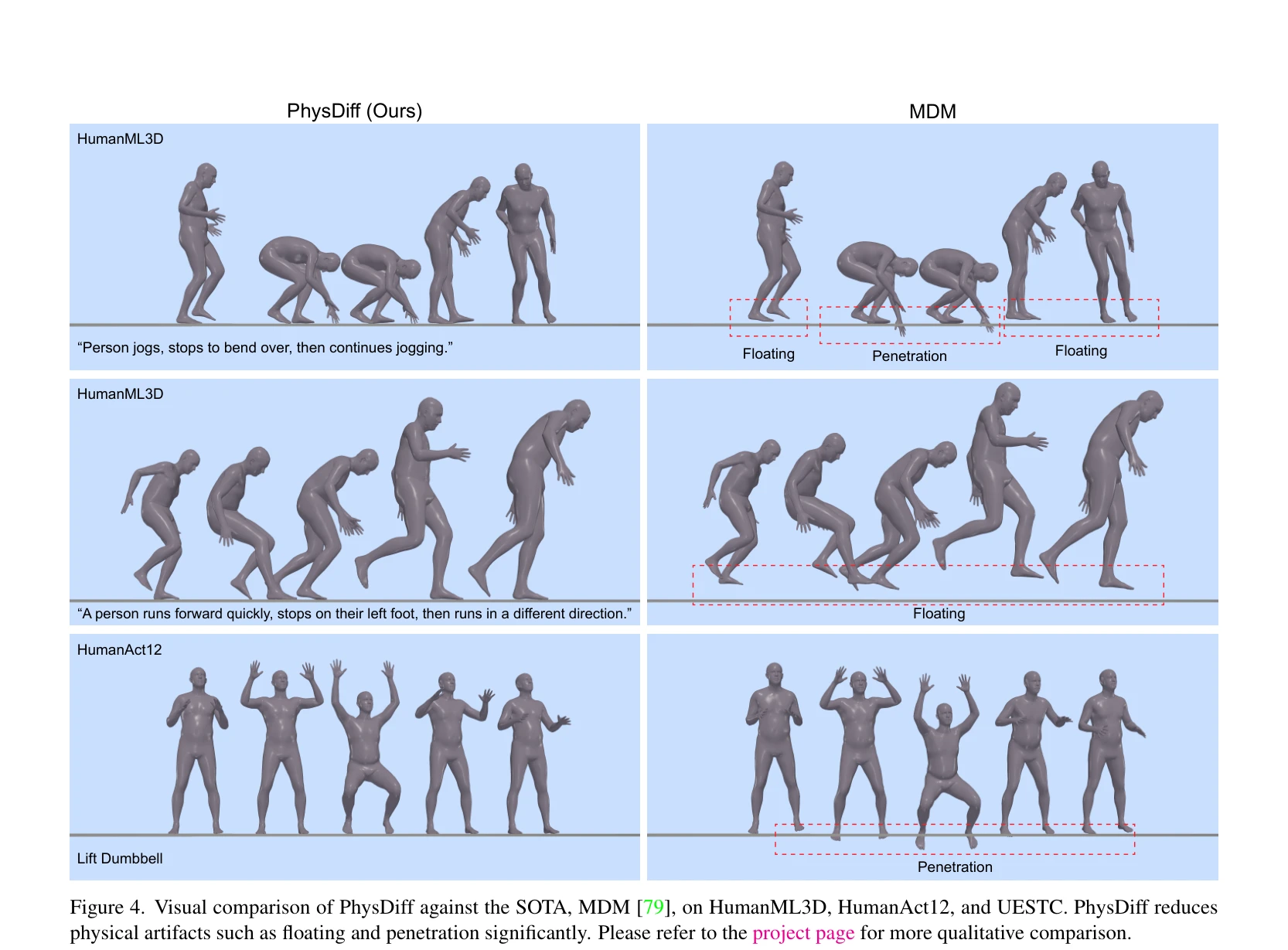
Figure 4. Visual comparison of PhysDiff against the SOTA, MDM [79], on HumanML3D, HumanAct12, and UESTC. PhysDiff reduce
물리적 정확성 대폭 개선: HumanML3D에서 physical error를 86% 이상 감소, HumanAct12에서 78% 이상 개선, UESTC에서 94% 개선
Motion quality 동시 개선: HumanML3D에서 FID 20% 이상 개선하면서 물리 제약을 만족
SOTA 성능 달성: MDM, MotionDiffuse 등 기존 SOTA motion diffusion 모델을 능가
Plug-and-play 유연성: 서로 다른 kinematic diffusion 모델에 적용 가능한 구조
Physics-based projection scheduling 분석: Projection 스텝 수에 따른 physical plausibility와 motion quality의 trade-off 관계 발견
How
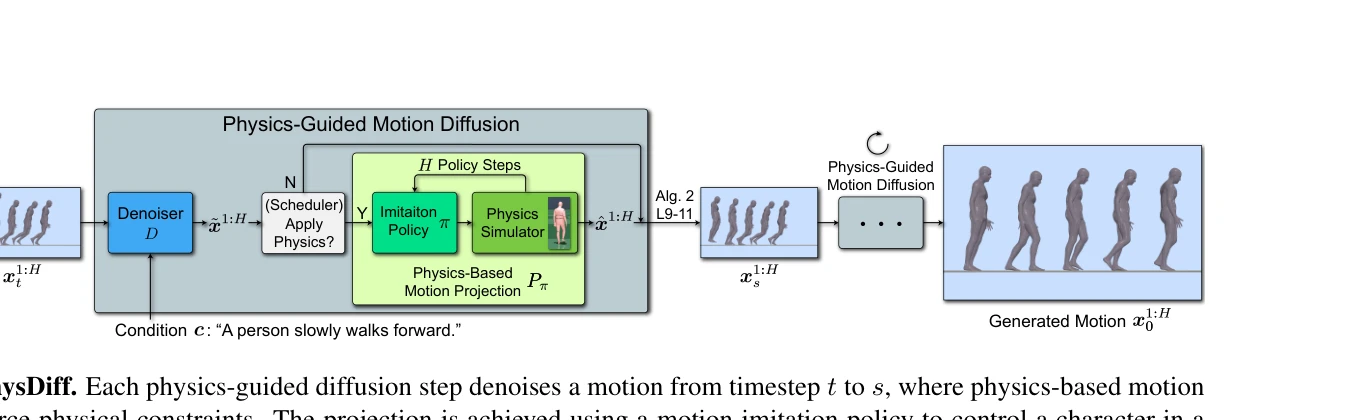
Figure 3. Overview of PhysDiff. Each physics-guided diffusion step denoises a motion from timestep t to s, where physics
Large-scale motion capture 데이터로 motion imitation policy를 physics simulator에서 훈련
각 diffusion 스텝에서 denoised motion에 대해 trained motion imitation policy를 실행하여 physically-plausible motion으로 projection
Projected motion을 다음 diffusion 스텝의 시작점으로 사용하여 iterative refinement 수행
Projection을 적용할 diffusion 스텝을 선택하는 scheduling 전략 활용 (late steps에 더 효과적)
Multiple projection steps를 사용하여 physical plausibility를 점진적으로 개선
Originality
Diffusion 과정 중간에 physics 제약을 반복적으로 적용하는 novel iterative approach로, 단순 post-processing과 구별됨
Motion imitation policy를 물리 기반 projection 모듈로 재활용하는 creative solution
Physics-based projection과 diffusion의 scheduling 및 trade-off 관계를 체계적으로 분석
Plug-and-play 구조로 다양한 diffusion 모델 backbone에 적용 가능한 일반화된 프레임워크
Limitation & Further Study
Physics simulator의 motion imitation policy 훈련에 필요한 시간 비용과 computational overhead가 큼
Non-differentiable physics simulator 특성으로 인해 모든 diffusion 스텝에 projection을 적용할 수 없음
Motion quality와 physical plausibility 간의 trade-off로 인해 최적의 projection scheduling을 찾기 위한 추가 튜닝 필요
후속 연구: 더 효율적인 physics constraint 적용 방법 탐색, differentiable physics simulator 활용, 다양한 motion type에 대한 robustness 강화
총평: PhysDiff는 human motion generation에 physics 제약을 systematically 통합하여 physically-plausible motion 생성의 핵심 문제를 해결한 혁신적 연구이다. Iterative projection 전략과 철저한 실험 분석이 학계에 중요한 기여를 제공하며, 실제 animation/VR 응용의 현실화를 크게 앞당긴다.