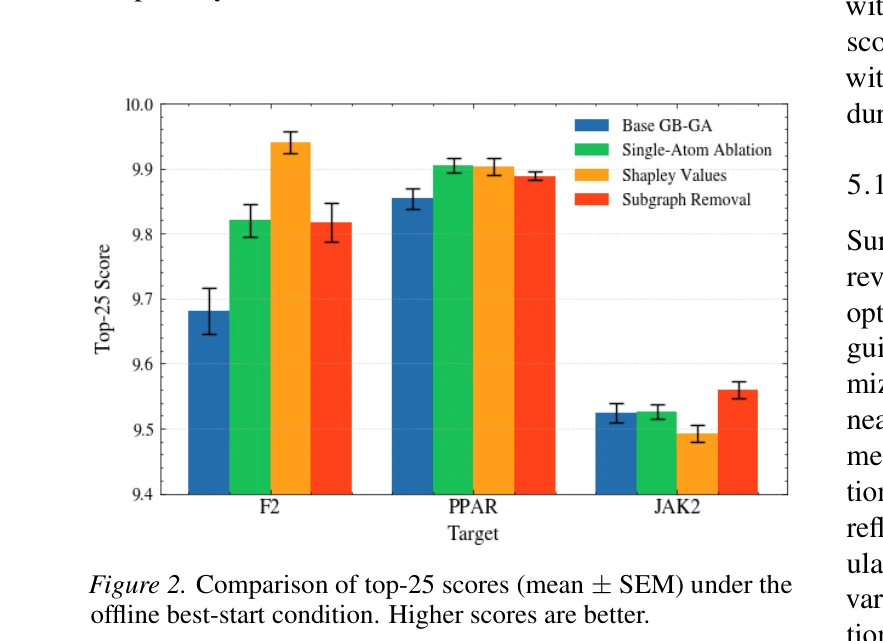
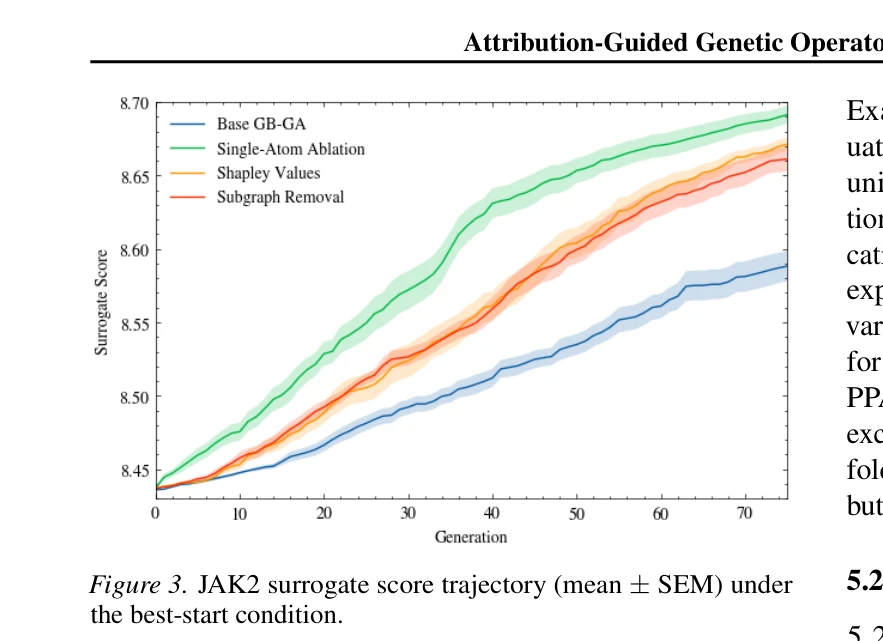
Essence
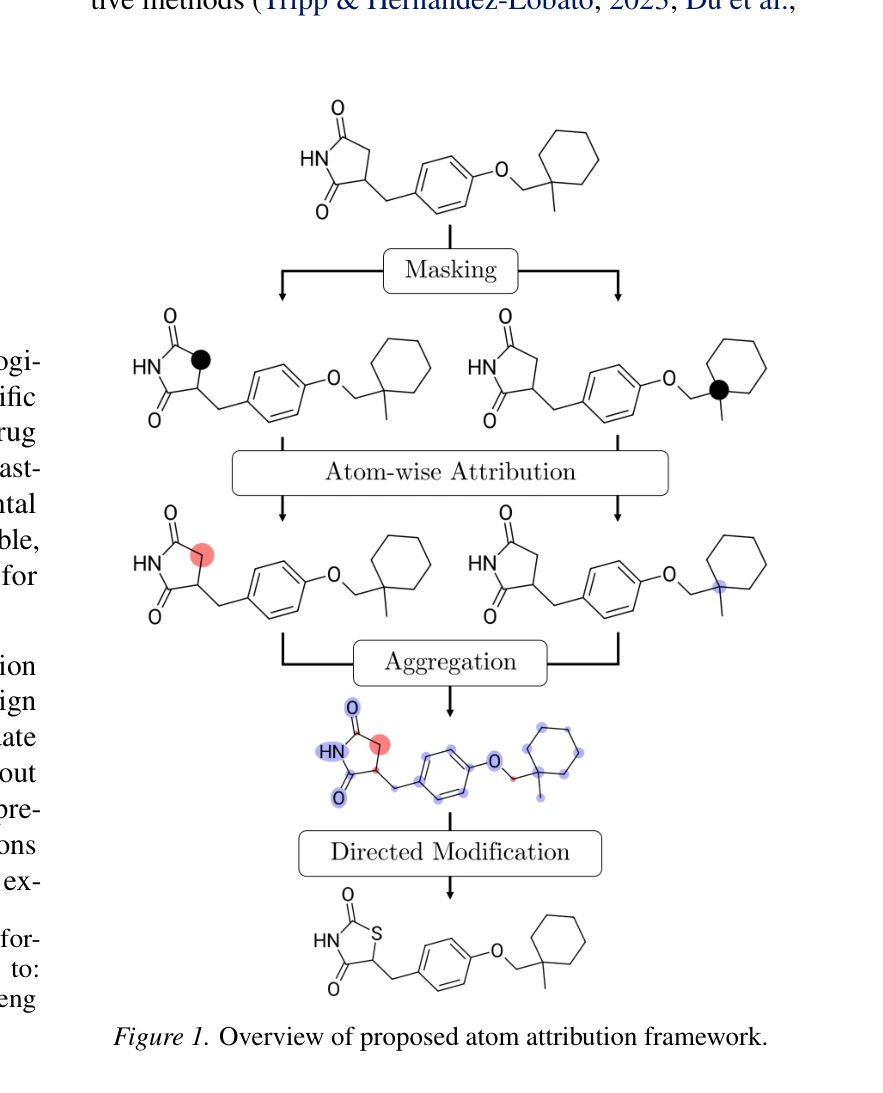
Figure 1. Overview of proposed atom attribution framework.
Graph-Based Genetic Algorithm(GB-GA)의 crossover/mutation 위치를 무작위로 선택하는 대신, directed message-passing neural network(D-MPNN)에서 도출한 atom-level attribution score를 이용해 fitness 개선 가능성이 낮은 원자를 우선적으로 선택하도록 유도하는 attribution-guided site selection 기법을 제안한다.
Evaluation
Novelty: 4/5 Technical Soundness: 4/5 Significance: 4/5 Clarity: 4/5 Overall: 4/5
총평: 단순하지만 참신한 아이디어를 통해 attribution 기법의 활용 범위를 해석에서 능동적 최적화 guidance로 확장하였으며, 재학습이 필요 없고 기존 파이프라인과 orthogonal하다는 실용적 장점을 갖춘 견고한 연구이나, 벤치마크 범위와 하이퍼파라미터 최적화 측면에서 추가 검증이 필요하다.
같이 보면 좋은 논문
기반 연구SPECTER2 유사도 0.93로 Computational Molecular Design와 Molecular Simulation and Generative Modeling가 맞닿아, 'Molgan: An implicit generative model for small molecular graphs'가 이 ICML 2026 논문의 배경·대안·응용 맥락을 보완한다.
기반 연구GB-GA 및 message-passing neural network 기반 분자 설계의 방법론적 기초를 제공한다.
기반 연구구조 기반 약물 최적화의 핵심 방법론적 기초를 제공한다.
기반 연구진화적 서열 설계 프레임워크를 실제 고성능 서열 발굴에 적용한다.
기반 연구SPECTER2 유사도 0.93로 Computational Molecular Design와 Molecular Simulation and Generative Modeling가 맞닿아, 'Training a force field for proteins and small molecules from scratch'가 이 ICML 2026 논문의 배경·대안·응용 맥락을 보완한다.
기반 연구SPECTER2 유사도 0.93로 Computational Molecular Design와 AI-Driven Drug and Materials Discovery가 맞닿아, 'Zero-shot design of drug-binding proteins via neural iterative selection−expansion'가 이 ICML 2026 논문의 배경·대안·응용 맥락을 보완한다.
다른 접근분자 최적화에서 유사한 신경망 기반 가이드 방법을 다르게 구현한다.
다른 접근유전 알고리즘 기반 분자 최적화라는 유사 문제의 대안적 접근이다.
후속 연구atom-level attribution을 활용한 최적화 방법을 확장한 연구이다.
후속 연구분자 쌍 기반 활성 예측 모델의 기초를 제공한다.