⚠️ 이 페이지의 요약·평가·해설은 생성형 AI(Claude)가 자동 생성한 2차적 분석물입니다. 논문 원문의 저작권은 원저작자에게 있으며, 정확한 내용은 원문(위 DOI·arXiv 등 출처)을 확인하세요.
라이선스: OpenReview 공개(오픈액세스)
Essence
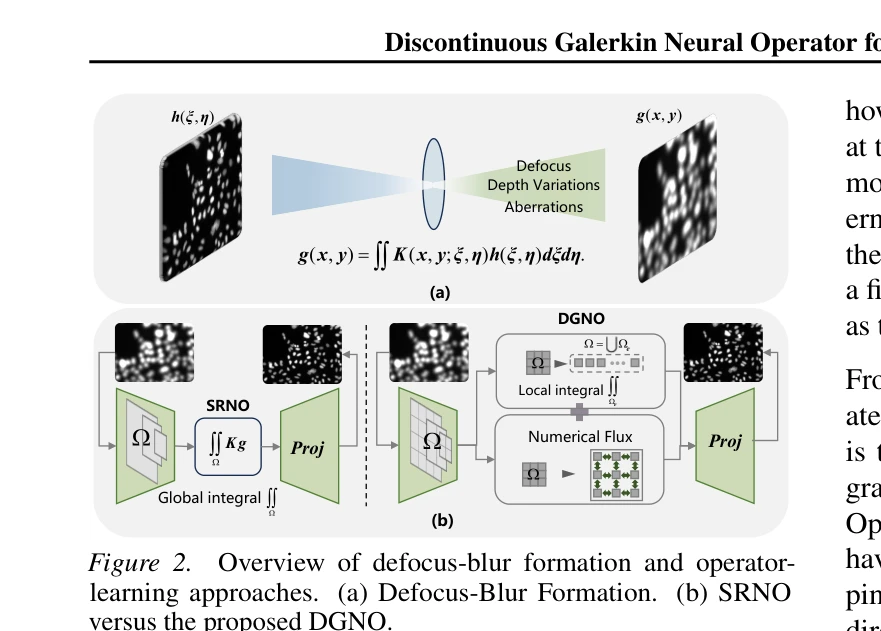
Figure 2.
병리 현미경 영상의 defocus deblurring을 spatially varying integral operator의 역문제로 재정의하고, discontinuous Galerkin(DG) 방법에서 영감을 받아 element-local volume operator와 interface numerical flux로 integral kernel을 분해하는 Discontinuous Galerkin Neural Operator(DGNO)를 제안한다.
Motivation
Known: defocus blur는 물리적으로 position-dependent PSF에 의한 spatially varying integral operator로 formulate되며, 기존 CNN/Transformer/Mamba 기반 defocus deblurring 방법들은 shift-invariance 가정이나 global self-attention에 의존해 이 문제를 finite-dimensional image regression으로 취급해 왔다. 최근 Neural Operator(NO) 프레임워크는 함수 공간 간 매핑을 학습해 이 integral operator를 직접 파라미터화할 수 있는 대안으로 제시되었다.
Gap: 그러나 DiffFNO, SRNO 등 기존 low-level vision용 NO 아키텍처들은 global하게 파라미터화된 kernel에 의존하여 smoothness와 stationarity를 암묵적으로 가정하므로, 병리 영상에서 나타나는 국소적이고 불연속적이며 이질적인(heterogeneous) blur 패턴을 모델링하는 데 근본적 한계가 있다.
Why: defocus blur를 물리적으로 정확한 spatially varying integral operator의 역문제로 다루면서도 국소 불연속성을 원리적으로 반영할 수 있는 프레임워크는, 세포 검출·분할 등 후속 병리 분석의 정확도에 직결되는 실질적 문제를 해결할 잠재력이 있으며, 물리 기반 해석 가능성과 성능을 동시에 확보한다는 점에서 중요하다.
Approach: discontinuous Galerkin(DG) 수치해석 방법론에서 영감을 받아, 전역 integral kernel을 element-local volume operator와 element 경계에서의 interface numerical flux로 분해함으로써 locality, heterogeneity, global coherence를 동시에 확보하는 neural operator를 설계한다.
Achievement
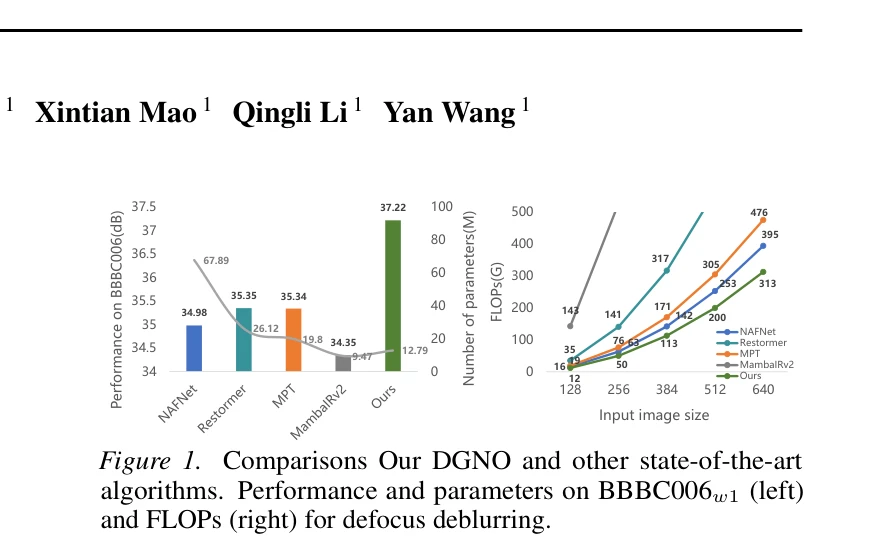
Figure 1. Comparisons Our DGNO and other state-of-the-art
DGNO 아키텍처 제안: element-local volume integral operator와 interface numerical flux를 결합하여 spatially varying하고 locally discontinuous한 defocus blur를 모델링하는 새로운 neural operator 구조를 제시했다.
P0DG 경량 근사: 일반적인 face-based numerical flux formulation뿐 아니라 zero-order DG(P0DG) 근사를 지원하여, element-local volume operator만으로 interface coupling을 구성할 수 있는 유연하고 경량화된 대안을 제공했다.
최초의 물리 기반 NO 정식화: defocus deblurring을 spatially varying, locally supported integral operator의 역문제로 formal하게 정식화하고 이를 neural operator로 접근한 첫 시도로 자리매김했다.
성능 및 효율성 우위 입증: BBBC006 등 벤치마크에서 NAFNet, Restormer, MPT, MambaIRv2 등 최신 기법 대비 더 선명한 복원 결과와 함께 파라미터 수 및 FLOPs 측면에서도 경쟁력 있는 효율성을 달성했다.
How
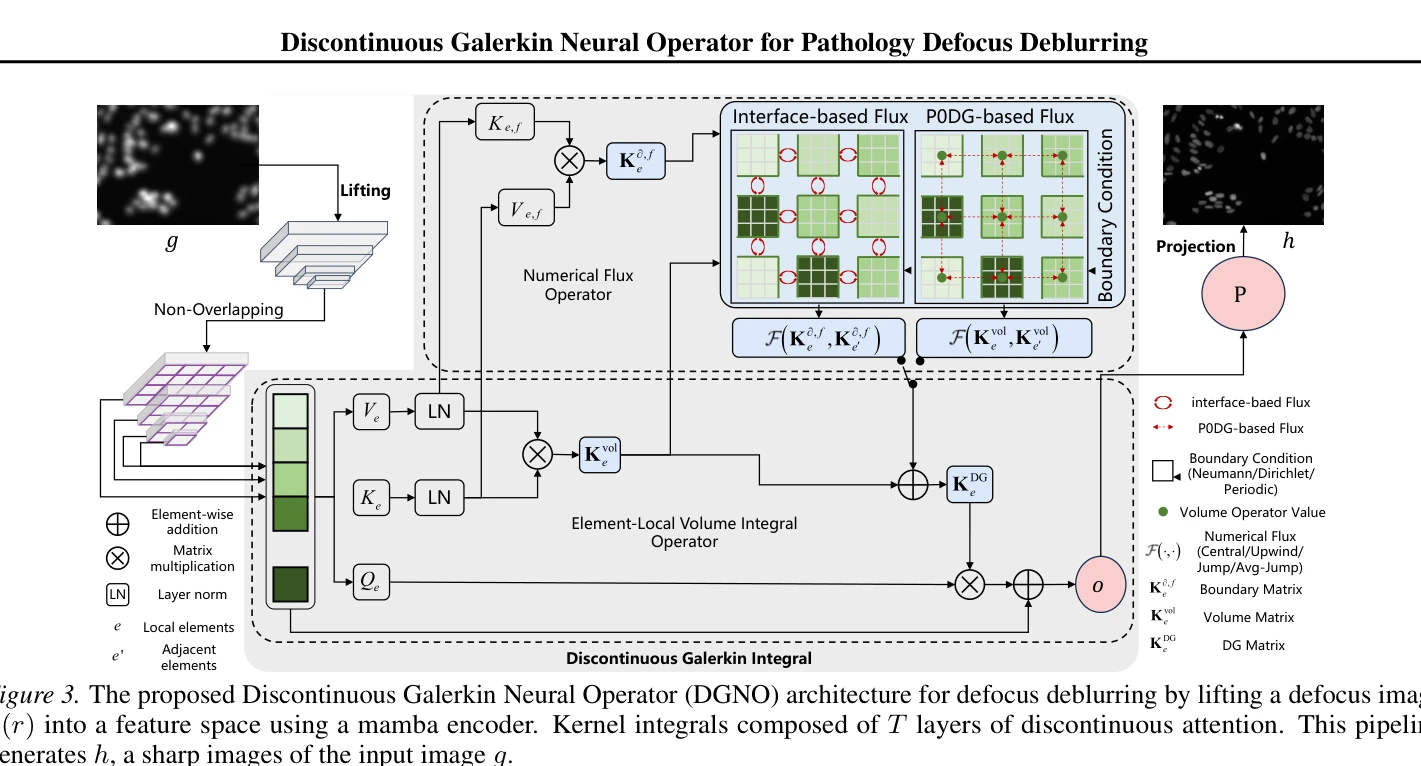
Figure 3. The proposed Discontinuous Galerkin Neural Operator (DGNO) architecture for defocus deblurring by lifting a de
defocus blur formation을 g(x,y) = ∬ K(x,y;ξ,η) h(ξ,η) dξdη 형태의 spatially varying integral operator로 정식화 (Eq. 1).
전역 kernel K를 element 단위로 분할하여, 각 element 내부에서는 element-local volume integral operator로 근사하고, element 경계에서는 interface numerical flux를 통해 인접 element 간 정보 교환을 통제.
일반적인 face-based numerical flux formulation과 lightweight zero-order DG(P0DG) 근사 두 가지 옵션을 지원하여 유연한 cross-element coupling 구현.
DGNO 아키텍처(Fig. 3)를 통해 element-wise operator learning과 flux 기반 interface coupling을 통합, local adaptability와 global consistency 간 균형을 달성.
BBBC006 등 데이터셋에서 NAFNet, Restormer, MPT, MambaIRv2, SRNO 등과 정량/정성 비교 및 latent representation의 effective-rank 분석(Fig. 5)을 통해 모델 특성 검증.
Originality
기존 defocus deblurring 연구들이 finite-dimensional pixel-to-pixel mapping으로 문제를 다룬 것과 달리, function-to-function mapping 및 spatially varying integral operator의 역문제로 명시적으로 재정식화한 관점 전환.
discontinuous Galerkin 수치해석 방법론을 neural operator 파라미터화에 도입하여, element-local operator와 interface numerical flux라는 개념을 신경망 아키텍처 설계에 직접 대응시킨 점이 독창적.
기존 global-kernel 기반 NO(SRNO, DiffFNO)와 달리 locality, heterogeneity, discontinuity를 원리적으로 통합한 최초의 NO 변형을 low-level vision, 특히 병리 defocus deblurring 문제에 적용.
Limitation & Further Study
element 분할(partition) 방식이 결과의 품질과 계산 비용에 미치는 영향에 대한 이론적/실험적 민감도 분석이 본문 발췌만으로는 충분히 드러나지 않아, element granularity 선택의 원칙이 명확한지 확인이 필요.
DG 방법에서 필수적인 flux 일관성(consistency) 및 안정성(stability) 조건이 학습 기반 파라미터화에서 어떻게 보장되는지에 대한 이론적 뒷받침이 실험적 검증 위주로 보완될 필요가 있음.
병리 현미경 영상(BBBC006 등)이라는 특정 도메인에 특화된 설계이므로, 다른 일반 이미지 defocus deblurring이나 다른 유형의 spatially varying degradation(motion blur 등)으로의 일반화 가능성에 대한 추가 검증이 필요.
후속 연구로 다양한 optical system 및 실제 임상 슬라이드 스캐너 데이터에 대한 cross-domain 검증, 그리고 element 개수/크기를 데이터에 적응적으로 결정하는 방법 탐구가 유망하다.
총평: 물리적 imaging 과정에 기반한 원리적 정식화와 discontinuous Galerkin 방법의 독창적 도입을 통해 병리 defocus deblurring 문제에 새로운 해법을 제시한 견실한 연구로, neural operator 커뮤니티와 low-level vision 커뮤니티 모두에 시사점이 크다.
기반 연구SPECTER2 유사도 0.92로 Scientific Machine Learning for Dynamics와 Scientific AI for Physics and Environment가 맞닿아, 'From Theory to Application: A Practical Introduction to Neural Operators in Scientific Computing'가 이 ICML 2026 논문의 배경·대안·응용 맥락을 보완한다.
기반 연구SPECTER2 유사도 0.91로 Scientific Machine Learning for Dynamics와 Scientific AI for Physics and Environment가 맞닿아, 'Physics-Informed Neural Networks with Unscented Kalman Filter for Sensorless Joint Torque Estimation in Humanoid Robots'가 이 ICML 2026 논문의 배경·대안·응용 맥락을 보완한다.
기반 연구SPECTER2 유사도 0.92로 Scientific Machine Learning for Dynamics와 Scientific AI for Physics and Environment가 맞닿아, 'Architectures, variants, and performance of neural operators: A comparative review'가 이 ICML 2026 논문의 배경·대안·응용 맥락을 보완한다.
기반 연구SPECTER2 유사도 0.91 기준으로 'Discontinuous Galerkin Neural Operator for Pathology Defocus Deblurring'의 AI4S 방법론을 'Physics-Informed Neural Operator for Electromagnetic Inverse Scattering Problems'의 과학 생산·평가 맥락과 함께 보면 연구 자동화의 의미를 입체적으로 볼 수 있다.