Essence
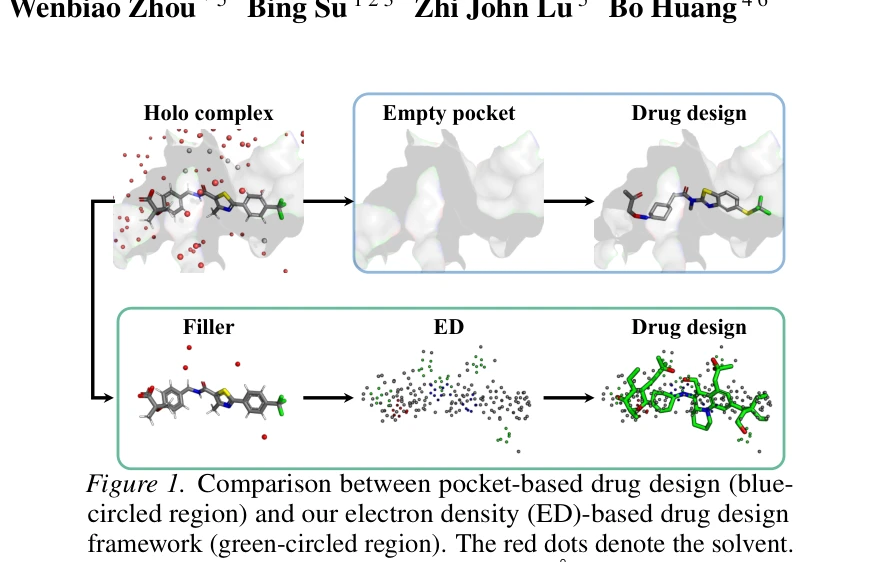
Figure 1. Comparison between pocket-based drug design (blue-
binding pocket가 아닌 filler(리간드와 용매)로부터 얻은 low-resolution electron density(ED)를 조건으로 사용하여, decoder-only autoregressive 프레임워크인 EDMolGPT로 3D 분자를 생성하는 구조 기반 신약설계(SBDD) 방법을 제안한다.
Evaluation
Novelty: 4/5 Technical Soundness: 4/5 Significance: 4/5 Clarity: 4/5 Overall: 4/5
총평: pocket 대신 filler ED를 조건으로 활용하는 새로운 관점과 decoder-only autoregressive 구조를 결합한 참신한 시도로, SBDD 분야에 실질적 기여를 하는 우수한 연구이나 실험적 검증의 폭을 넓힐 필요가 있다.
같이 보면 좋은 논문
기반 연구SPECTER2 유사도 0.93로 Computational Molecular Design와 Molecular Simulation and Generative Modeling가 맞닿아, 'High-quality, high-information datasets for universal atomistic machine learning'가 이 ICML 2026 논문의 배경·대안·응용 맥락을 보완한다.
기반 연구discrete-continuous 혼합 시퀀스 모델링을 확장한 연구로 추정됨
기반 연구iterative recycling 기반 구조 정제를 확장하는 관련 연구로 보임
기반 연구AlphaFold 기반 구조 생성을 electron density 조건화로 확장함
다른 접근약물 분자 생성에 다른 표현/조건화 방식을 사용함
기반 연구SPECTER2 유사도 0.93로 Computational Molecular Design와 AI-Driven Drug and Materials Discovery가 맞닿아, 'CryoNet.Refine: A One-step Diffusion Model for Rapid Refinement of Structural Models with Cryo-EM Density Map Restraints'가 이 ICML 2026 논문의 배경·대안·응용 맥락을 보완한다.
기반 연구SPECTER2 유사도 0.92 기준으로 'From Holo Pockets to Electron Density: GPT-style Drug Design with Density'의 AI4S 방법론을 'Interpretable and generative deep learning models explicate phase separating intrinsically disordered motifs'의 과학 생산·평가 맥락과 함께 보면 연구 자동화의 의미를 입체적으로 볼 수 있다.
기반 연구SPECTER2 유사도 0.93로 Computational Molecular Design와 LLMs for Molecular Biology & Chemistry가 맞닿아, 'Generative Chemical Language Models for Energetic Materials Discovery'가 이 ICML 2026 논문의 배경·대안·응용 맥락을 보완한다.
기반 연구SPECTER2 유사도 0.94로 Computational Molecular Design와 AI-Driven Drug and Materials Discovery가 맞닿아, 'On improving experimental binding affinity predictions with synthetic data'가 이 ICML 2026 논문의 배경·대안·응용 맥락을 보완한다.
후속 연구절대 자유 에너지 섭동(AFEP) 계산 방법론이 합성 데이터 생성의 기초를 제공한다.
기반 연구SPECTER2 유사도 0.92 기준으로 'From Holo Pockets to Electron Density: GPT-style Drug Design with Density'의 AI4S 방법론을 'Enhancing Molecular Dynamics with Equivariant Machine-Learned Densities'의 과학 생산·평가 맥락과 함께 보면 연구 자동화의 의미를 입체적으로 볼 수 있다.
다른 접근물리 정보 기반 대규모 사전학습의 대안적 프레임워크를 제시한다.
다른 접근조건부 3D 분자 생성이라는 동일 문제에 다른 조건(전자밀도 vs 다른 조건)을 사용함
후속 연구GPT 기반 분자 생성 프레임워크를 확장한 연구로 볼 수 있다.
응용 사례구조 기반 약물 설계에 GPT 스타일 생성 모델을 적용한 사례
응용 사례전자 밀도 기반 분자 설계를 신약 개발에 적용한 사례이다.