Zero-Shot Whole-Body Humanoid Control via Behavioral Foundation Models
저자: Andrea Tirinzoni, Ahmed Touati, Jesse Farebrother, Mateusz Guzek, Anssi Kanervisto, Yingchen Xu, Alessandro Lazaric, Matteo Pirotta | 날짜: 2025-04-15 | URL: https://arxiv.org/abs/2504.11054📄 PDF
⚠️ 이 페이지의 요약·평가·해설은 생성형 AI(Claude)가 자동 생성한 2차적 분석물입니다. 논문 원문의 저작권은 원저작자에게 있으며, 정확한 내용은 원문(위 DOI·arXiv 등 출처)을 확인하세요.
라이선스: arXiv 비독점 라이선스
Essence
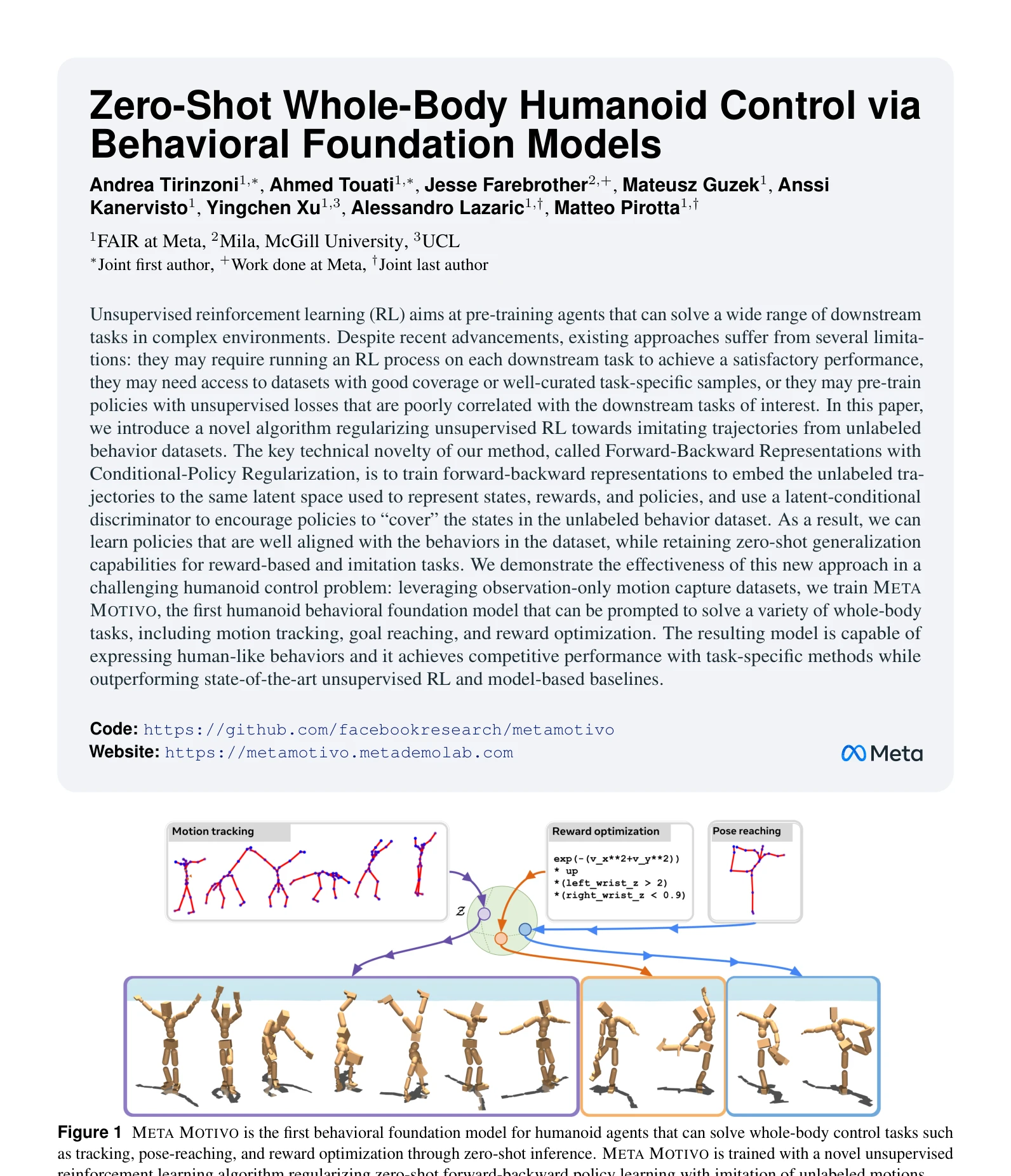
Figure 1 META MOTIVO is the first behavioral foundation model for humanoid agents that can solve whole-body control task
Forward-Backward representations with Conditional-Policy Regularization (FB-CPR)을 통해 unlabeled behavior dataset으로 unsupervised RL을 정규화하여, humanoid agent의 zero-shot whole-body control을 가능하게 하는 behavioral foundation model Meta Motivo를 개발했다.
Motivation
Known: Unsupervised RL과 behavior cloning 기반 접근법들은 각각의 장단점이 있으며, 최근 demonstration을 활용한 정규화 방법들이 등장했다. Foundation model의 개념은 언어와 vision 영역에서 성공적이다.
Gap: 기존 zero-shot RL은 고차원 불안정 제어(humanoid)에서 unsupervised exploration의 한계로 성능이 떨어지며, behavior cloning은 dataset의 behavior 외 generalization이 제한적이다. 두 접근법의 장점을 결합한 방법이 부재하다.
Why: Humanoid control은 로보틱스, 가상 캐릭터, NPC 등 광범위한 응용분야가 있으며, 일반화된 behavioral foundation model은 task-specific 학습의 필요성을 제거하여 실무적 가치가 크다.
Approach: FB representation으로 unlabeled trajectory를 state-reward-policy 잠재공간에 embedding하고, latent-conditional discriminator로 dataset 상태 분포를 cover하도록 정책을 장려하여, imitation 정규화와 zero-shot 일반화를 동시에 달성한다.
Achievement
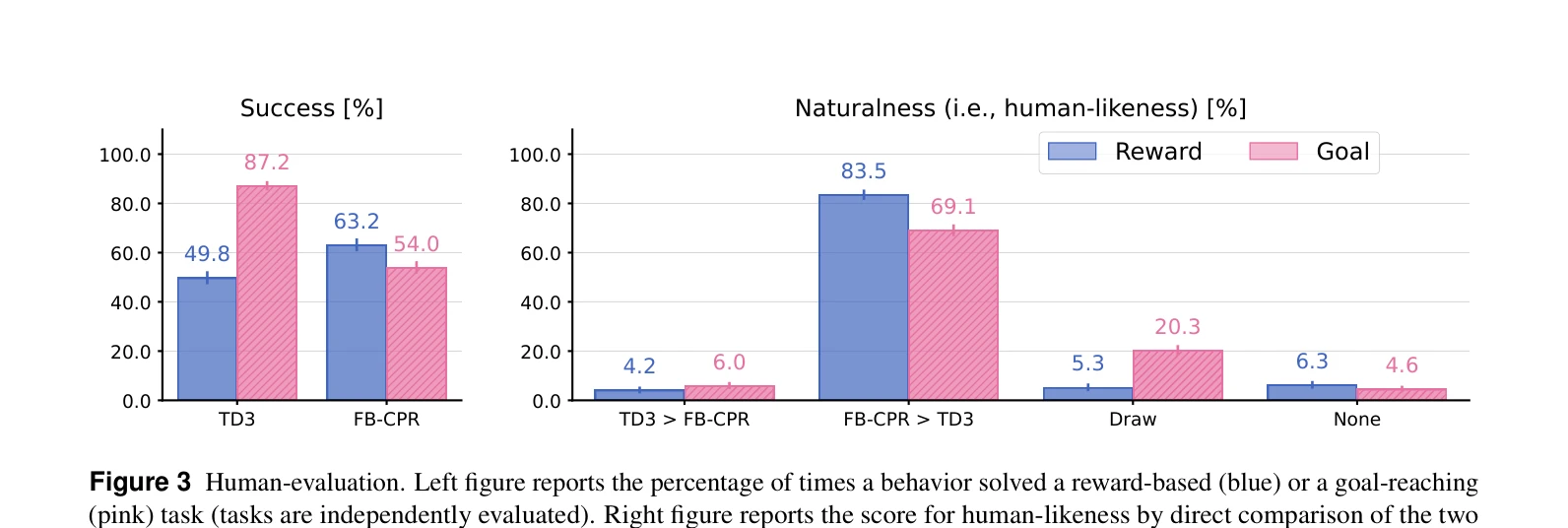
Figure 3 Human-evaluation. Left figure reports the percentage of times a behavior solved a reward-based (blue) or a goal
Meta Motivo 모델: SMPL 기반 humanoid의 최초 behavioral foundation model로 motion tracking, goal reaching, reward optimization을 zero-shot으로 수행
경쟁력 있는 성능: Task-specific 방법과 유사한 수준의 성능을 달성하면서 unsupervised RL 및 model-based baseline 초과
Human-like behavior 표현: AMASS dataset을 활용하여 인간다운 동작을 학습하고 표현
재현성 보장: 환경, 코드, 사전학습 모델 공개
How
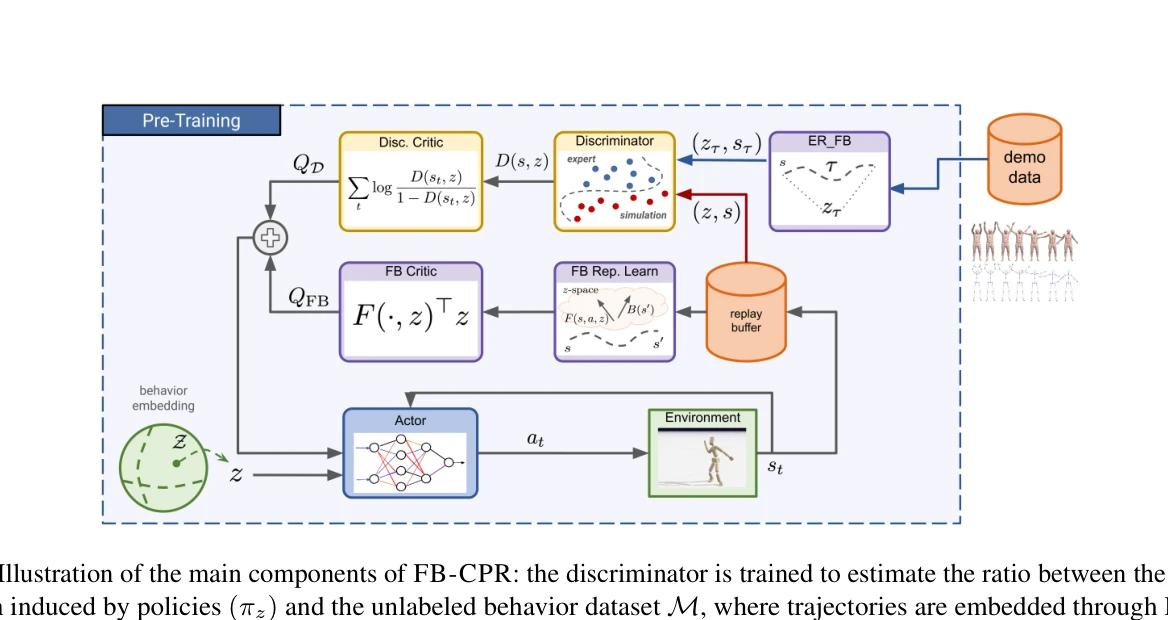
Figure 2 Illustration of the main components of FB-CPR: the discriminator is trained to estimate the ratio between the l
Successor measure의 low-rank decomposition인 FB representation 활용하여 reward-policy factorization 구현
Latent-conditional discriminator를 통해 학습된 정책이 unlabeled dataset의 상태 분포를 'cover'하도록 장려", 'Forward embedding F(s,a,z)와 backward embedding B(s)를 동일한 잠재공간에 매핑하여 trajectory embedding
Measure-valued Bellman equation (식 2)의 temporal difference 손실함수로 FB 학습
Actor network을 통해 연속 action space에서 arg max 근사
AMASS 모션캡처 데이터셋을 observation-only unlabeled behavior로 활용하여 정규화
Originality
Unlabeled trajectory를 같은 잠재공간에 embedding하고 latent-conditional discriminator로 상태 distribution 정규화하는 아이디어는 novel
Zero-shot RL의 exploration 한계를 behavior dataset 정규화로 해결하는 통합 프레임워크 제시
고차원 불안정 동역학을 가진 humanoid 제어에 FB representation 최초 적용
Behavioral foundation model 개념을 embodied agent에 처음 체계적으로 구현
Limitation & Further Study
AMASS 같은 고품질 unlabeled behavior dataset의 availability에 의존 - 다른 도메인이나 task-misaligned dataset에서의 성능 불명확
Humanoid와 bipedal walker, ant maze에서만 평가 - 더 다양한 제어 문제에 대한 일반성 미검증
Discriminator 기반 정규화의 computational overhead와 scalability 논의 부재
Zero-shot 성능이 task-specific 방법대비 여전히 gap이 있음 - 더 나은 in-context learning 메커니즘 필요
후속연구: (1) task-misaligned 데이터셋에 robust한 방법 개발, (2) real robot 전이학습 검증, (3) 다중 embodiment 지원 BFM 확장
총평: FB-CPR은 unsupervised RL의 exploration 한계를 behavior dataset 정규화로 창의적으로 해결하고, 복잡한 humanoid 제어에서 zero-shot generalization을 달성한 기술적으로 견실하고 의미 있는 연구이다. 재현성 보장과 다양한 평가는 강점이나, 데이터셋 의존성과 실제 로봇 검증 부재는 향후 개선이 필요하다.