Essence
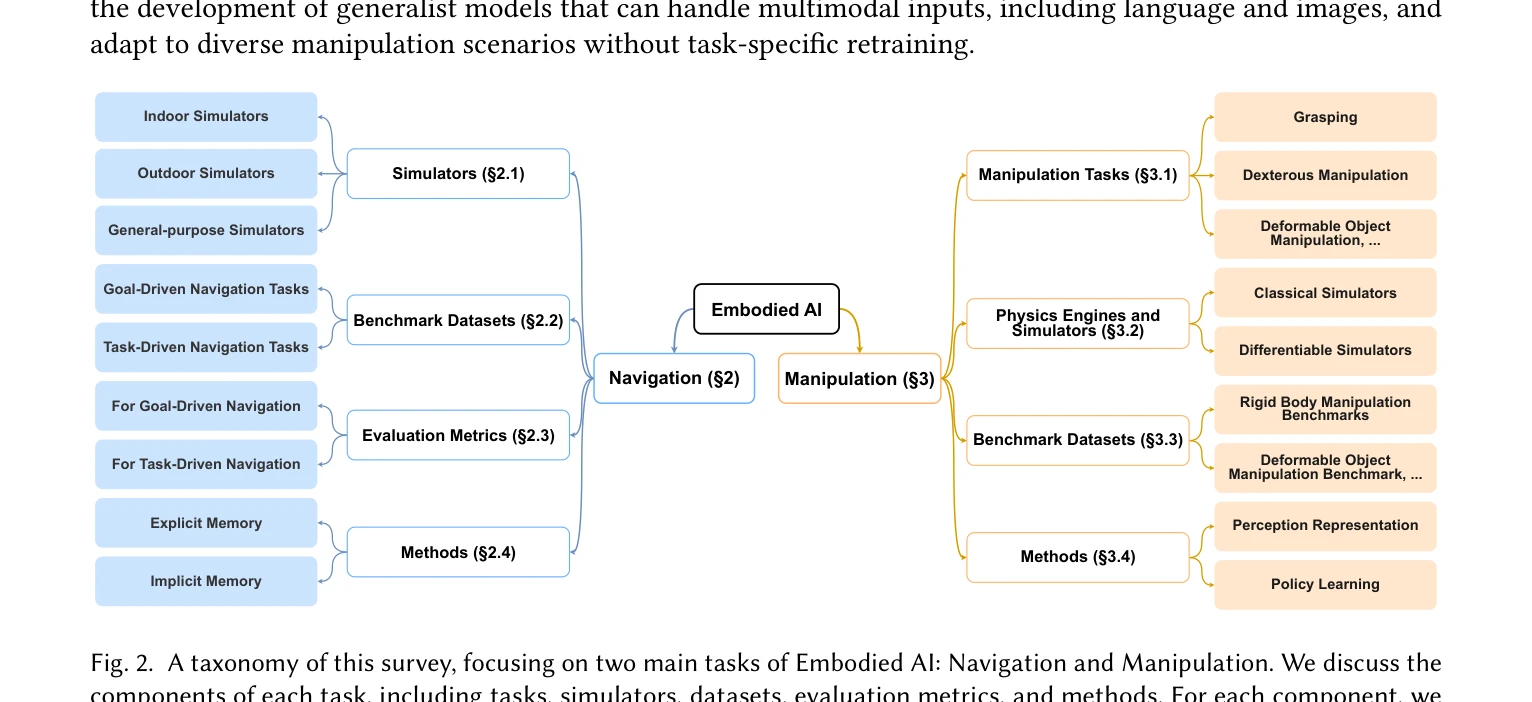
Fig. 2. A taxonomy of this survey, focusing on two main tasks of Embodied AI: Navigation and Manipulation. We discuss th
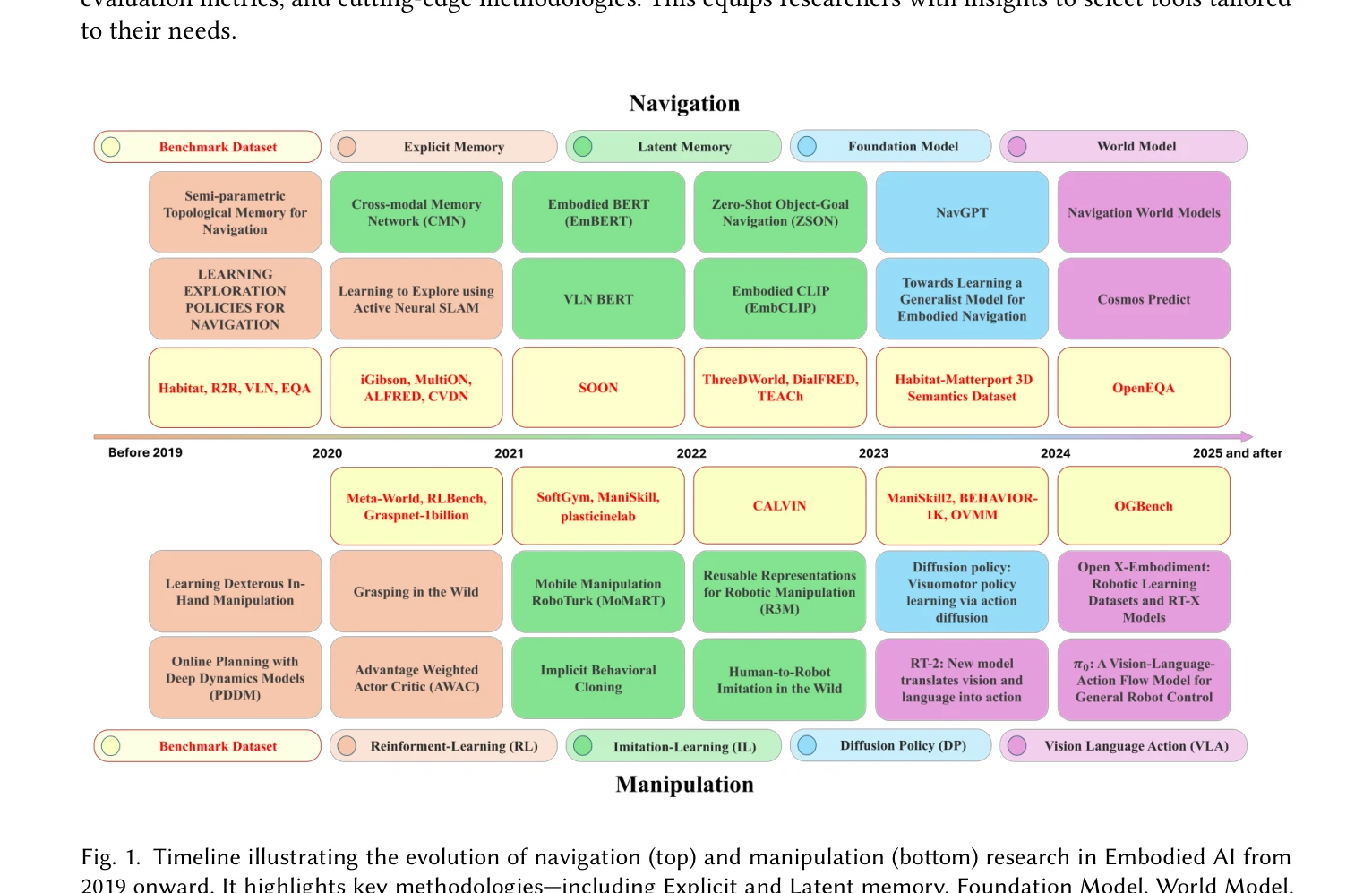
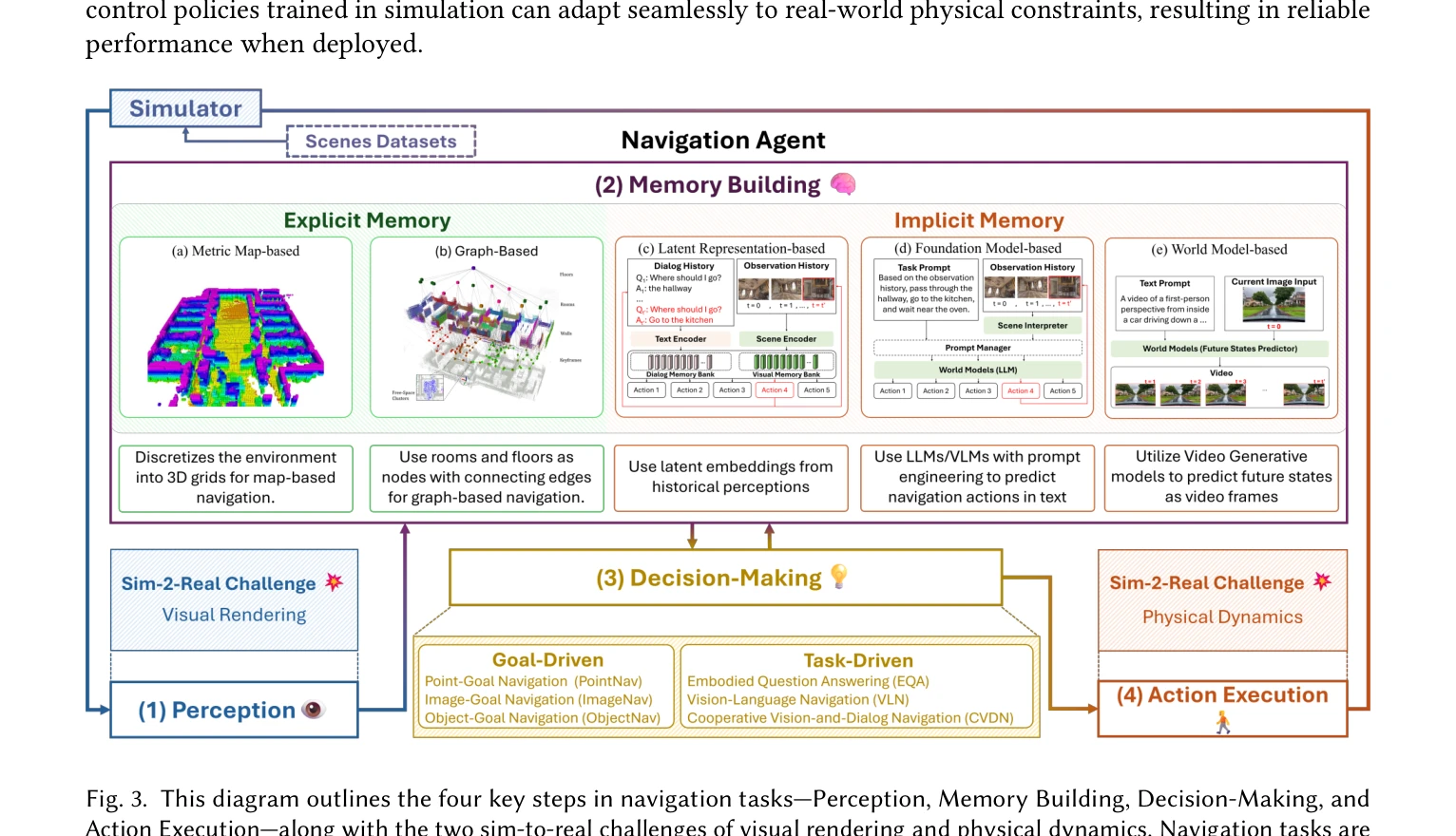
본 논문은 Embodied AI 시대에 로봇의 네비게이션과 조작 작업을 위한 Physics Simulator의 역할을 종합적으로 분석하고, sim-to-real 전이의 간극을 좁히기 위한 시뮬레이터 속성, 벤치마크, 평가 지표 및 최신 방법론을 제시한다.
Evaluation
Novelty: 4/5 Technical Soundness: 3/5 Significance: 4/5 Clarity: 4/5 Overall: 4/5
총평: 본 논문은 Embodied AI 시대의 navigation과 manipulation 연구를 포괄적으로 정리한 시의적절한 설문조사로, 현대적 simulator 기술과 최신 방법론(world model, geometric equivariance, VLA)을 체계적으로 분석하여 연구자들의 도구 선택과 방법론 설계에 실질적 가이드를 제공한다.
같이 보면 좋은 논문
기반 연구RLBench는 다양한 physics simulation 환경과 데이터셋을 제공해, 네비게이션 및 조작 정책 평가의 표준적인 시뮬레이터 역할을 한다.
기반 연구MineDojo 논문은 대규모 시뮬레이션 환경에서 embodied agent의 시뮬레이터-현실 전이 및 generalization을 다뤄 관련 이론적 기반을 제공한다.
기반 연구1493은 로보틱스에서의 neural scaling law를 분석하여,
1299의 sim-to-real 간극 및 벤치마킹 지표 설정에 과학적 근거를 제시한다.
다른 접근A Survey of Robotic Navigation and Manipulation with Physics는 물리기반 로봇학습을 중심으로 문제를 고찰하여, DRL 중심 서베이와 음미해볼만한 대안적 시각을 제공한다.
다른 접근로봇 네비게이션과 조작의 물리적 측면에서 정책 적응과 zero-shot 배포 문제를 다르게 접근한 논문이므로 비교할 가치가 있다.
다른 접근Sim-to-Real Reinforcement Learning for Vision-Based Dexterous Manipulation은 navigation보다는 조작 특화 관점에서 시뮬레이터 기반 sim-to-real 전이 문제를 다룬다.
다른 접근Real2Render2Real 논문은 전통적 physics simulation 대신 scalable visual simulation을 통한 sim-to-real 전이 접근법을 보여준다.
다른 접근1307은 VLA 모델 전반의 모듈 구조·효율성·안전성 원리를 다루며,
1299의 시뮬레이터 접근과 비교된다.
후속 연구A Survey of Robotic Navigation and Manipulation with Physics는 정책적응 및 강화학습 기반 VLA 모델의 다양한 방법론적 기반을 다룹니다.
후속 연구A Survey on Robotic Navigation and Manipulation with Physics simulators는
1508에서 제안하는 항공로봇용 시뮬레이션 플랫폼 기술의 이론적·방법론적 기반이 된다.
후속 연구로봇 내비게이션 및 조작에서의 policy training과 adaptation 이슈를 다루는 Survey 논문을 통해 NORA-1.5가 겨냥하는 실세계 환경 내 신뢰성 강화 방법론의 기반을 파악할 수 있다.