⚠️ 이 페이지의 요약·평가·해설은 생성형 AI(Claude)가 자동 생성한 2차적 분석물입니다. 논문 원문의 저작권은 원저작자에게 있으며, 정확한 내용은 원문(위 DOI·arXiv 등 출처)을 확인하세요.
라이선스: arXiv 비독점 라이선스
Essence
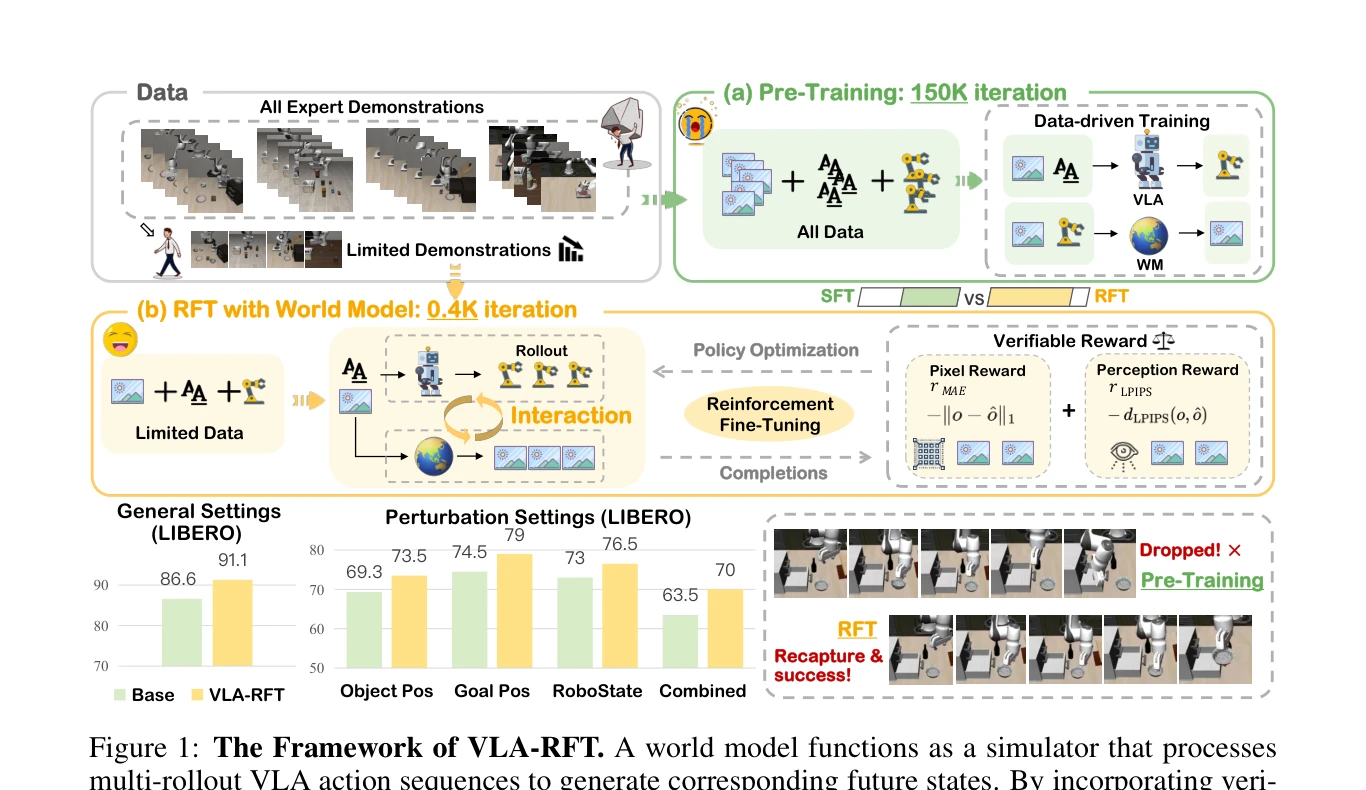
Figure 1: The Framework of VLA-RFT. A world model functions as a simulator that processes
VLA-RFT는 데이터 기반 world model을 시뮬레이터로 활용하여 vision-language-action 모델을 reinforcement learning으로 효율적으로 fine-tuning하는 프레임워크이다. 검증된 reward를 기반으로 GRPO 최적화를 수행하여 400 단계 이하의 fine-tuning으로 strong supervised baseline을 초과하는 성능을 달성한다.
Motivation
Known: VLA 모델은 imitation learning에 의존하여 distribution shift 하에서 error accumulation과 낮은 robustness 문제를 겪는다. Simulation-based RL과 real-world RL은 각각 높은 sample 복잡도와 비용 문제를 가지고 있다.
Gap: 기존 RL 접근법들은 현실적 제약(높은 상호작용 비용, sim-to-real gap, 안전성)을 극복하지 못하고 있다. World model 기반의 효율적이고 실용적인 VLA post-training 패러다임이 부재하다.
Why: VLA의 실제 배포와 확장성을 위해서는 imitation learning의 근본적 한계를 극복하고 generalization과 robustness를 동시에 달성할 수 있는 효율적인 학습 방법이 필수적이다.
Approach: Data-driven world model을 통해 real-world 상호작용 없이 policy rollout을 시뮬레이션하고, goal-achieving reference trajectory와의 비교를 통해 dense, trajectory-level reward를 생성한다. GRPO 프레임워크로 이러한 검증된 reward를 기반으로 VLA를 end-to-end 최적화한다.
Achievement
Figure 1: The Framework of VLA-RFT. A world model functions as a simulator that processes
효율성: 400 단계 이하의 fine-tuning으로 150K 반복 supervised fine-tuning baseline을 초과하는 성능 달성
우수한 성능: LIBERO 벤치마크에서 base VLA 86.6%에서 91.1%로 성능 향상 (general settings)
강화된 Robustness: 4가지 perturbation 조건(Object Pos, Goal Pos, RoboState, Combined)에서 일관된 성능 유지
Compositional Generalization: supervised baseline 대비 우수한 compositional 일반화 능력 입증
실행시간 Robustness: 예상치 못한 환경 변화에서도 안정적인 task 실행 및 failure recovery 능력
How
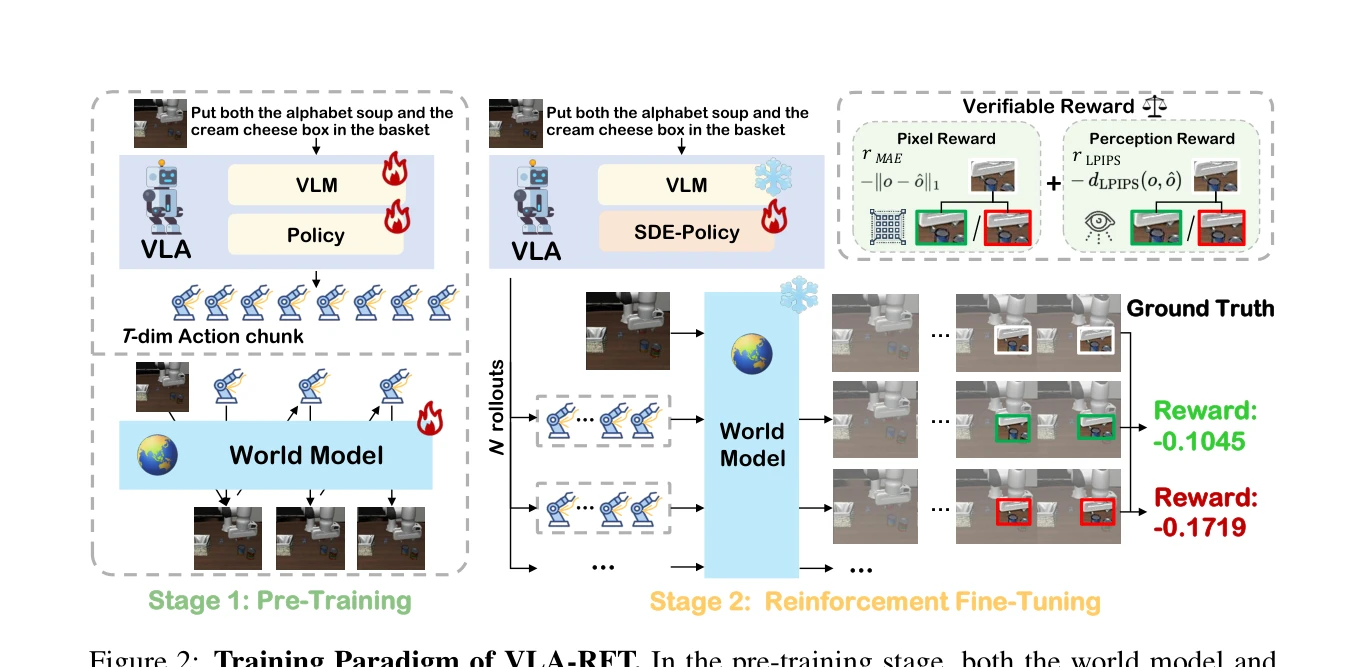
Figure 2: Training Paradigm of VLA-RFT. In the pre-training stage, both the world model and
Stage I: World model과 VLA policy를 offline 데이터셋에서 함께 pretrain하여 안정적인 초기화 제공
World model: Real interaction data로부터 action 조건부 future visual observation 예측 학습
Policy rollout: VLA가 생성한 action sequence를 world model에 입력하여 synthetic trajectory 생성
Verified reward design: Goal-achieving reference trajectory와의 LPIPS 및 MAE 기반 pixel/perception reward 계산
GRPO optimization: Trajectory-level verified reward를 기반으로 VLA policy를 end-to-end 최적화
Flow-matching action head: Stable action chunk generation을 위한 dual-system VLA 구조 활용
Originality
World model을 단순 dynamics 시뮬레이터가 아닌 verified reward 생성 메커니즘으로 통합하는 혁신적 접근
Dense, trajectory-level reward 설계로 action-aligned learning signal 제공
Offline data로부터 학습한 world model 기반 시뮬레이션을 통해 real-world interaction 비용 제거
GRPO와 world model의 결합으로 VLA post-training을 위한 새로운 패러다임 제시
Limitation & Further Study
World model의 예측 오차 누적에 대한 장기적 영향 분석 부재 (long-horizon task에서의 성능 저하 가능성)
LIBERO 벤치마크 중심의 평가로 다양한 robot morphology와 task 도메인에 대한 generalization 검증 필요
World model 학습에 필요한 offline 데이터셋의 규모와 다양성에 대한 민감도 분석 부족
Sim-to-real gap 측면에서 실제 로봇 환경에서의 검증 필요 (시뮬레이션 기반 실험만 수행)
Reward 설계가 goal trajectory 기반으로 제한되어 있어 exploration과 novelty 추구 가능성 제약
총평: VLA-RFT는 world model 기반 reinforcement fine-tuning을 통해 효율성, 성능, robustness를 동시에 달성하는 실용적이고 창의적인 접근법을 제시한다. 극도로 제한된 fine-tuning 단계로 strong baseline을 초과하고 perturbed 환경에서 일관된 성능을 유지하는 점에서 높은 가치가 있으나, 실제 로봇 환경에서의 검증과 장기 horizon task에 대한 분석이 필요하다.